9-cis-Retinoic acid, Endogenous retinoic acid receptor agonist
Be the first to review this product! Submit a review
|
(2 Publications )
MW 300.4 Da, Purity >98%. High affinity, endogenous retinoic acid receptor (RAR) agonist (IC50= 14 nM for RARα, RARβ and RARγ). Active metabolite of vitamin A. Acts as a transcription factor to regulate the growth and differentiation of normal and malignant cells and capable of inhibiting prostaglandin-endoperoxide synthase 2 expression.
View Alternative Names
Atherosclerosis, susceptibility to, included, DAUD I6, DKFZp686N23123, ER, ER-alpha, ER-beta, ER[a], ER[b], ESR, ESR B, ESR BETA, ESR1_HUMAN, ESRA, ESTR B, Early response protein NAK1, Era, Erb, Erb2, Estr, Estra, Estradiol Receptor alpha, Estradiol Receptor beta, Estradiol receptor, Estrogen Receptor 1, Estrogen Receptor 2, Estrogen receptor, Estrogen receptor 1 (alpha), Estrogen receptor 2 (ER beta), Estrogen receptor 2 ER beta, Estrogen receptor alpha, Estrogen receptor beta 4, Estrogen resistance, included, FLJ00280, FLJ00318, FLJ16020, FLJ16733, GFRP 1, Growth Factor Inducible Nuclear Protein NP10, Growth Factor Response Protein 1, Growth factor inducible nuclear protein N10, H 2RIIBP, HAP, HBV-activated protein, HDL cholesterol, augmented response of, to hormone replacement, included, HMR, Hbr1, Hormone Receptor, LX receptor beta, LXR a, LXR b, LXR beta, Liver X nuclear receptor beta, Liver X receptor alpha, Liver X receptor beta, MGC102720, MGC109416, MGC1831, MGC9485, MHC class I promoter binding protein, Myocardial infarction, susceptibility to, included, N10, N10 nuclear protein, NAK 1, NER I, NER1, NGFIB, NP 10, NR1B1, NR1B2, NR1B3, NR1H2_HUMAN, NR1H3_HUMAN, NR2B1, NR2B2, NR2B3, NR3A1, NR3A2, NR4A1_HUMAN, NUR77, mouse, homolog of, Nerve growth factor IB nuclear receptor variant 1, Nuclear Hormone Receptor TR3, Nuclear hormone receptor NUR/77, Nuclear mitotic apparatus protein retinoic acid receptor alpha fusion protein, Nuclear orphan receptor LXR beta, Nuclear receptor NER, Nuclear receptor subfamily 1 group B member 1, Nuclear receptor subfamily 1 group B member 2, Nuclear receptor subfamily 1 group B member 3, Nuclear receptor subfamily 1 group H member 2, Nuclear receptor subfamily 1 group H member 3, Nuclear receptor subfamily 2 group B member 1, Nuclear receptor subfamily 2 group B member 2, Nuclear receptor subfamily 2 group B member 3, Nuclear receptor subfamily 3 group A member 1, Nuclear receptor subfamily 3 group A member 2, Nuclear receptor subfamily 4 group A member 1, Nucleophosmin retinoic acid receptor alpha fusion protein NPM RAR long form, OR-1, OTTHUMP00000017718, OTTHUMP00000017719, OTTHUMP00000022510, OTTHUMP00000060418, Orphan nuclear receptor HMR, Orphan nuclear receptor NR4A1, Orphan nuclear receptor TR3, Orphan receptor tr3, Oxysterols receptor LXR-alpha, Oxysterols receptor LXR-beta, RAR, RAR-alpha, RAR-beta, RAR-epsilon, RAR-gamma, RARA_HUMAN, RARB_HUMAN, RARC, RARG_HUMAN, RARalpha1, RIP15, RLD 1, RNESTROR, RRB2, RXR alpha1, RXR beta, RXR gamma, RXRA_HUMAN, RXRB_HUMAN, RXRC, RXRG_HUMAN, Receptor NGFIB, Retanoic X receptor gamma, Retinoic acid nuclear receptor alpha variant 1, Retinoic acid nuclear receptor alpha variant 2, Retinoic acid receptor RXR-alpha, Retinoic acid receptor RXR-beta, Retinoic acid receptor RXR-gamma, Retinoic acid receptor alpha, Retinoic acid receptor alpha polypeptide, Retinoic acid receptor beta, Retinoic acid receptor beta 2, Retinoic acid receptor beta 4, Retinoic acid receptor beta 5, Retinoic acid receptor beta polypeptide, Retinoic acid receptor gamma 2, Retinoic acid receptor, gamma, Retinoid X nuclear receptor alpha, Retinoid X receptor alpha, Retinoid X receptor beta, Retinoid X receptor gamma, ST-59, Steroid hormone nuclear receptor NER, Steroid receptor TR3, TR 3, TR3 orphan receptor, Testicular receptor 3, UNR, Ubiquitously-expressed nuclear receptor
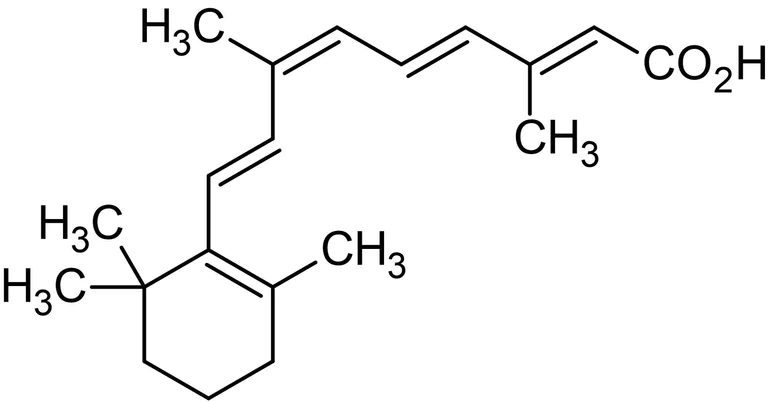
- Chemical Structure
Lab
Chemical Structure - 9-cis-Retinoic acid, Endogenous retinoic acid receptor agonist (AB141023)
2D chemical structure image of ab141023, 9-cis-Retinoic acid, Endogenous retinoic acid receptor agonist
Complementary Products


Primary Antibodies
AB316191
Anti-SLC12A3 antibody [EPR27106-48]
BOND RX™ Validated|20ul selling size|Recombinant|RabMAb|Advanced Validation

- 0
- 0
Properties and storage information
Shipped at conditions
Appropriate short-term storage conditions
Appropriate long-term storage conditions
Storage information
Handling instructions
Need more advice on solubility, usage and handling? Please visit our our product support page for more details.
|
Wherever possible, you should prepare and use solutions on the same day. However, if you need to make up stock solutions in advance, we recommend that you store the solution as aliquots in tightly sealed vials at -20°C. Generally, these will be useable for up to one month. Before use, and prior to opening the vial we recommend that you allow your product to equilibrate to room temperature for at least 1 hour.
|
Toxic, refer to SDS for further information.
Supplementary information
This supplementary information is collated from multiple sources and compiled automatically.
Biological function summary
Retinoic acid receptors function by binding to retinoic acid and this binding influences gene transcription. Usually they form heterodimers with retinoid X receptors to perform their function more effectively. This complex modulates expression of genes involved in cell differentiation apoptosis and lipid metabolism. RAR and RXR proteins also interact with other nuclear receptors further influencing the regulation of key metabolic processes.
Pathways
Retinoic acid receptors and retinoid X receptors are critical in the retinoic acid signaling pathway and lipid metabolism pathways. In these pathways they closely associate with proteins such as PPARs (peroxisome proliferator-activated receptors) to coordinate regulation of genes linked to energy homeostasis. These specific interactions ensure the maintenance of normal cellular functions and contribute to the body's ability to adapt to nutritional and metabolic changes.
Publications (2)
Recent publications for all applications. Explore the full list and refine your search
Communications biology 7:1532 PubMed39604738
2024
Applications
Unspecified application
Species
Unspecified reactive species
Aging 12:5469-5478 PubMed32209731
2020
Applications
Unspecified application
Species
Unspecified reactive species
Product promise
Please note: All products are 'FOR RESEARCH USE ONLY. NOT FOR USE IN DIAGNOSTIC OR THERAPEUTIC PROCEDURES'.
For licensing inquiries, please contact partnerships@abcam.com