CGP 39551, competitive NMDA antagonist
Be the first to review this product! Submit a review
|
(1 Publication)
MW 237.19 Da, Purity >99%. Competitive NMDA receptor antagonist (Ki = 310 nM for displacement of CPP binding in rat brain). Potent oral anticonvulsant activity in vivo.
Also available in simple stock solutions (ab146683) - add 1 ml of water to get an exact, ready-to-use concentration.
View Alternative Names
AMPA 1, AMPA-selective glutamate receptor 1, GLUH1, GRIA1_HUMAN, GluA1, GluR-1, GluR-A, GluR-K1, Glutamate receptor 1, Glutamate receptor ionotropic, Glutamate receptor ionotropic AMPA 1, HBGR1, MGC133252, OTTHUMP00000160643, OTTHUMP00000165781, OTTHUMP00000224241, OTTHUMP00000224242, OTTHUMP00000224243
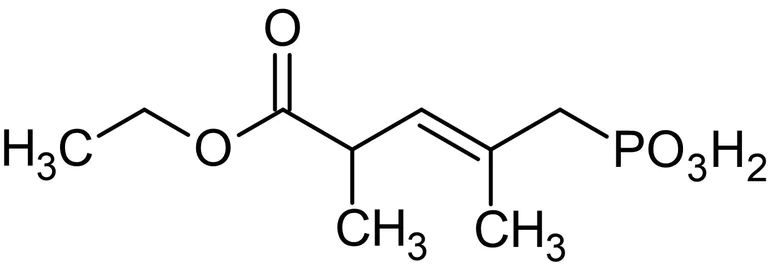
- Chemical Structure
Lab
Chemical Structure - CGP 39551, competitive NMDA antagonist (AB120128)
2D chemical structure image of ab120128, CGP 39551, competitive NMDA antagonist
Alternative Products

Complementary Products


Properties and storage information
Shipped at conditions
Appropriate short-term storage conditions
Appropriate long-term storage conditions
Storage information
Handling instructions
Need more advice on solubility, usage and handling? Please visit our our product support page for more details.
|
Wherever possible, you should prepare and use solutions on the same day. However, if you need to make up stock solutions in advance, we recommend that you store the solution as aliquots in tightly sealed vials at -20°C. Generally, these will be useable for up to one month. Before use, and prior to opening the vial we recommend that you allow your product to equilibrate to room temperature for at least 1 hour.
|
Toxic, refer to SDS for further information.
Supplementary information
This supplementary information is collated from multiple sources and compiled automatically.
Biological function summary
The GluR1 subunit is an essential component of the AMPA receptor complex which typically forms as a tetramer. This complex modulates synaptic strength and plasticity processes critical for learning and memory. The activity of AMPA receptors including those containing GluR1 is regulated by several auxiliary proteins and is essential for post-synaptic responses. The GluR1 subunit also interacts with other proteins such as TARPs which modulate its trafficking and channel properties.
Pathways
The GluR1-containing AMPA receptors participate significantly in the glutamatergic signaling pathway which is vital for fast excitatory synaptic transmission in the brain. This pathway also involves the NMDA receptors which work together with AMPA receptors to regulate synaptic plasticity and neuronal communication. Additionally the GluR1 interacts within the long-term potentiation (LTP) pathway contributing to the strengthening of synapses an essential mechanism underlying learning and memory.
Publications (1)
Recent publications for all applications. Explore the full list and refine your search
The Journal of physiology 592:67-86 PubMed24081159
2013
Applications
Unspecified application
Species
Unspecified reactive species
Product promise
Please note: All products are 'FOR RESEARCH USE ONLY. NOT FOR USE IN DIAGNOSTIC OR THERAPEUTIC PROCEDURES'.
For licensing inquiries, please contact partnerships@abcam.com