Methoxy-X04, amyloid beta fluorescent marker
Be the first to review this product! Submit a review
|
(5 Publications )
MW 344.4 Da, Purity >98%. Blood-brain barrier permeable amyloid β fluorescent marker. Blue fluorophore. Derivative of Congo Red (ab145645) and Chrysamine G. Selectively binds fibrillar β-sheet deposits with high affinity (Ki = 26.8 nM). Detects plaques, tangles and cerebrovascular amyloid in vivo. .
View Alternative Names
A BETA, A4 amyloid protein, A4_HUMAN, AAA, ABPP, AD1, AICD-50, AICD-57, AICD-59, AID(50), AID(57), AID(59), APP, APPI, Alzheimer disease amyloid protein, Amyloid beta (A4) precursor protein, Amyloid beta A4 protein, Amyloid beta protein, Amyloid intracellular domain 50, Amyloid intracellular domain 57, Amyloid intracellular domain 59, Amyloid precursor protein, Beta-APP40, Beta-APP42, Beta-amyloid precursor protein, C31, CTFgamma, CVAP, Cerebral vascular amyloid peptide, Gamma-CTF(50), Gamma-CTF(57), Gamma-CTF(59), PN 2, PN-II, PreA4, Protease nexin-II, S-APP-alpha, S-APP-beta, beta-amyloid peptide, peptidase nexin-II, sAPP
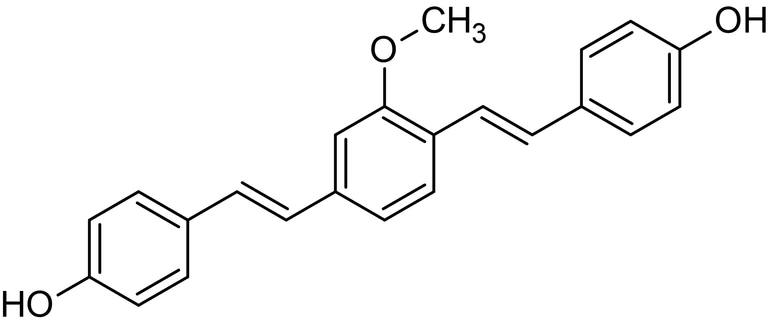
- Chemical Structure
Lab
Chemical Structure - Methoxy-X04, amyloid beta fluorescent marker (AB142818)
2D chemical structure image of ab142818, Methoxy-X04, amyloid beta fluorescent marker
Complementary Products
Primary Antibodies
AB278054
Anti-GFAP antibody [RM1003] - Astrocyte Marker
BOND RX™ Validated|20ul selling size|RabMAb|Recombinant
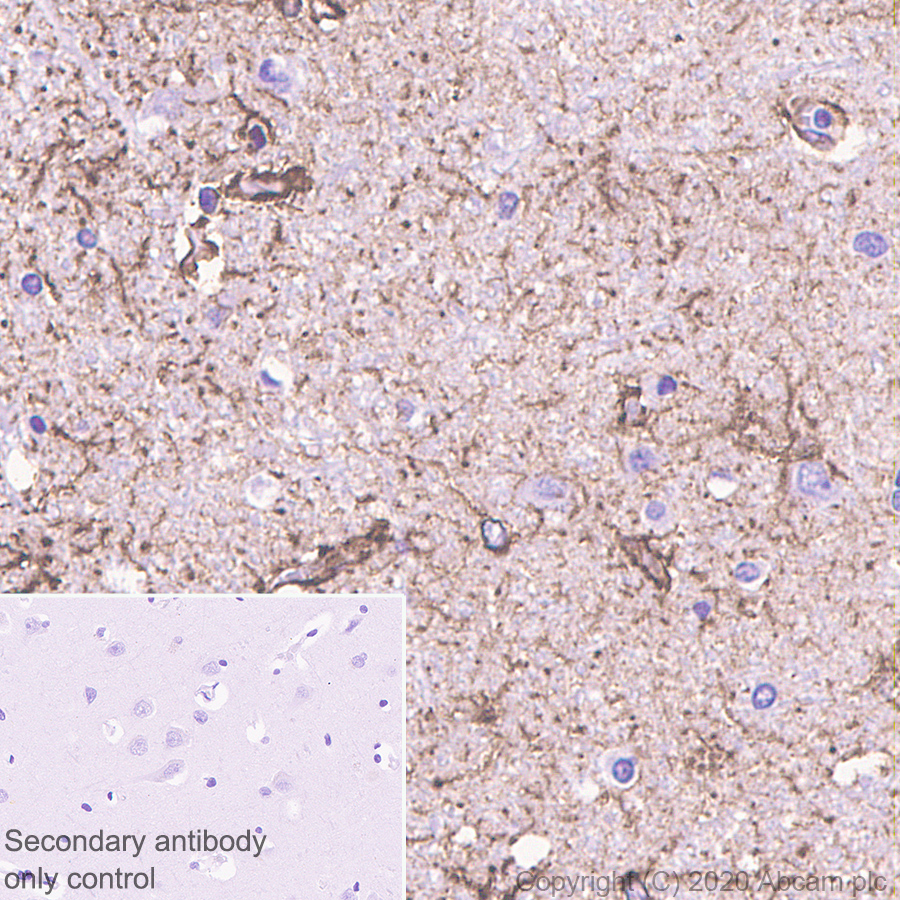
- 0
- 0

Primary Antibodies
AB16667
BOND RX™ Validated|KO Validated|RabMAb|Advanced Validation|Recombinant|20ul selling size

- 5
- 133
Product details
Properties and storage information
Shipped at conditions
Appropriate short-term storage conditions
Appropriate long-term storage conditions
Handling instructions
Need more advice on solubility, usage and handling? Please visit our our product support page for more details.
|
Wherever possible, you should prepare and use solutions on the same day. However, if you need to make up stock solutions in advance, we recommend that you store the solution as aliquots in tightly sealed vials at -20°C. Generally, these will be useable for up to one month. Before use, and prior to opening the vial we recommend that you allow your product to equilibrate to room temperature for at least 1 hour.
Supplementary information
This supplementary information is collated from multiple sources and compiled automatically.
Biological function summary
The processing of APP plays a fundamental role in neuronal growth survival and repair. APP is cleaved into fragments that can regulate synaptic function and plasticity. It does not operate as a part of a complex but interacts with various cellular components. The protein participates in signaling pathways influencing cellular adhesion motility and neurite outgrowth. APP’s numerous interaction partners facilitate its involvement in different cellular processes highlighting its critical role in normal cell function.
Pathways
The APP is a central component in the amyloidogenic pathway where its cleavage by beta-secretase and gamma-secretase yields beta-amyloid. This pathway is one of two primary metabolic routes for APP—alternative enzymatic processing through the non-amyloidogenic pathway precludes beta-amyloid formation releasing peptides that do not aggregate. Enzymes like BACE1 (beta-secretase 1) and presenilin are important in the amyloidogenic pathway directly resulting in the production of the neurotoxic amyloid beta-peptide.
Publications (5)
Recent publications for all applications. Explore the full list and refine your search
Journal of neural engineering 20: PubMed37531953
2023
Applications
Unspecified application
Species
Unspecified reactive species
Cells 12: PubMed36611872
2022
Applications
Unspecified application
Species
Unspecified reactive species
eLife 11: PubMed36040311
2022
Applications
Unspecified application
Species
Unspecified reactive species
International journal of molecular sciences 21: PubMed32138161
2020
Applications
Unspecified application
Species
Unspecified reactive species
Journal of neuropathology and experimental neurology 61:797-805 PubMed12230326
2002
Applications
Unspecified application
Species
Unspecified reactive species
Product promise
Please note: All products are 'FOR RESEARCH USE ONLY. NOT FOR USE IN DIAGNOSTIC OR THERAPEUTIC PROCEDURES'.
For licensing inquiries, please contact partnerships@abcam.com