Vigabatrin, Irreversible GABA transaminase inhibitor
Be the first to review this product! Submit a review
|
(0 Publication)
MW 129.16 Da, Purity >98%. Irreversible inhibitor of GABA transaminase (GABA-T). Increases GABA concentrations in the brain. Anticonvulsant and induces neuronal plasticity in mouse models.
Also available in simple stock solutions (ab146721) - add 1 ml of water to get an exact, ready-to-use concentration.
View Alternative Names
(S)-3-amino-2-methylpropionate transaminase, 4 aminobutyrate aminotransferase, mitochondrial, 4-aminobutyrate aminotransferase, ABAT, FLJ17813, FLJ30272, GABA aminotransferase, GABA transaminase, GABA transferase, GABA-AT, GABA-T, GABT_HUMAN, Gamma-amino-N-butyrate transaminase, L-AIBAT, NPD009, hCG1984265, mitochondrial
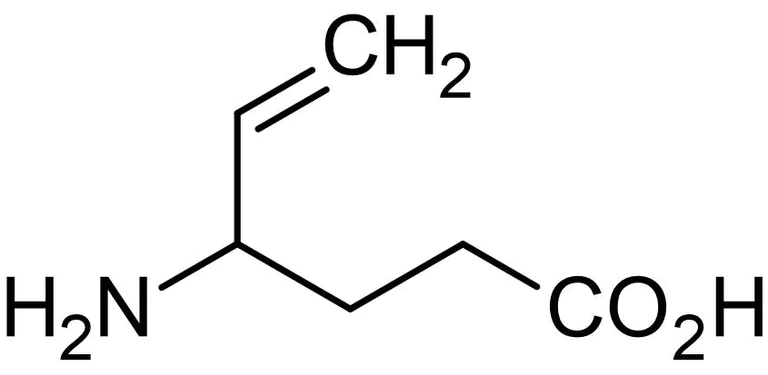
- Chemical Structure
Lab
Chemical Structure - Vigabatrin, Irreversible GABA transaminase inhibitor (AB120310)
2D chemical structure image of ab120310, Vigabatrin, Irreversible GABA transaminase inhibitor
Complementary Products
Primary Antibodies
AB188865
Anti-TXNIP antibody [EPR14774]
RabMAb|Recombinant|KO Validated|20ul selling size
- 4
- 4
Primary Antibodies
AB305044
Alexa Fluor® 647 Anti-IL-10 antibody [EPR1114]
RabMAb|Recombinant|Trial Size
- 0
- 0
Primary Antibodies
AB309497
Anti-TMS1/ASC antibody [RM1049]
BOND RX™ Validated|20ul selling size|RabMAb|Recombinant|KO Validated
- 0
- 0
Properties and storage information
Shipped at conditions
Appropriate short-term storage conditions
Appropriate long-term storage conditions
Storage information
Handling instructions
Need more advice on solubility, usage and handling? Please visit our our product support page for more details.
|
Wherever possible, you should prepare and use solutions on the same day. However, if you need to make up stock solutions in advance, we recommend that you store the solution as aliquots in tightly sealed vials at -20°C. Generally, these will be useable for up to one month. Before use, and prior to opening the vial we recommend that you allow your product to equilibrate to room temperature for at least 1 hour.
|
Refer to SDS for further information.
Supplementary information
This supplementary information is collated from multiple sources and compiled automatically.
Biological function summary
ABAT plays a critical role in maintaining GABA homeostasis in the central nervous system. The protein functions as a homodimer forming a complex that effectively binds to its substrate. It modulates the inhibitory effects mediated by GABA in neuronal signaling. This regulation is essential for processes such as synaptic transmission and plasticity impacting a range of neurological activities.
Pathways
ABAT is integral to the GABAergic neurotransmission pathway which balances excitatory and inhibitory signals in the brain. It operates in conjunction with glutamate decarboxylase another enzyme playing an important role in GABA synthesis. Together they maintain the dynamic equilibrium between GABA production and breakdown. Additionally the enzyme interacts with proteins that contribute to the tricarboxylic acid cycle linking neurotransmitter metabolism to energy production.
Product promise
Please note: All products are 'FOR RESEARCH USE ONLY. NOT FOR USE IN DIAGNOSTIC OR THERAPEUTIC PROCEDURES'.
For licensing inquiries, please contact partnerships@abcam.com