Human BID knockout SW480 cell line
Be the first to review this product! Submit a review
|
(0 Publication)

- NGS
Supplier Data
Next Generation Sequencing - Human BID knockout SW480 cell line (AB274917)
Knockout achieved by CRISPR/Cas9; X = 16 bp deletion; Frameshift = 100%
Complementary Products
Primary Antibodies
AB315845
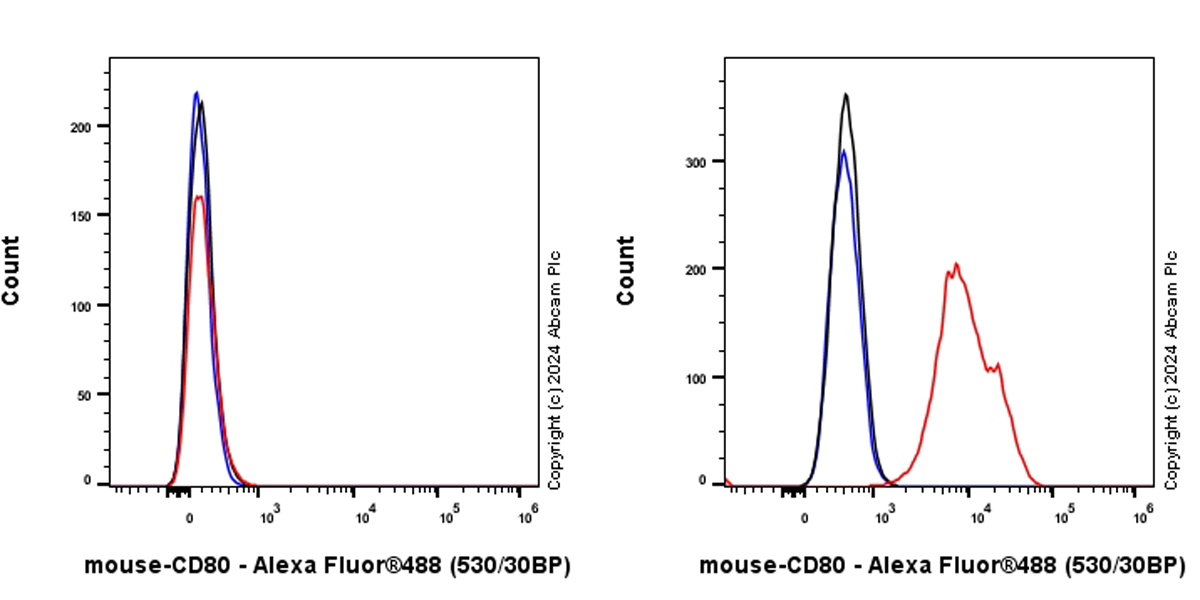
Alexa Fluor® 488 Anti-CD80 antibody [EPR22127-251]
RabMAb|Recombinant
- 0
- 0

Primary Antibodies
AB303476
Alexa Fluor® 647 Anti-CD127 antibody [EPR22835-249]
RabMAb|Recombinant|Trial Size

- 0
- 0
Reactivity data
Product details
We will provide viable cells that proliferate on revival.
This product is subject to limited use licenses from The Broad Institute, ERS Genomics Limited and Sigma-Aldrich Co. LLC, and is developed with patented technology. For full details of the licenses and patents please refer to our limited use license and patent pages.
What's included?
Properties and storage information
Gene name
Gene editing type
Gene editing method
Knockout validation
Shipped at conditions
Appropriate short-term storage duration
Appropriate short-term storage conditions
Appropriate long-term storage conditions
Supplementary information
This supplementary information is collated from multiple sources and compiled automatically.
Biological function summary
Bid induces mitochondria-mediated apoptosis that significantly affects cellular homeostasis. Bid is not considered to be part of a permanent protein complex; instead it acts as a mobile activator bridging interactions between different proteins within the apoptotic pathway. Upon activation tBID interacts with other Bcl-2 family members like Bax and Bak which leads to mitochondrial membrane permeabilization and subsequent release of cytochrome c.
Pathways
Bid significantly influences apoptotic signaling under different cellular stress conditions. It plays important functions in both intrinsic and extrinsic pathways of apoptosis. Within the intrinsic pathway Bid links the external death receptor signals to the mitochondria-mediated apoptotic pathway. In addition to interacting with Bax and Bak Bid indirectly connects to the apoptosome complex facilitating caspase activation which ultimately results in cellular apoptosis.
Cell culture
Biosafety level
EU: 1 US: 1
Adherent/suspension
Adherent
Gender
Male
Initial handling guidelines
Upon arrival, the vial should be stored in liquid nitrogen vapor phase and not at -80°C. Storage at -80°C may result in loss of viability. <p>1. Thaw the vial in 37°C water bath for approximately 1-2 minutes.<br>2. Transfer the cell suspension (0.8 mL) to a 15 mL/50 mL conical sterile polypropylene centrifuge tube containing 8.4 mL pre-warmed culture medium, wash vial with an additional 0.8 mL culture medium (total volume 10 mL) to collect remaining cells, and centrifuge at 201 x g (rcf) for 5 minutes at room temperature. 10 mL represents minimum recommended dilution. 20 mL represents maximum recommended dilution.<br>3. Resuspend the cell pellet in 5 mL pre-warmed culture medium and count using a haemocytometer or alternative cell counting method seed all remaining cells into a T25.<br>4. Incubate the culture at 37°C incubator with 5% CO<sub>2</sub>. Check the culture one day after revival and continue to check until 80% confluent. Media change can be given if needed.<br>5. Once confluent passage into an appropriate flask at a density of 2x10<sup>4</sup> cells/cm<sup>2</sup>. Seeding density is given as a guide only and should be scaled to align with individual lab schedules. Cultures should be monitored daily.</p>
Subculture guidelines
- All seeding densities should be based on cell counts gained by established methods.
- A guide seeding density of 2-3x10⁴ cells/cm2 is recommended.
- Cells should be passaged when they have achieved 80-90% confluence.
- Slow growing. A partial media change is recommended at least twice between passages.
Culture medium
Ham's F-12 + 10% FBS
Cryopreservation medium
Cell Freezing Medium-DMSO Serum free media, contains 8.7% DMSO in MEM supplemented with methyl cellulose.
Product promise
Please note: All products are 'FOR RESEARCH USE ONLY. NOT FOR USE IN DIAGNOSTIC OR THERAPEUTIC PROCEDURES'.
For licensing inquiries, please contact partnerships@abcam.com