Human GANC knockout HeLa cell line
Be the first to review this product! Submit a review
|
(0 Publication)

- Sanger seq
Unknown
Sanger Sequencing - Human GANC knockout HeLa cell line (AB265096)
Homozygous : 4 bp deletion in exon 11.
Complementary Products


Product details
We will provide viable cells that proliferate on revival.
This product is subject to limited use licenses from The Broad Institute and ERS Genomics Limited, and is developed with patented technology. For full details of the limited use licenses and relevant patents please refer to our limited use license and patent pages.
What's included?
Properties and storage information
Gene name
Gene editing type
Gene editing method
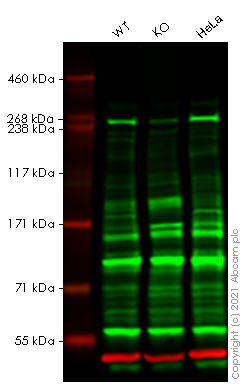
Knockout validation
Zygosity
Shipped at conditions
Appropriate short-term storage conditions
Appropriate long-term storage conditions
Supplementary information
This supplementary information is collated from multiple sources and compiled automatically.
Biological function summary
This enzyme is important for carbohydrate digestion and glucose production. GANC is not known to form part of a larger protein complex but acts individually to catalyze the breakdown of polysaccharides and oligosaccharides. By converting these molecules into glucose it provides an immediate source of energy for cells thereby supporting cellular metabolism and overall organismal energy balance.
Pathways
The enzyme takes part in the carbohydrate metabolism pathway and the glycogen degradation pathway. These pathways are instrumental in energy production and storage management in cells. GANC works in conjunction with enzymes like glycogen phosphorylase and beta-amylase to regulate the conversion of stored glycogen into glucose ensuring proper energy supply during fasting and physical activity.
Quality control
STR analysis
CSF1PO, D13S317, D7S820, D5S818, TH01, D16S539, TPOX
Cell culture
Biosafety level
EU: 2 US: 2
Adherent/suspension
Adherent
Gender
Female
Initial handling guidelines
Upon arrival, the vial should be stored in liquid nitrogen vapor phase and not at -80°C. Storage at -80°C may result in loss of viability. <p>1. Thaw the vial in 37°C water bath for approximately 1-2 minutes.<br>2. Transfer the cell suspension (0.8 mL) to a 15 mL/50 mL conical sterile polypropylene centrifuge tube containing 8.4 mL pre-warmed culture medium, wash vial with an additional 0.8 mL culture medium (total volume 10 mL) to collect remaining cells, and centrifuge at 201 x g (rcf) for 5 minutes at room temperature. 10 mL represents minimum recommended dilution. 20 mL represents maximum recommended dilution.<br>3. Resuspend the cell pellet in 5 mL pre-warmed culture medium and count using a haemocytometer or alternative cell counting method seed all remaining cells into a T25.<br>4. Incubate the culture at 37°C incubator with 5% CO<sub>2</sub>. Check the culture one day after revival and continue to check until 80% confluent. Media change can be given if needed.<br>5. Once confluent passage into an appropriate flask at a density of 2x10<sup>4</sup> cells/cm<sup>2</sup>. Seeding density is given as a guide only and should be scaled to align with individual lab schedules. Cultures should be monitored daily.</p>
Subculture guidelines
- All seeding densities should be based on cell counts gained by established methods.
- A guide seeding density of 2x10⁴ cells/cm2 is recommended.
- Cells should be passaged when they have achieved 80-90% confluence.
Culture medium
DMEM (High Glucose) + 10% FBS
Cryopreservation medium
Cell Freezing Medium-DMSO Serum free media, contains 8.7% DMSO in MEM supplemented with methyl cellulose.
Product promise
Please note: All products are 'FOR RESEARCH USE ONLY. NOT FOR USE IN DIAGNOSTIC OR THERAPEUTIC PROCEDURES'.
For licensing inquiries, please contact partnerships@abcam.com