JavaScript is disabled in your browser. Please enable JavaScript to view this website.
AB94297

AKIP overexpression 293T lysate (whole cell)

Be the first to review this product! Submit a review

|

(0 Publication)
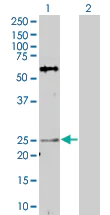
AKIP overexpression 293T lysate (whole cell) suitable for WB. View our extensive range of validated lysates from normal and diseased human, mouse and rat tissue.
2 Images
Western blot - AKIP overexpression 293T lysate (whole cell) (AB94297)
  • WB

Unknown

Western blot - AKIP overexpression 293T lysate (whole cell) (AB94297)

false
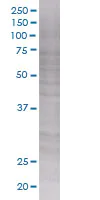
SDS-PAGE - AKIP overexpression 293T lysate (whole cell) (AB94297)
  • SDS-PAGE

Unknown

SDS-PAGE - AKIP overexpression 293T lysate (whole cell) (AB94297)

ab94297 at 15μg/lane on an SDS-PAGE gel.

Key facts

Cell type

HEK-293T

Species or organism

Human

Form

Liquid

form

Reactivity data

{ "title": "Reactivity Data", "filters": { "stats": ["", "Reactivity", "Dilution Info", "Notes"] }, "values": { "WB": { "reactivity":"TESTED_AND_REACTS", "dilution-info":"", "notes":"<p></p>" } } }

Product details

ab94297 is a 293T cell transfected lysate in which Human AKIP has been transiently over-expressed using a pCMV-AKIP plasmid. The lysate is provided in 1 x Sample Buffer.

Properties and storage information

Shipped at conditions
Dry Ice
Appropriate short-term storage conditions
-20°C
Appropriate long-term storage conditions
-20°C
Aliquoting information
Upon delivery aliquot
Storage information
Avoid freeze / thaw cycle

Supplementary information

This supplementary information is collated from multiple sources and compiled automatically.

AKIP also known as A Kinase Interacting Protein plays a significant role in cellular functions. It interacts with protein kinase A (PKA) and is thought to have a molecular mass around 18 kDa. Expression of AKIP occurs in multiple tissues but it is especially noticeable in heart and brain tissues. It serves as a critical modulator by linking protein kinase A to different cellular compartments impacting various signaling pathways.
Biological function summary

AKIP functions to mediate cellular responses to hormonal changes. It forms part of an intricate protein complex that impacts the transcriptional regulation of genes by influencing PKA's function and localization. AKIP's interaction with PKA suggests its presence in processes related to cellular growth and apoptosis. Its regulatory action becomes important in maintaining certain cellular functions and promoting cell survival under stress conditions.

Pathways

AKIP involvement becomes evident in the cAMP signaling pathway. It modulates the pathway by directing PKA to distinct substrates affecting downstream effectors like CREB. This interaction regulates gene expression involved in metabolic processes. AKIP also shows connection to the MAPK signaling pathway contributing to cell growth and differentiation. Such pathways indicate AKIP’s role in orchestrating complex cellular interactions and signal transduction.

AKIP's altered expression has implications in cardiovascular diseases and cancer. Its interaction with PKA and downstream proteins like CREB links it to heart disease affecting cardiac cell signaling under stress conditions. In cancer AKIP associations with transcription factors lead to changes in cell proliferation and survival indicating its part in tumor development and progression. Understanding AKIP's unique roles in these conditions might provide opportunities for therapeutic interventions.

Cell culture

Product protocols

Product promise

We are committed to supporting your work with high-quality reagents, and we're here for you every step of the way. In the unlikely event that one of our products does not perform as expected, you're protected by our Product Promise.
For full details, please see our Terms & Conditions

Please note: All products are 'FOR RESEARCH USE ONLY. NOT FOR USE IN DIAGNOSTIC OR THERAPEUTIC PROCEDURES'.

For licensing inquiries, please contact partnerships@abcam.com