JavaScript is disabled in your browser. Please enable JavaScript to view this website.
AB94215

Annexin A10 overexpression 293T lysate (whole cell)

Be the first to review this product! Submit a review

|

(0 Publication)
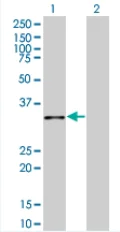
Annexin A10 overexpression 293T lysate (whole cell) suitable for WB. View our extensive range of validated lysates from normal and diseased human, mouse and rat tissue.
2 Images
Western blot - Annexin A10 overexpression 293T lysate (whole cell) (AB94215)
  • WB

Unknown

Western blot - Annexin A10 overexpression 293T lysate (whole cell) (AB94215)

false
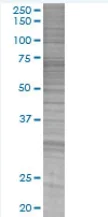
SDS-PAGE - Annexin A10 overexpression 293T lysate (whole cell) (AB94215)
  • SDS-PAGE

Unknown

SDS-PAGE - Annexin A10 overexpression 293T lysate (whole cell) (AB94215)

ab94215 at 15μg/lane on an SDS-PAGE gel.

Key facts

Cell type

HEK-293T

Species or organism

Human

Form

Liquid

form

Reactivity data

{ "title": "Reactivity Data", "filters": { "stats": ["", "Reactivity", "Dilution Info", "Notes"] }, "values": { "WB": { "reactivity":"TESTED_AND_REACTS", "dilution-info":"", "notes":"<p></p>" } } }

Product details

ab94215 is a 293T cell transfected lysate in which Human Annexin A10 has been transiently over-expressed using a pCMV-Annexin A10 plasmid. The lysate is provided in 1X Sample Buffer.

Properties and storage information

Shipped at conditions
Dry Ice
Appropriate short-term storage conditions
-20°C
Appropriate long-term storage conditions
-20°C
Aliquoting information
Upon delivery aliquot
Storage information
Avoid freeze / thaw cycle

Supplementary information

This supplementary information is collated from multiple sources and compiled automatically.

Annexin A10 (ANXA10) also known as Annexin-10 is a protein with a molecular weight of approximately 37 kDa. You can find its expression mainly in the cytoplasm of epithelial cells especially in the gastrointestinal tract and liver. ANXA10 belongs to the annexin family which is known for calcium-dependent phospholipid binding. Its unique N-terminal region differentiates it from other annexin family members and may confer specific functions in cellular processes.
Biological function summary

ANXA10 functions as a calcium-dependent phospholipid-binding protein that regulates cell proliferation and differentiation. Though not part of a larger protein complex it may interact with cytoplasmic or membrane-associated proteins to perform its functions. ANXA10 helps maintain cellular integrity and possibly plays a role in the development of certain tissue types.

Pathways

ANXA10 plays a role in the cellular mechanisms involving vesicle trafficking and signal transduction. This protein contributes to the phospholipid metabolism and Annexin mechanisms working with other annexin proteins to mediate intracellular events. ANXA10 shares pathway relations with proteins such as Annexin A1 and Annexin A2 which also influence cell growth and signaling pathways.

Researchers have associated ANXA10 with liver cancer and gastric cancer. Altered expression of ANXA10 could contribute to tumor development and progression in these cancers. Studies show potential links with proteins like Annexin A8 in gastric cancer which makes ANXA10 a critical target of interest in cancer diagnostics and therapeutic research.

Cell culture

Product protocols

Product promise

We are committed to supporting your work with high-quality reagents, and we're here for you every step of the way. In the unlikely event that one of our products does not perform as expected, you're protected by our Product Promise.
For full details, please see our Terms & Conditions

Please note: All products are 'FOR RESEARCH USE ONLY. NOT FOR USE IN DIAGNOSTIC OR THERAPEUTIC PROCEDURES'.

For licensing inquiries, please contact partnerships@abcam.com