JavaScript is disabled in your browser. Please enable JavaScript to view this website.
AB94206

CBL overexpression 293T lysate (whole cell)

Be the first to review this product! Submit a review

|

(0 Publication)
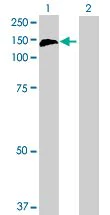
CBL overexpression 293T lysate (whole cell) suitable for WB. View our extensive range of validated lysates from normal and diseased human, mouse and rat tissue.
2 Images
Western blot - CBL overexpression 293T lysate (whole cell) (AB94206)
  • WB

Unknown

Western blot - CBL overexpression 293T lysate (whole cell) (AB94206)

false
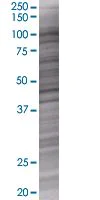
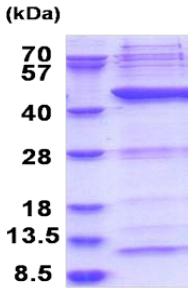
SDS-PAGE - CBL overexpression 293T lysate (whole cell) (AB94206)
  • SDS-PAGE

Unknown

SDS-PAGE - CBL overexpression 293T lysate (whole cell) (AB94206)

ab94206 at 15μg/lane on an SDS-PAGE gel.

Key facts

Cell type

HEK-293T

Species or organism

Human

Form

Liquid

form

Reactivity data

{ "title": "Reactivity Data", "filters": { "stats": ["", "Reactivity", "Dilution Info", "Notes"] }, "values": { "WB": { "reactivity":"TESTED_AND_REACTS", "dilution-info":"", "notes":"<p></p>" } } }

Product details

ab94206 is a 293T cell transfected lysate in which Human CBL has been transiently over-expressed using a pCMV-CBL plasmid. The lysate is provided in 1 x Sample Buffer.

Properties and storage information

Shipped at conditions
Dry Ice
Appropriate short-term storage conditions
-20°C
Appropriate long-term storage conditions
-20°C
Aliquoting information
Upon delivery aliquot
Storage information
Avoid freeze / thaw cycle

Supplementary information

This supplementary information is collated from multiple sources and compiled automatically.

The CBL protein also known as C-cbl or Casitas B-lineage lymphoma proto-oncogene serves as an E3 ubiquitin-protein ligase. This protein with a molecular mass of approximately 120-130 kDa plays a critical role in the regulation of receptor tyrosine kinases. It facilitates the polyubiquitination of activated receptor proteins targeting them for degradation in the proteasome. CBL is predominantly expressed in various tissues including the hematopoietic system. It is a significant component in the control of cell signaling and helps maintain cellular homeostasis.
Biological function summary

The CBL protein acts as a negative regulator for several signaling pathways. It integrates into signaling complexes and modulates the activation of pathways by interacting with other proteins. CBL does not act alone; it commonly forms complexes with proteins such as Grb2 and p85 influencing downstream signaling influence in pathways. This regulation prevents excessive activation of signals that can lead to cellular proliferation or differentiation abnormally.

Pathways

CBL integrates into the ubiquitin-proteasome system and the Ras signaling pathway. Within these pathways CBL works to modulate cell surface receptors ensuring that signaling threshold is not surpassed. The importance of CBL in the Ras signaling pathway is highlighted by its interactions with proteins like Ras-GAP and SHP2. Through these interactions CBL controls the rate of signal transduction affecting cellular responses such as growth survival and motility.

CBL involvement has been linked to several forms of cancer and immune deficiencies. Mutations or dysregulation of the CBL gene can lead to myelodysplastic syndromes and acute myeloid leukemia. In these conditions the interaction between CBL and other proteins such as JAK2 becomes dysregulated driving abnormal cell growth and survival. Furthermore CBL’s failure to properly degrade tyrosine kinase receptors can contribute to enhanced signaling fostering oncogenic processes.

Cell culture

Product protocols

Product promise

We are committed to supporting your work with high-quality reagents, and we're here for you every step of the way. In the unlikely event that one of our products does not perform as expected, you're protected by our Product Promise.
For full details, please see our Terms & Conditions

Please note: All products are 'FOR RESEARCH USE ONLY. NOT FOR USE IN DIAGNOSTIC OR THERAPEUTIC PROCEDURES'.

For licensing inquiries, please contact partnerships@abcam.com