JavaScript is disabled in your browser. Please enable JavaScript to view this website.
AB94068

CXCR6 overexpression 293T lysate (whole cell)

Be the first to review this product! Submit a review

|

(1 Publication)
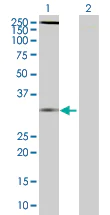
CXCR6 overexpression 293T lysate (whole cell) suitable for WB. View our extensive range of validated lysates from normal and diseased human, mouse and rat tissue.
2 Images
Western blot - CXCR6 overexpression 293T lysate (whole cell) (AB94068)
  • WB

Unknown

Western blot - CXCR6 overexpression 293T lysate (whole cell) (AB94068)

false
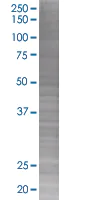
SDS-PAGE - CXCR6 overexpression 293T lysate (whole cell) (AB94068)
  • SDS-PAGE

Unknown

SDS-PAGE - CXCR6 overexpression 293T lysate (whole cell) (AB94068)

ab94068 at 15µg/lane on an SDS-PAGE gel.

Key facts

Cell type

HEK-293T

Species or organism

Human

Form

Liquid

form

Reactivity data

{ "title": "Reactivity Data", "filters": { "stats": ["", "Reactivity", "Dilution Info", "Notes"] }, "values": { "WB": { "reactivity":"TESTED_AND_REACTS", "dilution-info":"", "notes":"<p></p>" } } }

Product details

ab94068 is a 293T cell transfected lysate in which Human Bonzo has been transiently over-expressed using a pCMV-Bonzo plasmid. The lysate is provided in 1X Sample Buffer.

Properties and storage information

Shipped at conditions
Dry Ice
Appropriate short-term storage conditions
-20°C
Appropriate long-term storage conditions
-20°C
Aliquoting information
Upon delivery aliquot
Storage information
Avoid freeze / thaw cycle

Supplementary information

This supplementary information is collated from multiple sources and compiled automatically.

CXCR6 also known as CD186 or BONZO is a chemokine receptor that belongs to the larger family of G protein-coupled receptors. This receptor has a molecular weight of approximately 45 kDa. CXCR6 gets expressed on various leukocytes including T-cells and natural killer cells. This expression profiles CXCR6 as essential in the immune system where its occupation involves directing cell movement via chemotaxis a process integral for normal immune surveillance and inflammatory response.
Biological function summary

CXCR6 critically orchestrates the interactions between T-cells and antigen-presenting cells within tissues. By engaging its ligand CXCL16 CXCR6 helps mediate cell adhesion and migration. This receptor works as part of an immune complex influencing the migration and retention of immune cells at sites of inflammation. The presence of CXCR6 enhances tissue-specific homing which is vital for localized immune responses.

Pathways

CXCR6 plays a significant role in the chemokine signaling pathway. This pathway leads immune cells to sites of inflammation or infection. Moreover CXCR6 interacts closely with other chemokine receptors such as CCR5. These receptor interactions ensure efficient communication and coordination in cell trafficking across immune environments all of which are critical for proper immune function.

CXCR6 has a known association with diseases like HIV and certain forms of cancer. CXCR6 can act as a co-receptor for the entry of some HIV strains into cells linking it to viral pathogenesis. In the context of cancer CXCR6 and its ligand CXCL16 have connections with tumor cell migration and metastasis. The interaction of CXCR6 with proteins like CXCL16 creates a microenvironment that can either suppress or promote tumor progression depending on the context.

Cell culture

Product protocols

Publications (1)

Recent publications for all applications. Explore the full listand refine your search

iScience 27:111038 PubMed39474078

2024

The GDF6-FTO axis modulates the innate immune and inflammatory response to human respiratory syncytial virus.

Applications

Unspecified application

Species

Unspecified reactive species

Zhu Li,Ling Zhang,Yi Liu,Haitao Li,Ling Gong,Xinran Tan,Jiahua Tian,Hang Pi,Bingyao Wang,Yu Zhao,Daishun Liu
View all publications

Product promise

We are committed to supporting your work with high-quality reagents, and we're here for you every step of the way. In the unlikely event that one of our products does not perform as expected, you're protected by our Product Promise.
For full details, please see our Terms & Conditions

Please note: All products are 'FOR RESEARCH USE ONLY. NOT FOR USE IN DIAGNOSTIC OR THERAPEUTIC PROCEDURES'.

For licensing inquiries, please contact partnerships@abcam.com