Exonuclease 1 overexpression 293T lysate (whole cell)
Be the first to review this product! Submit a review
|
(0 Publication)
Exonuclease 1 overexpression 293T lysate (whole cell) suitable for WB. View our extensive range of validated lysates from normal and diseased human, mouse and rat tissue.
View Alternative Names
EXO1_HUMAN, ExoI, Exonuclease 1, Exonuclease I, HEX1, Rad2 nuclease family member homolog of S. cerevisiae exonuclease 1, hExo I, hExo1
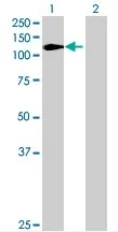
- WB
Unknown
Western blot - Exonuclease 1 overexpression 293T lysate (whole cell) (AB94309)
false
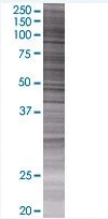
- SDS-PAGE
Unknown
SDS-PAGE - Exonuclease 1 overexpression 293T lysate (whole cell) (AB94309)
ab94309 at 15μg/lane on an SDS-PAGE gel.
Complementary Products
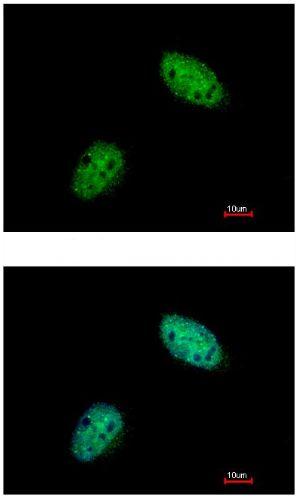
Reactivity data
Product details
Properties and storage information
Shipped at conditions
Appropriate short-term storage conditions
Appropriate long-term storage conditions
Aliquoting information
Storage information
Supplementary information
This supplementary information is collated from multiple sources and compiled automatically.
Biological function summary
Exo1 is key in maintaining genomic stability. This protein engages in homologous recombination mismatch repair and the resection process during DNA double-strand break repair. Exo1 works collaboratively as part of larger complexes particularly interacting with proteins like MRE11-RAD50-NBS1 (MRN) complex in DNA repair mechanisms. The interaction within these complexes enhances its efficacy in processing DNA ends and facilitates accurate repair.
Pathways
Exo1 is integral to the DNA repair and homologous recombination pathways. In the DNA repair pathway Exo1 functions in conjunction with proteins such as MutL homologs and DNA polymerases ensuring proper mismatch repair by creating single-strand gaps. Through homologous recombination Exo1 links with proteins such as BRCA1 and RAD51 facilitating the repair of double-strand breaks by processing the DNA ends to allow strand invasion and exchange steps of recombination.
Cell culture
Product promise
Please note: All products are 'FOR RESEARCH USE ONLY. NOT FOR USE IN DIAGNOSTIC OR THERAPEUTIC PROCEDURES'.
For licensing inquiries, please contact partnerships@abcam.com