Granzyme B overexpression 293T lysate (whole cell)
Be the first to review this product! Submit a review
|
(0 Publication)
- WB
Ap
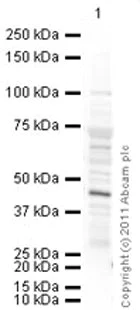
Western blot - Granzyme B overexpression 293T lysate (whole cell) (AB94040)
All lanes:
Western blot - Anti-ATP1B1 antibody [464.8] (<a href='/en-us/products/primary-antibodies/atp1b1-antibody-4648-ab8344'>ab8344</a>) at 1/500 dilution
All lanes:
Human kidney tissue lysate - total protein (<a href='/en-us/products/unavailable/human-kidney-tissue-lysate-total-protein-ab30203'>ab30203</a>) at 20 µg
Predicted band size: 35 kDa
Observed band size: 45 kDa
true
Exposure time: 4min
- WB
Unknown
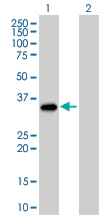
Western blot - Granzyme B overexpression 293T lysate (whole cell) (AB94040)
false
- SDS-PAGE
Unknown
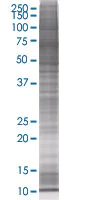
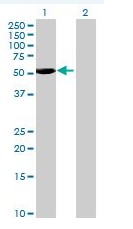
SDS-PAGE - Granzyme B overexpression 293T lysate (whole cell) (AB94040)
ab94040 at 15µg/lane on an SDS-PAGE gel.
Complementary Products
Primary Antibodies
AB1101
BOND RX™ Validated|KO Validated|Lab Essentials
- 4
- 14
Primary Antibodies
AB32147
RabMAb|Recombinant|KO Validated|20ul selling size

- 5
- 8
Primary Antibodies
AB33911
Anti-Cyclin E1 antibody [EP435E]
20ul selling size|BOND RX™ Validated|KO Validated|RabMAb|Recombinant

- 4
- 8
Reactivity data
Product details
Properties and storage information
Shipped at conditions
Appropriate short-term storage conditions
Appropriate long-term storage conditions
Aliquoting information
Storage information
Supplementary information
This supplementary information is collated from multiple sources and compiled automatically.
Biological function summary
Granzyme B participates prominently in the immune response by activating caspases particularly caspase-3 which promotes the breakdown of cellular components necessary for apoptosis. Granzyme B does not function in isolation but acts in concert with other immune system factors such as perforin to effectively induce cell death. Perforin creates pores in the target cell membrane allowing granzyme B to enter and instigate the apoptosis sequence. The enzyme also contributes to the processing of cytokines which enhances the immune response further.
Pathways
Studies have determined that granzyme B is critical in the apoptosis pathway particularly in the granule exocytosis pathway. It closely interacts with proteins such as perforin and other granzymes to mediate apoptosis in target cells. Granzyme B also plays a role in the inflammatory response and can influence pathways associated with cytotoxic T cell signaling. Its pathway interactions ensure effective elimination of damaged or infected cells maintaining tissue homeostasis.
Cell culture
Product promise
Please note: All products are 'FOR RESEARCH USE ONLY. NOT FOR USE IN DIAGNOSTIC OR THERAPEUTIC PROCEDURES'.
For licensing inquiries, please contact partnerships@abcam.com