Human COMP ELISA Kit
5
(2 Reviews)
|
(1 Publication)
- sELISA
Supplier Data
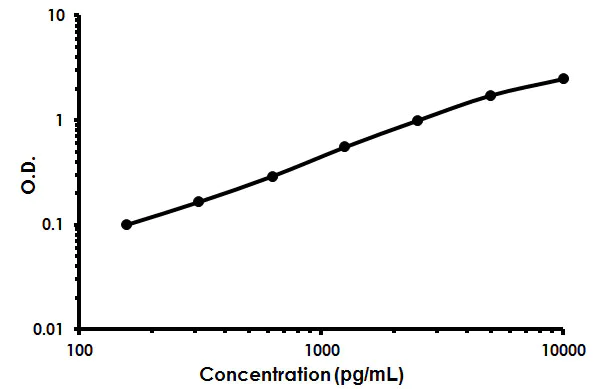
Sandwich ELISA - Human COMP ELISA Kit (AB213764)
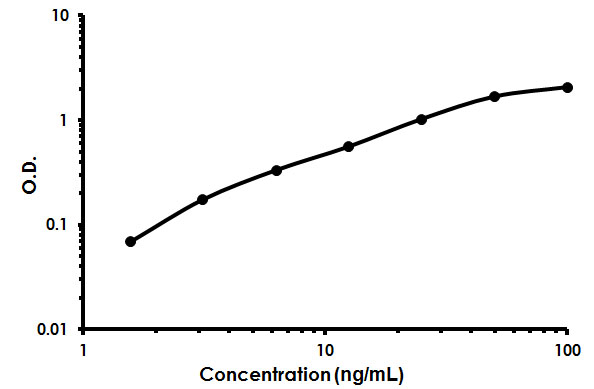
Human COMP ELISA Kit (ab213764) Standard Curve.
Complementary Products
Reactivity data
Product details
The Human COMP Enzyme-Linked Immunosorbent Assay (ELISA) kit (ab213764) is designed for the quantitative measurement of Human COMP in cell culture supernatants, cell lysates, tissue homogenates, serum and plasma (heparin, EDTA).
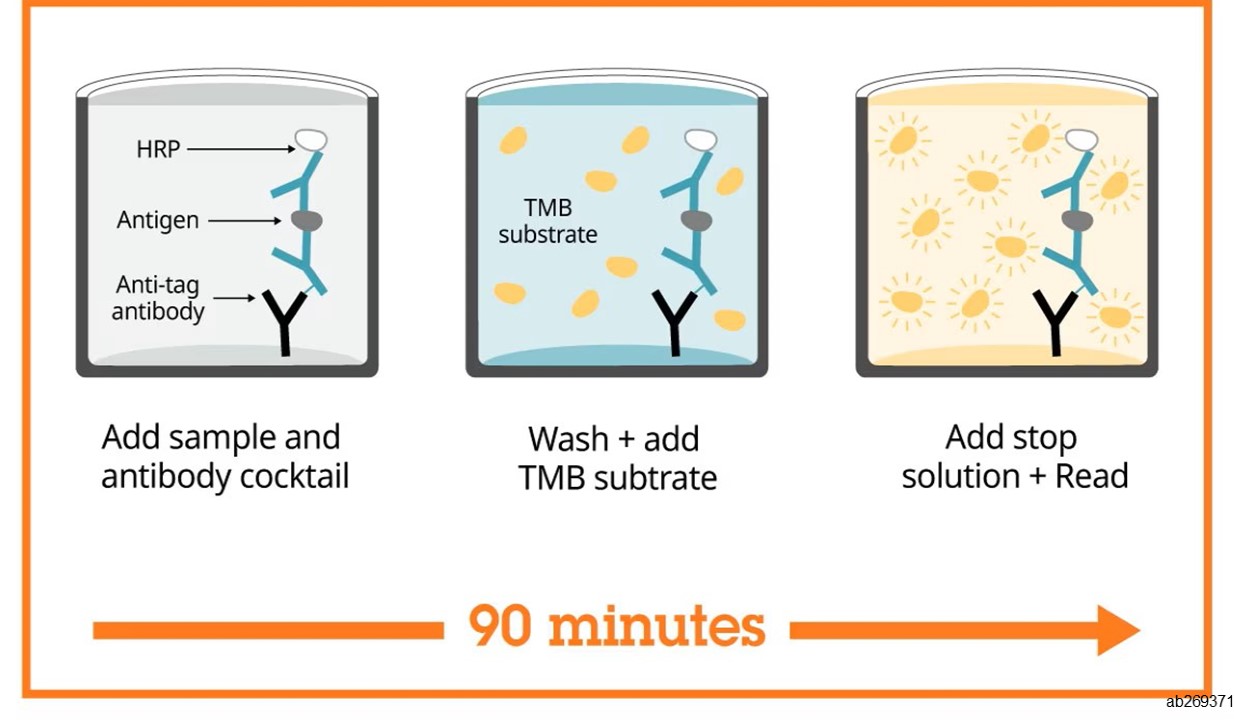
The ELISA kit is based on standard sandwich enzyme-linked immunosorbent assay technology. A polyclonal antibody from goat specific for COMP has been pre-coated onto 96-well plates. Standards (Expression system for standard: NSO; Immunogen sequence: Q21-A757) and test samples are added to the wells, a biotinylated detection polyclonal antibody from goat specific for COMP is added subsequently and then followed by washing with PBS or TBS buffer. Avidin-Biotin-Peroxidase Complex is added and unbound conjugates are washed away with PBS or TBS buffer. HRP substrate TMB is used to visualize HRP enzymatic reaction. TMB is catalyzed by HRP to produce a blue color product that changed into yellow after adding acidic stop solution. The density of yellow is proportional to the Human COMP amount of sample captured in plate.
Cartilage oligomeric matrix protein is a protein that in humans is encoded by the COMP gene. The sequences of rat and bovine COMP indicate that it is a member of the thrombospondin gene family. By Southern blot analysis of a somatic cell hybrid DNA panel and by isotopic in situ hybridization, human COMP gene was mapped to 19p13.1, and the murine COMP gene was mapped to the central region of mouse chromosome 8 by use of an interspecific backcross mapping panel. COMP is a marker of cartilage turnover.
Precision & recovery information
Precision
[ { "reproducibilityType": "Inter", "sample": "Sample 1", "replicates": 24, "mean": "1.13 ng/mL", "standardDeviation": "0.07", "coefficientOfVariability": "6.2" }, { "reproducibilityType": "Inter", "sample": "Sample 2", "replicates": 24, "mean": "3.08 ng/mL", "standardDeviation": "0.166", "coefficientOfVariability": "5.4" }, { "reproducibilityType": "Inter", "sample": "Sample 3", "replicates": 24, "mean": "6.23 ng/mL", "standardDeviation": "0.324", "coefficientOfVariability": "5.2" }, { "reproducibilityType": "Intra", "sample": "Sample 1", "replicates": 16, "mean": "1.02 ng/mL", "standardDeviation": "0.052", "coefficientOfVariability": "5.1" }, { "reproducibilityType": "Intra", "sample": "Sample 2", "replicates": 16, "mean": "3.12 ng/mL", "standardDeviation": "0.131", "coefficientOfVariability": "4.2" }, { "reproducibilityType": "Intra", "sample": "Sample 3", "replicates": 16, "mean": "6.19 ng/mL", "standardDeviation": "0.254", "coefficientOfVariability": "4.1" } ]
What's included?
Properties and storage information
Shipped at conditions
Appropriate short-term storage conditions
Appropriate long-term storage conditions
Storage information
Supplementary information
This supplementary information is collated from multiple sources and compiled automatically.
Biological function summary
COMP interacts with other extracellular matrix components to enhance structural integrity and function of cartilage tissue. It performs significant roles in the organization and maintenance of the matrix tethering fibrillar proteins and supporting cellular interaction. COMP is not typically part of a large complex but works closely with collagens and other matrix proteins to form a robust and flexible extracellular environment.
Pathways
COMP participates in pathways associated with cartilage formation and turnover. It engages in chondrocyte-mediated processes that are vital for endochondral ossification and cartilage repair. Within these pathways it interacts with proteins such as collagen type II and decorin which facilitate the organization and mineralization of cartilage matrix. These interactions highlight the protein's importance in maintaining cartilage architecture and function.
Product protocols
- Visit the General protocols
- Visit the Troubleshooting
- Download websiteProtocolBooklet|en
Target data
Alternative Names
Publications (1)
Recent publications for all applications. Explore the full listand refine your search
Frontiers in molecular biosciences 11:1252058 PubMed38584705
2024
Applications
Unspecified application
Species
Unspecified reactive species
Product promise
Please note: All products are 'FOR RESEARCH USE ONLY. NOT FOR USE IN DIAGNOSTIC OR THERAPEUTIC PROCEDURES'.
For licensing inquiries, please contact partnerships@abcam.com