JavaScript is disabled in your browser. Please enable JavaScript to view this website.
AB277395

Human GLP-1 ELISA Kit

Be the first to review this product! Submit a review

|

(1 Publication)

Human GLP-1 ELISA Kit is a Sandwich ELISA for the measurement of Human GLP-1 in Human in Biofluids, Cell Culture Media samples.
1 Images
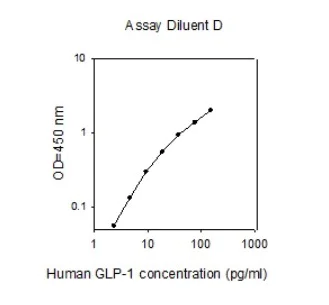
ELISA - Human GLP-1 ELISA Kit (AB277395)
  • ELISA

Supplier Data

ELISA - Human GLP-1 ELISA Kit (AB277395)

These standard curves are for demonstration only. A standard curve must be run with each assay.

Key facts

Detection method

Colorimetric

Sample types

Plasma, Cell culture supernatant, Serum

Reacts with

Human

Assay type

Sandwich

Results type

Quantitative

Sensitivity

= 2.3 pg/mL

Range

2.34 - 150 pg/mL

Assay Platform

Pre-coated microplate (12 x 8 well strips)

Reactivity data

{ "title": "Reactivity Data", "filters": { "stats": ["", "Reactivity", "Dilution Info", "Notes"] }, "values": { "sELISA": { "reactivity":"TESTED_AND_REACTS", "dilution-info":"", "notes":"<p></p>" } } }

Product details

Human GLP1 ELISA Kit (ab277395) is an in-vitro enzyme-linked immunosorbent assay for the quantitative measurement of Human GLP1 in serum, plasma and cell culture supernatants.

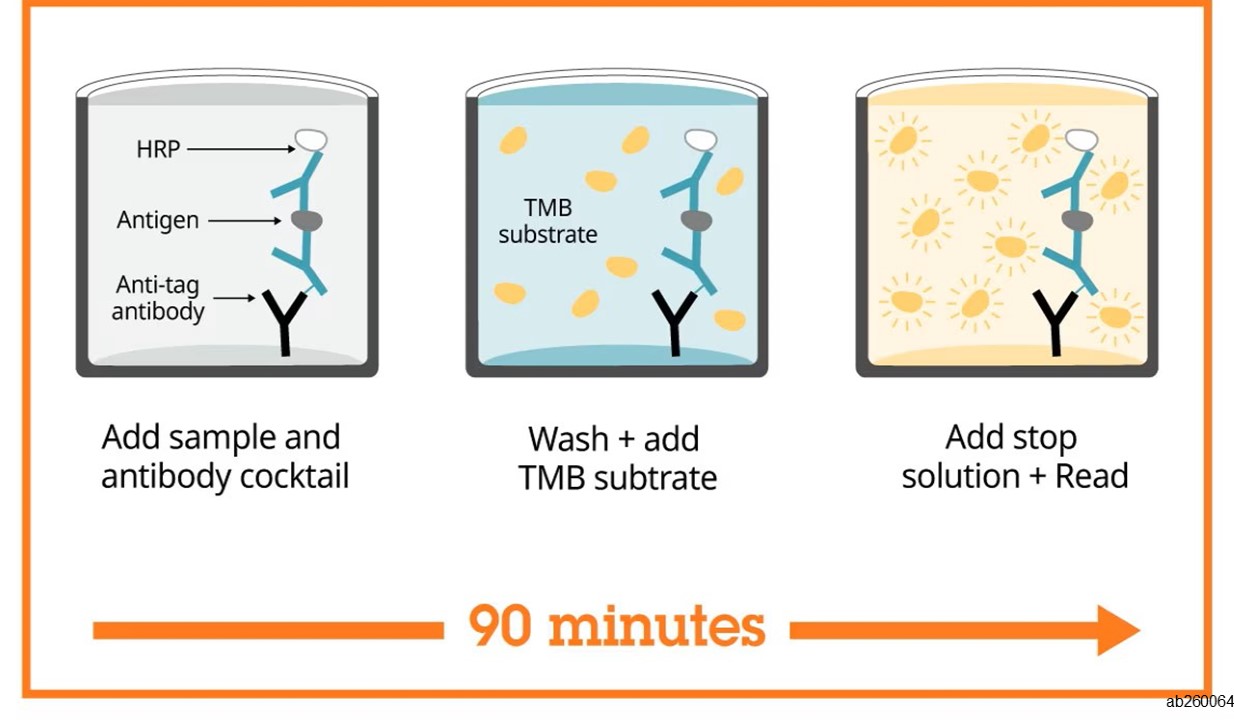
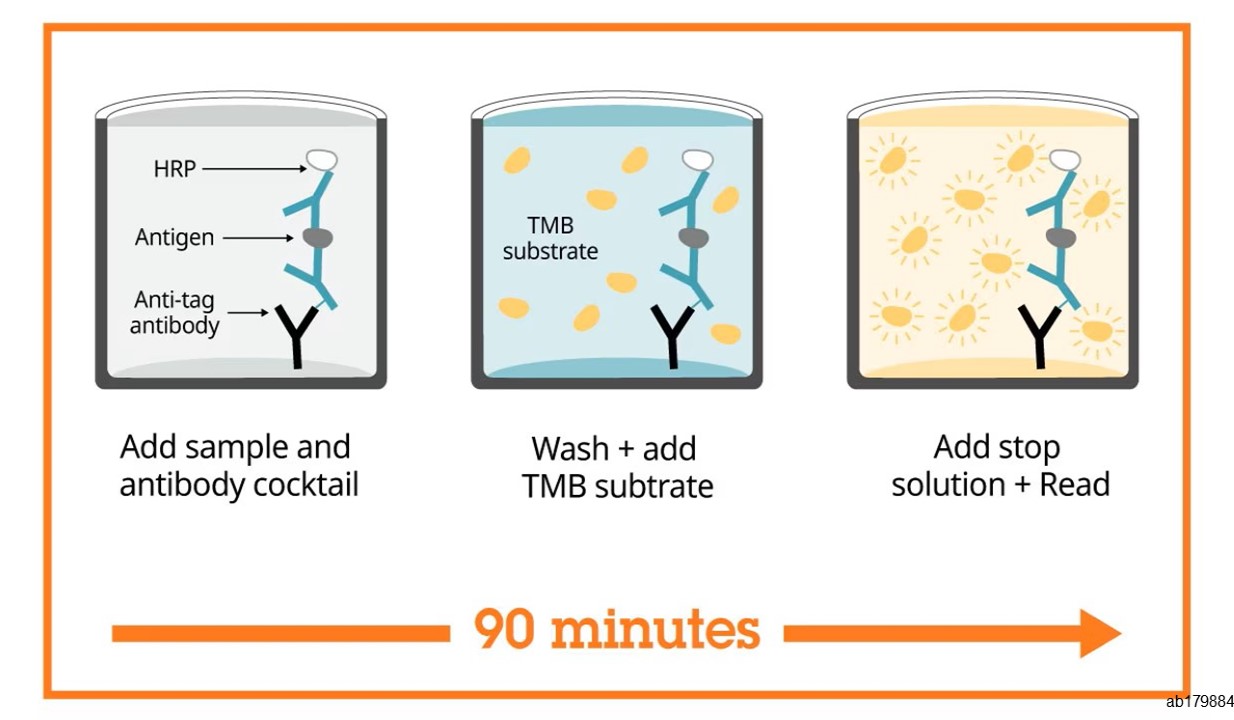
This assay employs an antibody specific for Human GLP1 coated on a 96-well plate. Standards and samples are pipetted into the wells and Human GLP1 present in a sample is bound to the wells by the immobilized antibody. The wells are washed, and biotinylated anti-Human GLP1 antibody is added. After washing away unbound biotinylated antibody, HRP-conjugated streptavidin is pipetted to the wells. The wells are again washed, a TMB substrate solution is added to the wells and color develops in proportion to the amount of Human GLP1 bound. The Stop Solution changes the color from blue to yellow, and the intensity of the color is measured at 450 nm.

Precision & recovery information

Precision

[ { "reproducibilityType": "Inter", "sample": "Overall", "replicates": 0, "mean": null, "standardDeviation": null, "coefficientOfVariability": "< 12" }, { "reproducibilityType": "Intra", "sample": "Overall", "replicates": 0, "mean": null, "standardDeviation": null, "coefficientOfVariability": "< 10" } ]

Recovery

[ { "sample": "Serum", "range": "83 - 134 %", "average": "= 102.8" }, { "sample": "Plasma", "range": "83 - 144 %", "average": "= 109.5" }, { "sample": "Cell culture media", "range": "83 - 146 %", "average": "= 105.7" } ]

What's included?

{ "values": { "1x96Tests": { "sellingSize": "1 x 96 Tests", "publicAssetCode":"ab277395-1x96Tests", "assetComponentDetails": [ { "size":"1 x 15 mL", "name":"5X Assay Diluent B", "number":"AB277395-CMP05", "productcode":"" }, { "size":"1 x 12 mL", "name":"TMB One-Step Substrate Reagent", "number":"AB277395-CMP08", "productcode":"" }, { "size":"1 x 15 mL", "name":"5X Assay Diluent D", "number":"AB277395-CMP06", "productcode":"" }, { "size":"1 x 1 Unit", "name":"Anti-Human GLP1 coated Microplate", "number":"AB277395-CMP04", "productcode":"" }, { "size":"1 x 25 mL", "name":"20X Wash Buffer", "number":"AB277395-CMP02", "productcode":"" }, { "size":"1 x 8 mL", "name":"Stop Solution", "number":"AB277395-CMP07", "productcode":"" }, { "size":"2 x 1 Vial", "name":"Human GLP1 standard protein (Lyophilized)", "number":"AB277395-CMP01", "productcode":"" }, { "size":"2 x 1 Vial", "name":"Biotinylated Anti-Human GLP1 Antibody", "number":"AB277395-CMP09", "productcode":"" }, { "size":"1 x 200 µL", "name":"400X HRP-Streptavidin Concentrate", "number":"AB277395-CMP03", "productcode":"" } ] } } }

Properties and storage information

Shipped at conditions
Blue Ice
Appropriate short-term storage conditions
-20°C
Appropriate long-term storage conditions
-20°C
Storage information
-20°C

Supplementary information

This supplementary information is collated from multiple sources and compiled automatically.

GLP-1 also known as glucagon-like peptide-1 is a 30 or 31 amino acid peptide with a mass of approximately 3.3 kDa. This peptide is mainly secreted by intestinal L-cells and the CNS. It enhances the secretion of insulin in response to glucose making it an important regulator of blood sugar levels. GLP-1 is degraded by dipeptidyl peptidase-4 which rapidly reduces its activity. Researchers often target GLP-1 in studies aimed at understanding metabolic processes and developing therapeutic interventions.
Biological function summary

GLP-1 influences several physiological functions by acting on its receptor GLP-1R a G-protein coupled receptor. It is not part of a complex but exerts its effects through binding to this receptor. Activation of GLP-1R promotes insulin secretion suppresses glucagon release slows gastric emptying and promotes satiety. This makes GLP-1 an important regulator in energy homeostasis and nutrient absorption. Its effects on appetite and food intake are of particular interest in obesity research.

Pathways

GLP-1 is an essential component of the incretin pathway which regulates insulin secretion in response to food intake. The interaction between GLP-1 and the GLP-1 receptor activates the adenylate cyclase pathway leading to increased cAMP and PKA signaling in pancreatic beta-cells. This chain of events enhances the insulin-secreting ability of these cells. Furthermore GLP-1 has connections with proteins such as insulin and glucagon through its regulatory functions in glucose metabolism.

GLP-1 is highly relevant to type 2 diabetes and obesity. Its ability to enhance insulin secretion and promote weight loss has made it a target for drug development in the treatment of these conditions. Antidiabetic medications including GLP-1 receptor agonists exploit this mechanism to control blood sugar levels effectively. Additionally GLP-1's connection to insulin makes it a significant focus in diabetes research as imbalances in these proteins contribute to the disease pathology.

Product protocols

Target data

Glucagon. Plays a key role in glucose metabolism and homeostasis. Regulates blood glucose by increasing gluconeogenesis and decreasing glycolysis. A counterregulatory hormone of insulin, raises plasma glucose levels in response to insulin-induced hypoglycemia. Plays an important role in initiating and maintaining hyperglycemic conditions in diabetes. Binds to and activates the glucagon receptor GCGR, which couples to the G(s) G protein and elevates intracellular cAMP, triggering downstream metabolic responses (PubMed : 32193322).. Glucagon-like peptide 1. Potent stimulator of glucose-dependent insulin release (PubMed : 22037645, PubMed : 40446798). Also stimulates insulin release in response to IL6 (PubMed : 22037645). Plays important roles on gastric motility and the suppression of plasma glucagon levels (PubMed : 10605628, PubMed : 14719035, PubMed : 12554744). May be involved in the suppression of satiety and stimulation of glucose disposal in peripheral tissues, independent of the actions of insulin (PubMed : 10605628, PubMed : 14719035, PubMed : 12554744). Has growth-promoting activities on intestinal epithelium (PubMed : 10605628, PubMed : 14719035, PubMed : 12554744). May also regulate the hypothalamic pituitary axis (HPA) via effects on LH, TSH, CRH, oxytocin, and vasopressin secretion (PubMed : 10605628, PubMed : 14719035, PubMed : 12554744). Increases islet mass through stimulation of islet neogenesis and pancreatic beta cell proliferation (PubMed : 10605628, PubMed : 14719035, PubMed : 12554744). Inhibits beta cell apoptosis (PubMed : 10605628, PubMed : 14719035, PubMed : 12554744).. Glucagon-like peptide 2. Stimulates intestinal growth and up-regulates villus height in the small intestine, concomitant with increased crypt cell proliferation and decreased enterocyte apoptosis. The gastrointestinal tract, from the stomach to the colon is the principal target for GLP-2 action. Plays a key role in nutrient homeostasis, enhancing nutrient assimilation through enhanced gastrointestinal function, as well as increasing nutrient disposal. Stimulates intestinal glucose transport and decreases mucosal permeability.. Oxyntomodulin. Significantly reduces food intake. Inhibits gastric emptying in humans. Suppression of gastric emptying may lead to increased gastric distension, which may contribute to satiety by causing a sensation of fullness.. Glicentin. May modulate gastric acid secretion and the gastro-pyloro-duodenal activity. May play an important role in intestinal mucosal growth in the early period of life.
See full target information GCG

Alternative Names

Pro-glucagon, GCG

Publications (1)

Recent publications for all applications. Explore the full listand refine your search

Journal of biochemical and molecular toxicology 37:e23258 PubMed36424357

2022

GLP-1 rescued gestational diabetes mellitus-induced suppression of fetal thalamus development.

Applications

Unspecified application

Species

Unspecified reactive species

Longfei You,Yujie Deng,Dan Li,Yangyang Lin,Yuling Wang
View all publications
websiteProtocolBooklet
en

Product promise

We are committed to supporting your work with high-quality reagents, and we're here for you every step of the way. In the unlikely event that one of our products does not perform as expected, you're protected by our Product Promise.
For full details, please see our Terms & Conditions

Please note: All products are 'FOR RESEARCH USE ONLY. NOT FOR USE IN DIAGNOSTIC OR THERAPEUTIC PROCEDURES'.

For licensing inquiries, please contact partnerships@abcam.com