JavaScript is disabled in your browser. Please enable JavaScript to view this website.
AB100618

Human Osteopontin ELISA Kit

Be the first to review this product! Submit a review

|

(15 Publications )

Human Osteopontin ELISA Kit is a sandwich ELISA designed to quantify Human Osteopontin with a sensitivity of 50 pg/mL.

- Colorimetric sandwich ELISA - 450 nm readout - works on any plate reader
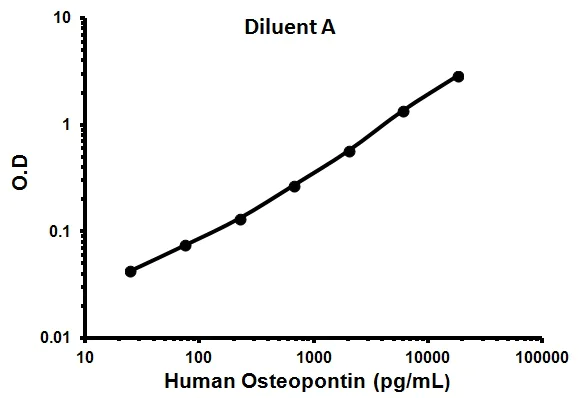
- Wide dynamic range - quantifies 74.07 - 18000 pg/mL
- Cited in over 10 publications
3 Images
Sandwich ELISA - Human Osteopontin ELISA Kit (AB100618)
  • sELISA

Supplier Data

Sandwich ELISA - Human Osteopontin ELISA Kit (AB100618)

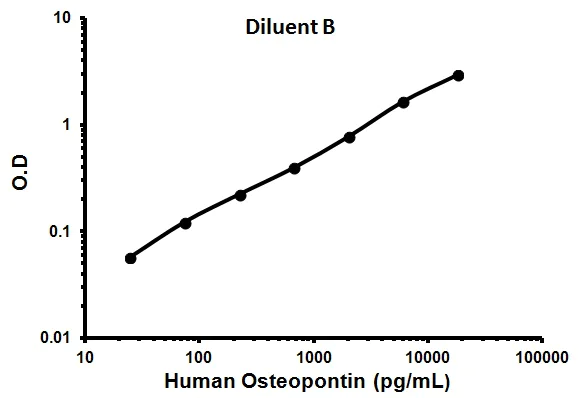
Representative Standard Curve using ab100618.
Sandwich ELISA - Human Osteopontin ELISA Kit (AB100618)
  • sELISA

Supplier Data

Sandwich ELISA - Human Osteopontin ELISA Kit (AB100618)

Representative Standard Curve using ab100618.
Sandwich ELISA - Human Osteopontin ELISA Kit (AB100618)
  • sELISA

Lab

Sandwich ELISA - Human Osteopontin ELISA Kit (AB100618)

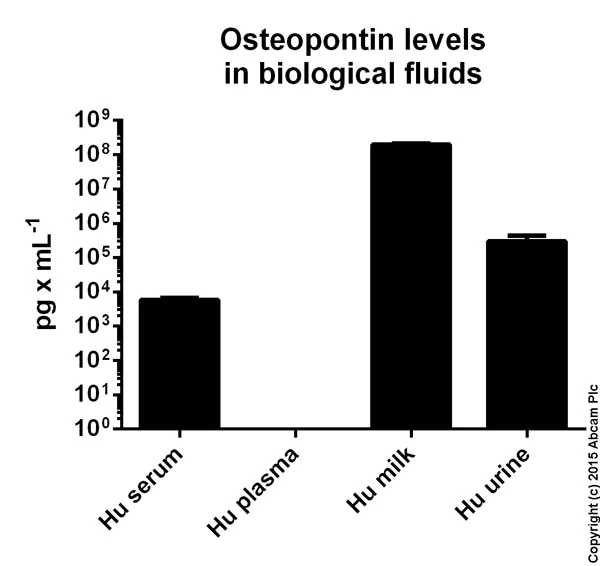
Osteopontin measured in biological fluids showing quantity (pg) per mL of tested sample. Human serum diluted 10-30 fold. Human plasma diluted 50 fold - below detection. Human milk diluted 18000-54000 fold. Human urine diluted 100 fold.

Key facts

Detection method

Colorimetric

Sample types

Urine, Plasma, Cell culture supernatant, Milk, Serum

Reacts with

Human

Assay type

Sandwich

Results type

Quantitative

Sensitivity

< 50 pg/mL

Range

74.07 - 18000 pg/mL

Assay Platform

Microplate

Reactivity data

{ "title": "Reactivity Data", "filters": { "stats": ["", "Reactivity", "Dilution Info", "Notes"] }, "values": { "sELISA": { "reactivity":"TESTED_AND_REACTS", "dilution-info":"", "notes":"<p></p>" } } }

Product details

Human Osteopontin ELISA Kit ab100618 is a sandwich ELISA to measure Human Osteopontin in serum, plasma, cell culture supernatant, urine, milk with a sensitivity of 50 pg/ml.

How the assay works

This assay employs an antibody specific for Human Osteopontin coated on a 96-well plate. Standards and samples are pipetted into the wells and Osteopontin present in a sample is bound to the wells by the immobilized antibody. The wells are washed and biotinylated anti-Human Osteopontin antibody is added. After washing away unbound biotinylated antibody, HRP-conjugated streptavidin is pipetted to the wells. The wells are again washed, a TMB substrate solution is added to the wells and color develops in proportion to the amount of Osteopontin bound. The Stop Solution changes the color from blue to yellow, and the intensity of the color is measured at 450 nm.

Assay Specificity

Our ELISA kits are rigorously validated to ensure the highest level of consistency and reproducibility. Please check the protocol booklet for more details

Human Osteopontin ELISA Kit ab100618 protocol summary

1. Add standard or sample to each well used. Incubate at room temperature
2. Wash and add prepared biotinylated antibody to each well. Incubate at room temperature.
3. Wash and add prepared streptavidin solution. Incubate at room temperature.
4. Add TMB Development Solution to each well. Incubate at room temperature.
5. Add Stop Solution to each well. Read at 450nm immediately.

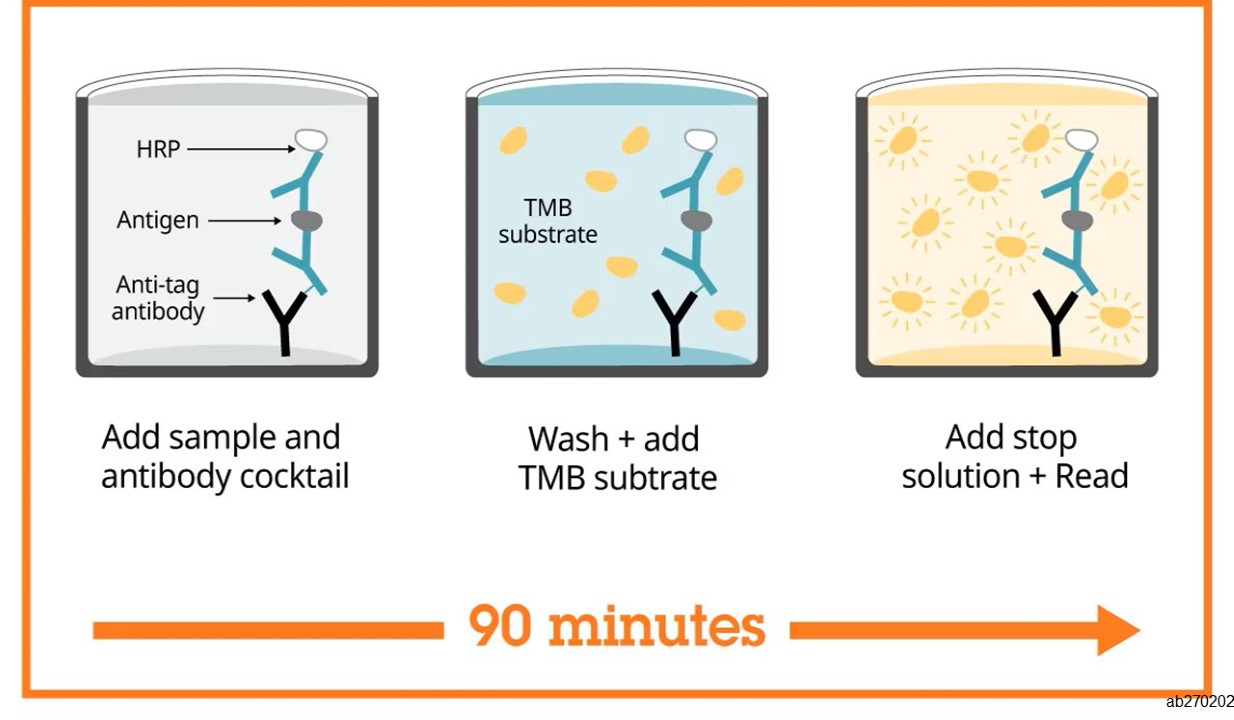
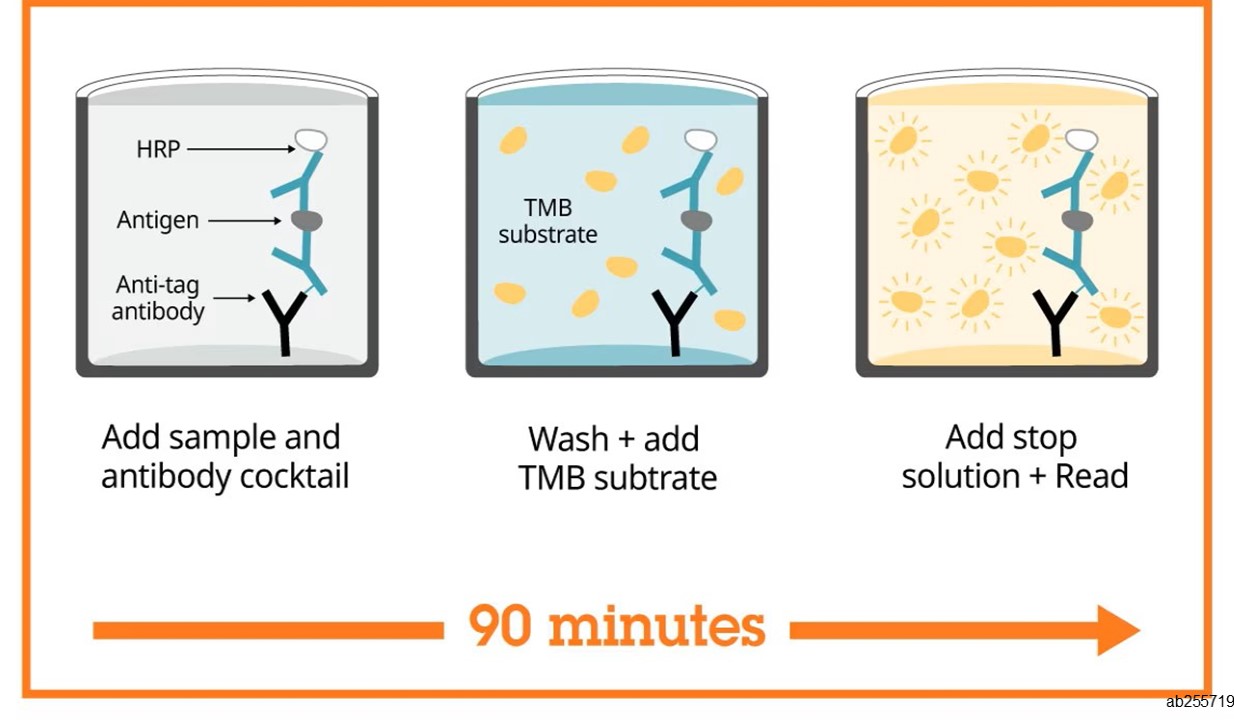
Get results in 90 minutes with our SimpleStep ELISA® kit

Human Osteopontin ELISA Kit (ab192143)

Optimization may be required with urine samples

Precision & recovery information

Recovery

[ { "sample": "Cell culture supernatant", "range": "95 - 118 %", "average": "= 103.5" }, { "sample": "Serum", "range": "88 - 108 %", "average": "= 89.92" }, { "sample": "Plasma", "range": "90 - 109 %", "average": "= 92.41" } ]

What's included?

{ "values": { "1x96Tests": { "sellingSize": "1 x 96 Tests", "publicAssetCode":"ab100618-1x96Tests", "assetComponentDetails": [ { "size":"1 x 15 mL", "name":"5X Assay Diluent B", "number":"AB100618-CMP07", "productcode":"" }, { "size":"1 x 12 mL", "name":"TMB One-Step Substrate Reagent", "number":"AB100618-CMP09", "productcode":"" }, { "size":"1 x 30 mL", "name":"Assay Diluent A", "number":"AB100618-CMP06", "productcode":"" }, { "size":"1 x 1 Unit", "name":"Osteopontin Microplate (12 x 8 wells)", "number":"AB100618-CMP01", "productcode":"" }, { "size":"1 x 25 mL", "name":"20X Wash Buffer", "number":"AB100618-CMP04", "productcode":"" }, { "size":"1 x 8 mL", "name":"Stop Solution", "number":"AB100618-CMP08", "productcode":"" }, { "size":"2 x 1 Vial", "name":"Biotinylated anti-Human Osteopontin", "number":"AB100618-CMP03", "productcode":"" }, { "size":"2 x 1 Vial", "name":"Recombinant Human Osteopontin Standard (lyophilized)", "number":"AB100618-CMP02", "productcode":"" }, { "size":"1 x 200 µL", "name":"500X HRP-Streptavidin Concentrate", "number":"AB100618-CMP05", "productcode":"" } ] } } }

Properties and storage information

Shipped at conditions
Blue Ice
Appropriate short-term storage conditions
-20°C
Appropriate long-term storage conditions
-20°C
Storage information
-20°C

Supplementary information

This supplementary information is collated from multiple sources and compiled automatically.

Osteopontin also known as OPN or secreted phosphoprotein 1 (SPP1) is a glycoprotein with a molecular weight of approximately 44 to 75 kDa depending on its post-translational modifications. Osteopontin is characteristically expressed in bone but is also present in various body tissues including kidney liver and immune system cells. This multifunctional protein interacts with cell surface receptors such as integrins and CD44 playing an important role in cell signaling and extracellular matrix interactions. Researchers often study it using osteopontin western blot or osteopontin ELISA kit to understand its expression patterns and roles.
Biological function summary

Osteopontin affects cell adhesion migration and survival. It does not form part of a known large complex but interacts closely with its integrin receptors. Osteopontin modulates immune responses and aids in bone remodeling by affecting osteoclast and osteoblast functions. It is also influential in inflammation processes where it orchestrates the recruitment and activation of macrophages. The osteopontin function is significant in both physiological processes and pathologies marking it as an important protein to study in numerous biological contexts.

Pathways

Osteopontin is integral to both the bone remodeling and immune response pathways. It collaborates with proteins like osteocalcin and matrix metalloproteinases within these processes. In the bone remodeling pathway osteopontin mediates communication between osteoclasts and osteoblasts impacting bone resorption and formation. In the immune response pathway it coordinates with cytokines such as interleukin-6 to modulate immune cell activities. Its roles in these pathways indicate its multifunctional nature and its impact across different biological systems.

Osteopontin links to cancer and cardiovascular diseases. It facilitates tumor progression and metastasis by interacting with proteins such as vascular endothelial growth factor (VEGF) and matrix metalloproteinase-9 (MMP-9). In cardiovascular diseases osteopontin influences atherosclerosis development through interactions with inflammatory cytokines and contributes to plaque stability. These disease associations highlight the importance of osteopontin as both a therapeutic target and a biomarker for disease progression and prognosis.

Product protocols

Target data

Major non-collagenous bone protein that binds tightly to hydroxyapatite. Appears to form an integral part of the mineralized matrix. Probably important to cell-matrix interaction.. Acts as a cytokine involved in enhancing production of interferon-gamma and interleukin-12 and reducing production of interleukin-10 and is essential in the pathway that leads to type I immunity.
See full target information SPP1

Alternative Names

BNSP, OPN, PSEC0156, SPP1, Osteopontin, Bone sialoprotein 1, Nephropontin, Secreted phosphoprotein 1, Urinary stone protein, Uropontin, SPP-1

Publications (15)

Recent publications for all applications. Explore the full listand refine your search

Materials (Basel, Switzerland) 15: PubMed35955174

2022

Evaluation of the Biocompatibility and Osteogenic Properties of Metal Oxide Coatings Applied by Magnetron Sputtering as Potential Biofunctional Surface Modifications for Orthopedic Implants.

Applications

Unspecified application

Species

Unspecified reactive species

Mariana Fernández-Lizárraga,Julieta García-López,Sandra E Rodil,Rosa María Ribas-Aparicio,Phaedra Silva-Bermudez

International journal of general medicine 15:4433-4440 PubMed35509601

2022

Determinant of Osteopontin Levels in Microvascular Complications in Patients with Diabetes.

Applications

Unspecified application

Species

Unspecified reactive species

Shaik Sarfaraz Nawaz,Khalid Siddiqui,Muhammad Mujammami,Obeed Alotaibi,Saud Sulaiman Alanazi,Mohamed Rafiullah

Experimental and therapeutic medicine 22:928 PubMed34306197

2021

Relationship between miRNA-433 and SPP1 in the presence of fracture and traumatic brain injury.

Applications

Unspecified application

Species

Unspecified reactive species

Zhen Han,Feng Shi,Ya Chen,Xiaoqing Dong,Bo Zhang,Meng Li

Diagnostics (Basel, Switzerland) 11: PubMed34206615

2021

A Novel Combination of Blood Biomarkers and Clinical Stroke Scales Facilitates Detection of Large Vessel Occlusion Ischemic Strokes.

Applications

Unspecified application

Species

Unspecified reactive species

Edoardo Gaude,Barbara Nogueira,Marcos Ladreda Mochales,Sheila Graham,Sarah Smith,Lisa Shaw,Sara Graziadio,Gonzalo Ladreda Mochales,Philip Sloan,Joshua D Bernstock,Shashank Shekhar,Toby I Gropen,Christopher I Price

Frontiers in medicine 8:671798 PubMed34124100

2021

Sphingomyelin and Medullary Sponge Kidney Disease: A Biological Link Identified by Omics Approach.

Applications

Unspecified application

Species

Unspecified reactive species

Simona Granata,Maurizio Bruschi,Michela Deiana,Andrea Petretto,Gianmarco Lombardi,Alberto Verlato,Rossella Elia,Giovanni Candiano,Giovanni Malerba,Giovanni Gambaro,Gianluigi Zaza

PloS one 14:e0222006 PubMed31490977

2019

Dextranol: An inert xeroprotectant.

Applications

Unspecified application

Species

Unspecified reactive species

Bryan J Jones,Advitiya Mahajan,Alptekin Aksan

Cureus 11:e4791 PubMed31384515

2019

Evaluation of Bone Metabolism Biomarkers in Paget's Disease of Bone.

Applications

Unspecified application

Species

Unspecified reactive species

Glaucio R Werner de Castro,Ziliani Da Silva Buss,Julia Salvan Rosa,Bruno M Facchin,Tania S Fröde

FASEB journal : official publication of the Federa 33:7236-7251 PubMed30893567

2019

Osteopontin plays important roles in pulmonary arterial hypertension induced by systemic-to-pulmonary shunt.

Applications

Unspecified application

Species

Unspecified reactive species

Liukun Meng,Xiaoyan Liu,Xiao Teng,Haiyong Gu,Wen Yuan,Jian Meng,Jun Li,Zhe Zheng,Yingjie Wei,Shengshou Hu

Experimental and therapeutic medicine 15:2681-2687 PubMed29467860

2018

Roles of microRNA-539 and osteopontin in rheumatoid arthritis.

Applications

Unspecified application

Species

Unspecified reactive species

Yan Liu,Kai Qian,Chunmei Li,Yi Ma,Xingguo Chen

Journal of clinical and diagnostic research : JCDR 10:BC06-8 PubMed27656430

2016

Association of Salivary Osteopontin Levels with Glycaemic Status and Microalbuminuria - in Patients with Type 2 Diabetes Mellitus.

Applications

Unspecified application

Species

Unspecified reactive species

Niranjan Gopal,Reeta Rajagambeeram,Shruthi Venkatkumar,Mohana Valli Vijayan,Sathish Babu Murugaiyan,Shyam Prakash Gopal,Sathiya Ramsamy,Velayutharaj Alwar
View all publications
websiteProtocolBooklet
en

Product promise

We are committed to supporting your work with high-quality reagents, and we're here for you every step of the way. In the unlikely event that one of our products does not perform as expected, you're protected by our Product Promise.
For full details, please see our Terms & Conditions

Please note: All products are 'FOR RESEARCH USE ONLY. NOT FOR USE IN DIAGNOSTIC OR THERAPEUTIC PROCEDURES'.

For licensing inquiries, please contact partnerships@abcam.com