JavaScript is disabled in your browser. Please enable JavaScript to view this website.
AB279927

Phospho-Smad1 (S463/465) ELISA Kit

Be the first to review this product! Submit a review

|

(0 Publication)
Phospho-Smad1 (S463/465) ELISA Kit is a ELISA for the measurement of Phospho-Smad1 (S463/465) in Human in Cell/Tissue Extracts samples.
2 Images
Sandwich ELISA - Phospho-Smad1 (S463/465) ELISA Kit (AB279927)
  • sELISA

Supplier Data

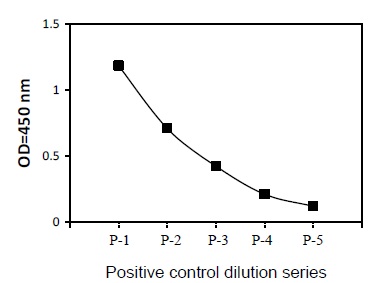
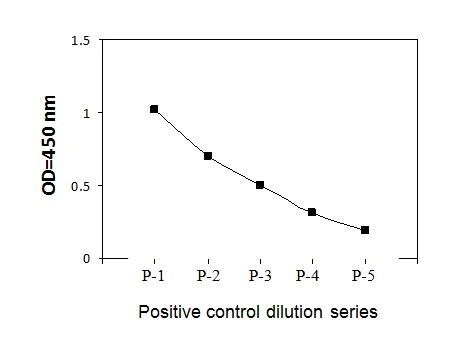
Sandwich ELISA - Phospho-Smad1 (S463/465) ELISA Kit (AB279927)

Positive Control.

HeLa cells were treated with BMP2.

Solubilize cells at 4 x 10⁷ cells/ml in Cell Lysate Buffer.

Serial dilutions of lysates were analyzed in this ELISA.
Sandwich ELISA - Phospho-Smad1 (S463/465) ELISA Kit (AB279927)
  • sELISA

Supplier Data

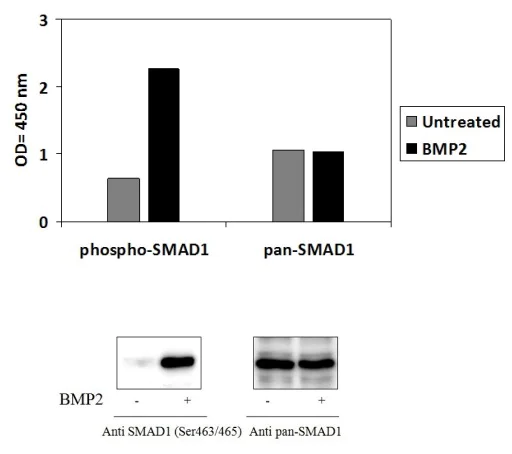
Sandwich ELISA - Phospho-Smad1 (S463/465) ELISA Kit (AB279927)

HeLa cells treated with/without BMP2.

HeLa cells were untreated or treated with BMP2. Cell lysates were analyzed using this phosphoELISA and Western Blot.

Key facts

Detection method

Colorimetric

Sample types

Cell Lysate

Reacts with

Human

Results type

Semi-Quantitative

Assay Platform

Pre-coated microplate (12 x 8 well strips)

Reactivity data

{ "title": "Reactivity Data", "filters": { "stats": ["", "Reactivity", "Dilution Info", "Notes"] }, "values": { "ELISA": { "reactivity":"TESTED_AND_REACTS", "dilution-info":"", "notes":"<p></p>" } } }

Product details

Phospho-Smad1 (S463/465) ELISA Kit (ab279927) is a very rapid, convenient and sensitive assay kit that can monitor the activation or function of important biological pathways in human cell lysates. By determining phosphorylated Smad1 protein in your experimental model system, you can verify pathway activation in your cell lysates. You can simultaneously measure numerous different cell lysates without spending excess time and effort in performing a Western Blotting analysis.

This Sandwich ELISA kit is an in vitro enzyme-linked immunosorbent assay for the measurement of human phospho-Smad1. An anti-pan Smad1 antibody has been coated onto a 96-well plate. Samples are pipetted into the wells and Smad1 present in a sample is bound to the wells by the immobilized antibody. The wells are washed and rabbit anti-phospho-Smad1 (S463/465) antibody is used to detect phosphorylated Smad1. After washing away unbound antibody, HRP conjugated anti-rabbit IgG is pipetted into the wells. The wells are again washed, a TMB substrate solution is added to the wells and color develops in proportion to the amount of Smad1 (S463/465) bound. The Stop Solution changes the color from blue to yellow, and the intensity of the color is measured at 450 nm.

REACH authorisation
Abcam has not and does not intend to apply for the REACH Authorisation of customers' uses of products that contain European Authorisation list (Annex XIV) substances.
It is the responsibility of our customers to check the necessity of application of REACH Authorisation, and any other relevant authorisations, for their intended uses.

What's included?

{ "values": { "1x96Tests": { "sellingSize": "1 x 96 Tests", "publicAssetCode":"ab279927-1x96Tests", "assetComponentDetails": [ { "size":"1 x 15 mL", "name":"5X Assay Diluent", "number":"AB279927-CMP04", "productcode":"" }, { "size":"1 x 12 mL", "name":"TMB One-Step Substrate Reagent", "number":"AB279927-CMP08", "productcode":"" }, { "size":"1 x 1 Vial", "name":"Positive Control - treated HeLa cell lysate", "number":"AB279927-CMP02", "productcode":"" }, { "size":"1 x 1 Unit", "name":"Pan-Smad1 Coated Microplate", "number":"AB279927-CMP05", "productcode":"" }, { "size":"1 x 8 mL", "name":"Stop Solution", "number":"AB279927-CMP07", "productcode":"" }, { "size":"1 x 25 mL", "name":"20X Wash Buffer", "number":"AB279927-CMP03", "productcode":"" }, { "size":"1 x 5 mL", "name":"2X Cell lysate buffer", "number":"AB279927-CMP09", "productcode":"" }, { "size":"1 x 25 µL", "name":"HRP-conjugated anti-rabbit IgG concentrate (500X)", "number":"AB279927-CMP10", "productcode":"" }, { "size":"2 x 1 Vial", "name":"Rabbit anti-phospho-Smad1 (S463/465)-antibody", "number":"AB279927-CMP06", "productcode":"" } ] } } }

Properties and storage information

Shipped at conditions
Blue Ice
Appropriate short-term storage conditions
-20°C
Appropriate long-term storage conditions
-20°C
Storage information
-20°C

Supplementary information

This supplementary information is collated from multiple sources and compiled automatically.

Smad1 also known as Mothers against decapentaplegic homolog 1 (MADH1) is a protein encoded by the SMAD1 gene in humans. It has a molecular mass of approximately 53 kDa and functions as a receptor-regulated Smad protein. Smad1 primarily transmits signals from the bone morphogenetic proteins (BMPs) a group of growth factors and cytokines. Expression of Smad1 occurs in various tissues including the lung heart and kidney. It plays an important role in mediating signaling pathways within different cellular environments.
Biological function summary

Smad1 participates in the transmission of BMP signals from the cell surface to the nucleus ensuring transcriptional regulation of target genes. In the presence of BMPs Smad1 forms complexes with Smad4 upon activation. These Smad complexes then translocate to the nucleus where they regulate gene expression. Smad1 influences cellular responses such as proliferation differentiation and apoptosis. In particular it plays a significant role in bone development and osteogenesis.

Pathways

Smad1 plays an important role within the BMP signaling pathway which is important for early development and tissue homeostasis. Within this pathway BMPs trigger the phosphorylation of Smad1 which then associates with Smad4 to propagate downstream signaling. Another associated pathway includes the TGF-beta signaling pathway where Smads like Smad2 and Smad3 show functional similarities and differences with Smad1. The interactions of Smad1 with related proteins like Smad4 highlight its significant contribution to cellular processes regulated by these pathways.

Smad1 associates with various pathological conditions. For instance aberrant Smad1 signaling has implications in cancer particularly in processes like tumor progression and metastasis. Disruptions in the BMP pathway involving Smad1 and Smad4 can influence the onset and development of disorders such as pulmonary hypertension where inappropriate cell growth and remodeling occur. Understanding Smad1's role in these contexts provides insights into potential therapeutic avenues for treatment and management of these conditions.

Product protocols

Target data

Transcriptional modulator that plays a role in various cellular processes, including embryonic development, cell differentiation, and tissue homeostasis (PubMed : 9335504). Upon BMP ligand binding to their receptors at the cell surface, is phosphorylated by activated type I BMP receptors (BMPRIs) and associates with SMAD4 to form a heteromeric complex which translocates into the nucleus acting as transcription factor (PubMed : 33667543). In turn, the hetero-trimeric complex recognizes cis-regulatory elements containing Smad Binding Elements (SBEs) to modulate the outcome of the signaling network (PubMed : 33667543). SMAD1/OAZ1/PSMB4 complex mediates the degradation of the CREBBP/EP300 repressor SNIP1. Positively regulates BMP4-induced expression of odontogenic development regulator MSX1 following IPO7-mediated nuclear import (By similarity).
See full target information SMAD1 pS463 + S465

Alternative Names

BSP1, MADH1, MADR1, SMAD1, SMAD family member 1, SMAD 1, hSMAD1, JV4-1, Mad-related protein 1, Mothers against decapentaplegic homolog 1, Transforming growth factor-beta-signaling protein 1, MAD homolog 1, Mothers against DPP homolog 1, BSP-1
websiteProtocolBooklet
en

Product promise

We are committed to supporting your work with high-quality reagents, and we're here for you every step of the way. In the unlikely event that one of our products does not perform as expected, you're protected by our Product Promise.
For full details, please see our Terms & Conditions

Please note: All products are 'FOR RESEARCH USE ONLY. NOT FOR USE IN DIAGNOSTIC OR THERAPEUTIC PROCEDURES'.

For licensing inquiries, please contact partnerships@abcam.com