Anti-acetyl Lysine antibody - ChIP Grade
4
(10 Reviews)
|
(91 Publications )
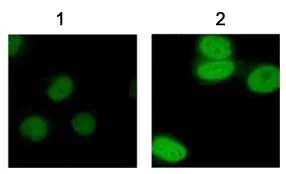
- ICC/IF
Unknown
Immunocytochemistry/ Immunofluorescence - Anti-acetyl Lysine antibody - ChIP Grade (AB21623)
Immunofluorescent staining of Human melanoma cells, using Rabbit polyclonal to acetyl Lysine (ab21623) at 1 : 100 dilution.
1 : Untreated cells
2 : TSA treated cells
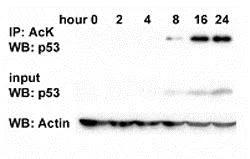
- IP
Unknown
Immunoprecipitation - Anti-acetyl Lysine antibody - ChIP Grade (AB21623)
p53 acetylation upon Doxorubicin treatment in human melanoma cells (MMRU cells). MMRU cells were treated with 0.5 ug/ml Dox for various times and lyzed for whole protein. Immunoprecipitation was performed with ab21623. Western blot was performed to detect the immunoprecipitated p53 with anti-p53 antibody.
All lanes:
Immunoprecipitation - Anti-acetyl Lysine antibody - ChIP Grade (ab21623)
false
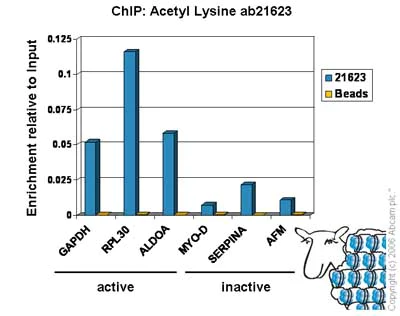
- ChIP
Unknown
ChIP - Anti-acetyl Lysine antibody - ChIP Grade (AB21623)
Chromatin was prepared from Hela cells according to the Abcam X-ChIP protocol. Cells were fixed with formaldehyde for 10min. The ChIP was performed with 25μg of chromatin, 2μg of ab21623 (blue), and 20μl of Protein A/G sepharose beads. No antibody was added to the beads control (yellow). The immunoprecipitated DNA was quantified by real time PCR (Taqman approach). Primers and probes are located in the first kb of the transcribed region.
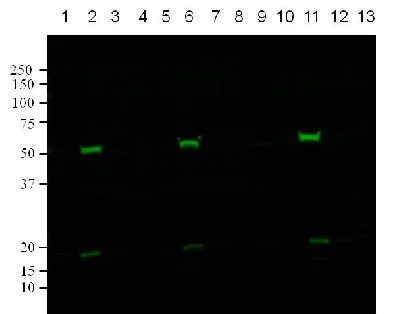
- WB
Unknown
Western blot - Anti-acetyl Lysine antibody - ChIP Grade (AB21623)
Lane 1 = Extract of Mcf7 cells incubated with vehicle 20 ug. Lane 2 = Extract of Mcf7 cells incubated with trichostatin A 20 ug. Lane 3 = Extract of Mcf7 cells incubated with EX527 20 ug. Lane 4 = Extract of Mcf7 cells incubated with nicotinamide 20 ug. Lane 5 = Extract of Mcf7 cells incubated with camptothecin 20 ug. Lane 6 = Extract of Mcf7 cells incubated with camptothecin and trichostatin A 20 ug. Lane 7 = Extract of Mcf7 cells incubated with camptothecin and EX527 20 ug. Lane 8 = Extract of Mcf7 cells incubated with camptothecin and nicotinamide 20 ug. Lane 9 = Extract of 293T cells incubated with vehicle 20 ug. Lane 10 = Extract of 293T cells incubated with camptothecin 20 ug. Lane 11 = Extract of 293T cells incubated with camptothecin and trichostatin A 20 ug. Lane 12 = Extract of 293T cells incubated with camptothecin and EX527 20 ug. Lane 13 = Extract of 293T cells incubated with camptothecin and nicotinamide 20 ug
SDS PAGE performed under reducing conditions (100mM DTT Sample heated at 50°C). Primary : Lanes 1-13 : Rabbit anti acetyl Lysine antibody (ab21623) at 1/500 dilution. Secondary : Lanes 1-13 : Goat anti rabbit IgG(H&L)-IR680 at 1 : 10,000 (in green). Developed : Oddysey. Blocking : in 5% Milk + PBS for 3 hours at RT. Primary antibody : in 5% BSA + 50mM Tris pH 7.5 + 150 mM NaCl + 0.05% Tween-20. Secondary antibody : in 5% Milk + PBS + 0.1% Tween-20 + 0.01%SDS for 2 hour at RT. Predicted band size : multiple. Observed band size : multiple
All lanes:
Western blot - Anti-acetyl Lysine antibody - ChIP Grade (ab21623)
false
- WB
Unknown
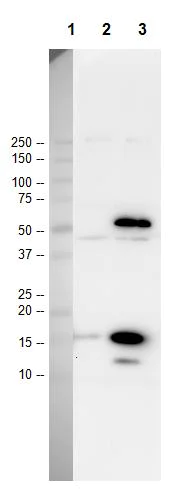
Western blot - Anti-acetyl Lysine antibody - ChIP Grade (AB21623)
Primary : All Lanes : Anti acetyl Lysine antibody (ab21623) at 1 : 1000. Lane 1 : Marker. Lane 2 : HeLa cells vehicle-treated (ab139414). Lane 3 : HeLa cells, trichostatin A-treated (ab139414). Lysates at 20 ug/lane . Secondary : All Lanes : Goat anti-Rabbit IgG 1 : 10000. Performed under reducing conditions. Blocking buffer : 5% milk in PBS. Observed band sizes : 11 kDa 15kDa 45kDa 50 kDa.
All lanes:
Western blot - Anti-acetyl Lysine antibody - ChIP Grade (ab21623)
false
- WB
Unknown
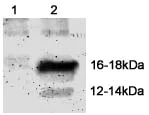
Western blot - Anti-acetyl Lysine antibody - ChIP Grade (AB21623)
All lanes:
Western blot - Anti-acetyl Lysine antibody - ChIP Grade (ab21623) at 0.5 µg/mL
Lane 1:
Untreated Human melanoma cell lysate at 75 µg
Lane 2:
TSA-treated Human melanoma cell lysate at 75 µg
Secondary
All lanes:
Goat anti-rabbit IgG HRP at 0.25 µg/mL
Observed band size: 14-Dec kDa,16-18 kDa
true
Alternative Products


Complementary Products
Primary Antibodies
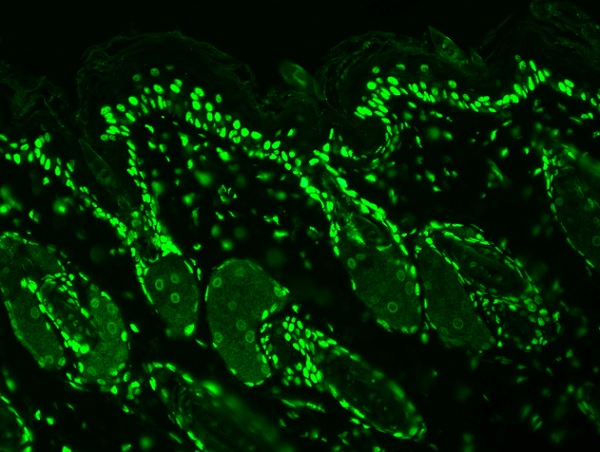
AB259968
Anti-SIRT7 antibody [EPR23811-15]
20ul selling size|BOND RX™ Validated|RabMAb|Recombinant
- 0
- 0
Primary Antibodies
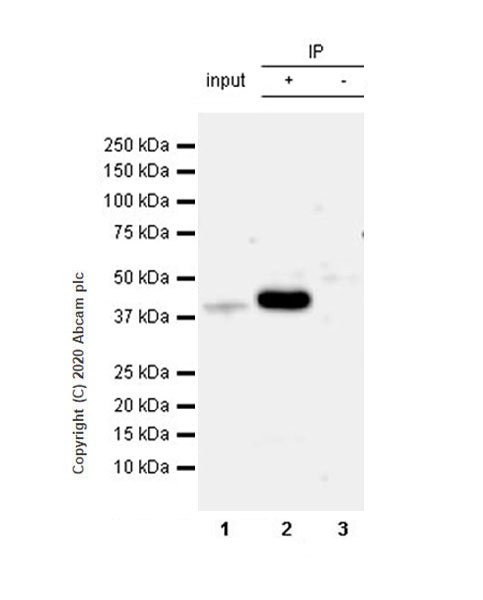
AB1791
Anti-Histone H3 antibody - Nuclear Marker and ChIP Grade
Lab Essentials

- 5
- 233
Reactivity data
Product details
Properties and storage information
Form
Purification technique
Purification notes
Storage buffer
Shipped at conditions
Appropriate short-term storage duration
Appropriate short-term storage conditions
Appropriate long-term storage conditions
Aliquoting information
Storage information
Supplementary information
This supplementary information is collated from multiple sources and compiled automatically.
Biological function summary
Acetylation adds an acetyl group to the lysine which changes its positive charge reducing chromatin compaction and enhancing gene transcription. The acetyl lysine modification is not acting alone; it forms part of larger histone modification complexes. By altering chromatin structure acetyl lysine regulates the accessibility of transcription factors to DNA influencing various biological processes like DNA repair replication and cell cycle progression. The interaction between acetyl lysine and chromatin remodeling complexes plays a significant role in epigenetic regulation.
Pathways
Acetyl lysine is central to epigenetic regulatory pathways significantly impacting gene expression and cellular growth pathways. The acetylation process involves histone acetylases (HATs) such as the p300/CBP complex which adds acetyl groups to specific lysines on histones increasing transcriptional activity. Conversely histone deacetylases (HDACs) remove acetyl groups decreasing transcription. The balance of these modifications involves critical pathways such as the TGF-beta signaling pathway and the NF-kB pathway linking acetyl lysine with numerous cellular activities and protein interactions.
Product protocols
- Visit the General protocols
- Visit the Troubleshooting
Publications (91)
Recent publications for all applications. Explore the full listand refine your search
Cell death discovery 11:449 PubMed41057297
2025
Applications
Unspecified application
Species
Unspecified reactive species
BMC cardiovascular disorders 25:232 PubMed40155821
2025
Applications
Unspecified application
Species
Unspecified reactive species
Cell death & disease 16:160 PubMed40050614
2025
Applications
Unspecified application
Species
Unspecified reactive species
Cell death & disease 15:931 PubMed39719443
2024
Applications
Unspecified application
Species
Unspecified reactive species
Journal of translational medicine 22:1047 PubMed39568000
2024
Applications
Unspecified application
Species
Unspecified reactive species
Nature communications 15:9496 PubMed39489725
2024
Applications
Unspecified application
Species
Unspecified reactive species
eLife 13: PubMed39495216
2024
Applications
Unspecified application
Species
Unspecified reactive species
Cell reports 43:114642 PubMed39240713
2024
Applications
Unspecified application
Species
Unspecified reactive species
Redox biology 75:103300 PubMed39142179
2024
Applications
Unspecified application
Species
Unspecified reactive species
Nature communications 15:6002 PubMed39019872
2024
Applications
Unspecified application
Species
Unspecified reactive species
Product promise
Please note: All products are 'FOR RESEARCH USE ONLY. NOT FOR USE IN DIAGNOSTIC OR THERAPEUTIC PROCEDURES'.
For licensing inquiries, please contact partnerships@abcam.com