JavaScript is disabled in your browser. Please enable JavaScript to view this website.
AB181699

Anti-Adiponectin antibody - C-terminal

Be the first to review this product! Submit a review

|

(6 Publications )
Rabbit Polyclonal Adiponectin antibody. C-terminal. Suitable for IHC-P, WB, IHC-Fr and reacts with Mouse, Rat, Human samples. Cited in 6 publications. Immunogen corresponding to Synthetic Peptide within Human ADIPOQ aa 200 to C-terminus.
5 Images
Immunohistochemistry (Formalin/PFA-fixed paraffin-embedded sections) - Anti-Adiponectin antibody - C-terminal (AB181699)
  • IHC-P

Supplier Data

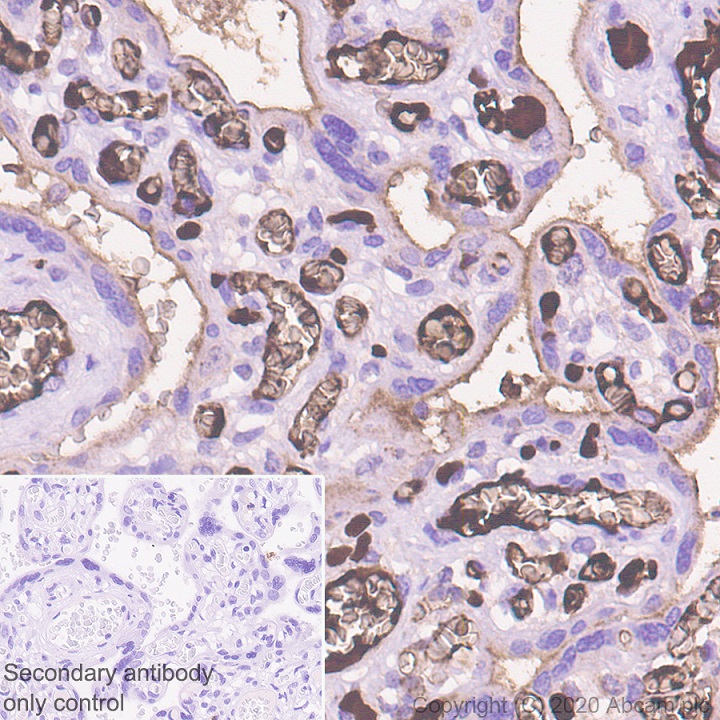
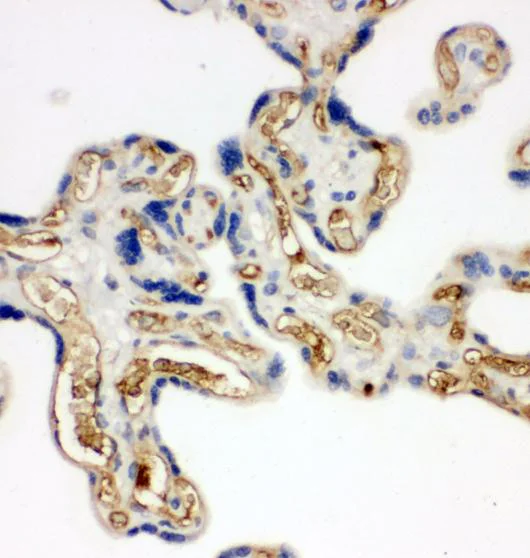
Immunohistochemistry (Formalin/PFA-fixed paraffin-embedded sections) - Anti-Adiponectin antibody - C-terminal (AB181699)

Immunohistochemical analysis of paraffin-embedded Human placenta tissue, labeling Adiponectin using ab181699 at 1 μg/ml.
Immunohistochemistry (Frozen sections) - Anti-Adiponectin antibody - C-terminal (AB181699)
  • IHC-Fr

Supplier Data

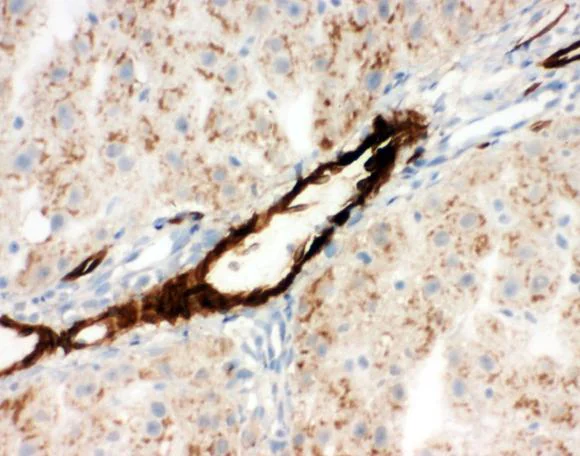
Immunohistochemistry (Frozen sections) - Anti-Adiponectin antibody - C-terminal (AB181699)

Immunohistochemical analysis of frozen rat liver tissue, labeling Adiponectin using ab181699 at 1 μg/ml.
Immunohistochemistry (Formalin/PFA-fixed paraffin-embedded sections) - Anti-Adiponectin antibody - C-terminal (AB181699)
  • IHC-P

Supplier Data

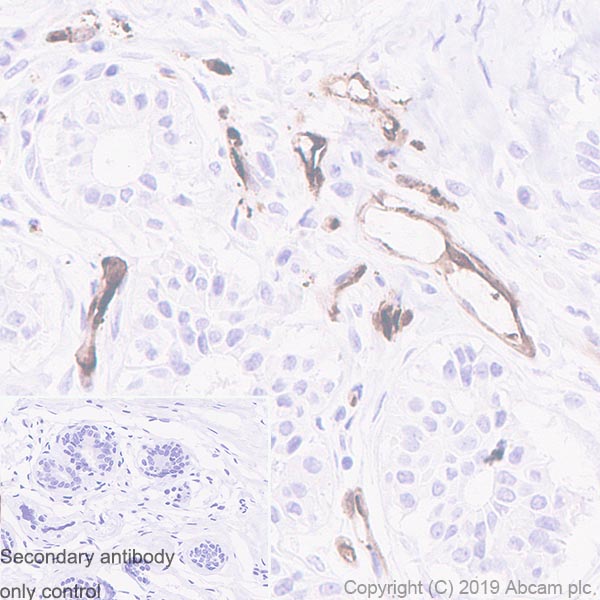
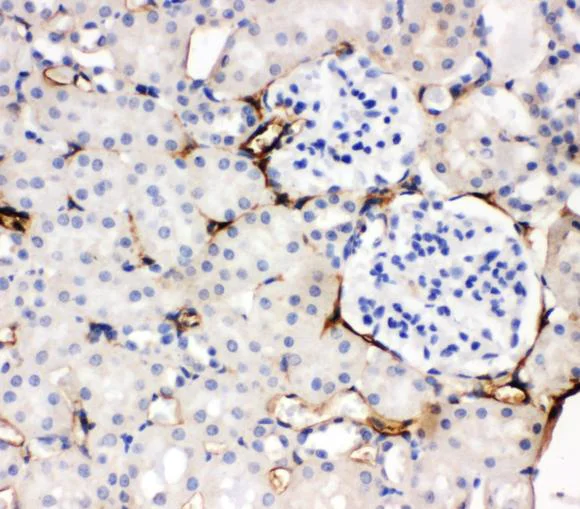
Immunohistochemistry (Formalin/PFA-fixed paraffin-embedded sections) - Anti-Adiponectin antibody - C-terminal (AB181699)

Immunohistochemical analysis of paraffin-embedded rat kidney tissue, labeling Adiponectin using ab181699 at 1 μg/ml.
Immunohistochemistry (Formalin/PFA-fixed paraffin-embedded sections) - Anti-Adiponectin antibody - C-terminal (AB181699)
  • IHC-P

Supplier Data

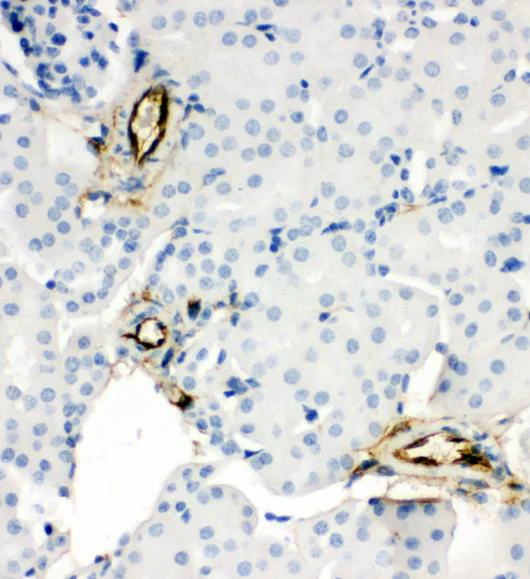
Immunohistochemistry (Formalin/PFA-fixed paraffin-embedded sections) - Anti-Adiponectin antibody - C-terminal (AB181699)

Immunohistochemical analysis of paraffin-embedded mouse kidney tissue, labeling Adiponectin using ab181699 at 1 μg/ml.
Western blot - Anti-Adiponectin antibody - C-terminal (AB181699)
  • WB

Supplier Data

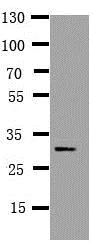
Western blot - Anti-Adiponectin antibody - C-terminal (AB181699)

All lanes:

Western blot - Anti-Adiponectin antibody - C-terminal (ab181699) at 0.5 µg/mL

All lanes:

rat heart tissue lysate

Predicted band size: 26 kDa

false

Key facts

Host species

Rabbit

Clonality

Polyclonal

Isotype

IgG

Carrier free

No

Reacts with

Mouse, Rat, Human

Applications

WB, IHC-Fr, IHC-P

applications

Immunogen

Synthetic Peptide within Human ADIPOQ aa 200 to C-terminus. The exact immunogen used to generate this antibody is proprietary information.

Q15848

Reactivity data

{ "title": "Reactivity Data", "filters": { "stats": ["", "Species", "Dilution Info", "Notes"], "tabs": { "all-applications": {"fullname" : "All Applications", "shortname": "All Applications"}, "IHCP" : {"fullname" : "Immunohistochemistry (Formalin/PFA-fixed paraffin-embedded sections)", "shortname":"IHC-P"}, "WB" : {"fullname" : "Western blot", "shortname":"WB"}, "IHCFr" : {"fullname" : "Immunohistochemistry (Frozen sections)", "shortname":"IHC-Fr"} }, "product-promise": { "all": "all", "testedAndGuaranteed": "tested", "guaranteed": "expected", "predicted": "predicted", "notRecommended": "not-recommended" } }, "values": { "Human": { "IHCP-species-checked": "testedAndGuaranteed", "IHCP-species-dilution-info": "0.5-1 µg/mL", "IHCP-species-notes": "<p></p> Perform heat-mediated antigen retrieval with citrate buffer pH 6 before commencing with IHC staining protocol.", "WB-species-checked": "testedAndGuaranteed", "WB-species-dilution-info": "0.1-0.5 µg/mL", "WB-species-notes": "<p>The detection limit for Adiponectin is approximately 1ng/lane under reducing conditions.</p>", "IHCFr-species-checked": "guaranteed", "IHCFr-species-dilution-info": "", "IHCFr-species-notes": "" }, "Mouse": { "IHCP-species-checked": "testedAndGuaranteed", "IHCP-species-dilution-info": "0.5-1 µg/mL", "IHCP-species-notes": "<p></p> Perform heat-mediated antigen retrieval with citrate buffer pH 6 before commencing with IHC staining protocol.", "WB-species-checked": "guaranteed", "WB-species-dilution-info": "", "WB-species-notes": "", "IHCFr-species-checked": "guaranteed", "IHCFr-species-dilution-info": "", "IHCFr-species-notes": "" }, "Rat": { "IHCP-species-checked": "testedAndGuaranteed", "IHCP-species-dilution-info": "0.5-1 µg/mL", "IHCP-species-notes": "<p></p> Perform heat-mediated antigen retrieval with citrate buffer pH 6 before commencing with IHC staining protocol.", "WB-species-checked": "testedAndGuaranteed", "WB-species-dilution-info": "0.1-0.5 µg/mL", "WB-species-notes": "<p>The detection limit for Adiponectin is approximately 1ng/lane under reducing conditions.</p>", "IHCFr-species-checked": "testedAndGuaranteed", "IHCFr-species-dilution-info": "0.5-1 µg/mL", "IHCFr-species-notes": "<p></p>" } } }

Properties and storage information

Form
Liquid
Purification technique
Affinity purification Immunogen
Storage buffer
Preservative: 0.025% Sodium azide, 0.025% Thimerosal (merthiolate) Constituents: 2.5% BSA, 0.45% Sodium chloride, 0.1% Disodium hydrogenorthophosphate
Shipped at conditions
Blue Ice
Appropriate short-term storage duration
1-2 weeks
Appropriate short-term storage conditions
+4°C
Appropriate long-term storage conditions
-20°C
Aliquoting information
Upon delivery aliquot
Storage information
Avoid freeze / thaw cycle

Supplementary information

This supplementary information is collated from multiple sources and compiled automatically.

Adiponectin also known as ADIPOQ or adipocyte complement-related protein of 30 kDa (Acrp30) is a 30 kDa protein that plays a significant mechanical role in energy homeostasis. Adiponectin is secreted predominantly by adipose tissue and circulates in the blood. This protein forms various multimeric structures including low-molecular-weight medium-molecular-weight and high-molecular-weight forms each with distinct biological functions. Its expression in adipose tissue links it closely to metabolic processes and functions related to fat storage and energy balance.
Biological function summary

Adiponectin influences glucose regulation and fatty acid oxidation. It acts as a hormone with several metabolic roles including anti-diabetic anti-atherogenic and anti-inflammatory properties. Adiponectin participates in forming a complex with other proteins such as AdipoR1 and AdipoR2 which are receptors facilitating signal transduction. The interaction of adiponectin with its receptors leads to the induction of several lipid and glucose metabolism pathways important for maintaining cellular energy balance.

Pathways

Many regulatory cascades are influenced by adiponectin. This protein is integral to the AMPK signaling pathway and the PPAR signaling pathway. In the AMPK pathway adiponectin enhances insulin sensitivity and stimulates oxidation of fatty acids in muscle tissue. Through the PPAR pathway it influences lipid metabolism and storage. Adiponectin interacts with key proteins such as leptin and resistin coordinating various metabolic pathways to balance energy and glucose levels making it a critical factor in metabolic regulation.

Reduced levels of adiponectin associate with conditions like type 2 diabetes and cardiovascular disease. Lower circulating adiponectin concentrations correlate with obesity leading to increased insulin resistance and higher risk of type 2 diabetes. In cardiovascular disease this protein's role links to its anti-inflammatory properties and ability to decrease the proliferation of vascular smooth muscle cells. Adiponectin also interacts with proteins like cytokines that play a role in these conditions affecting the body’s inflammatory responses and metabolic processes highlighting its importance in health and disease management.

Product protocols

For this product, it's our understanding that no specific protocols are required. You can visit:

Target data

Important adipokine involved in the control of fat metabolism and insulin sensitivity, with direct anti-diabetic, anti-atherogenic and anti-inflammatory activities. Stimulates AMPK phosphorylation and activation in the liver and the skeletal muscle, enhancing glucose utilization and fatty-acid combustion. Antagonizes TNF by negatively regulating its expression in various tissues such as liver and macrophages, and also by counteracting its effects. Inhibits endothelial NF-kappa-B signaling through a cAMP-dependent pathway. May play a role in cell growth, angiogenesis and tissue remodeling by binding and sequestering various growth factors with distinct binding affinities, depending on the type of complex, LMW, MMW or HMW.
See full target information ADIPOQ

Alternative Names

ACDC, ACRP30, APM1, GBP28, ADIPOQ, Adiponectin, 30 kDa adipocyte complement-related protein, Adipocyte complement-related 30 kDa protein, Adipose most abundant gene transcript 1 protein, Gelatin-binding protein, apM-1

Publications (6)

Recent publications for all applications. Explore the full listand refine your search

Journal of dairy science 106:5182-5195 PubMed37268580

2023

Tumor necrosis factor-α reduces adiponectin production by decreasing transcriptional activity of peroxisome proliferator-activated receptor-γ in calf adipocytes.

Applications

Unspecified application

Species

Unspecified reactive species

Hao Yu,Xinxing Gao,Qilai Ge,Wenjun Tai,Xue Hao,Qi Shao,Zhiyuan Fang,Meng Chen,Yuxiang Song,Wenwen Gao,Guowen Liu,Xiliang Du,Xinwei Li

Journal of bone and mineral research : the official journal of the American Society for Bone and Mineral Research 36:2017-2026 PubMed34131944

2021

Forkhead box P1 (Foxp1) in osteoblasts regulates bone mass accrual and adipose tissue energy metabolism.

Applications

Unspecified application

Species

Unspecified reactive species

Wei Zhang,Pei Liu,Shifeng Ling,Fuhua Wang,Shaojiao Wang,Tienan Chen,Rujiang Zhou,Xuechun Xia,Zhengju Yao,Ying Fan,Niansong Wang,Jiqiu Wang,Haley O Tucker,Xizhi Guo

Nature communications 12:2382 PubMed33888706

2021

Proteomics of protein trafficking by in vivo tissue-specific labeling.

Applications

Unspecified application

Species

Unspecified reactive species

Ilia A Droujinine,Amanda S Meyer,Dan Wang,Namrata D Udeshi,Yanhui Hu,David Rocco,Jill A McMahon,Rui Yang,JinJin Guo,Luye Mu,Dominique K Carey,Tanya Svinkina,Rebecca Zeng,Tess Branon,Areya Tabatabai,Justin A Bosch,John M Asara,Alice Y Ting,Steven A Carr,Andrew P McMahon,Norbert Perrimon

eLife 8: PubMed30632962

2019

Integrin alpha11 is an Osteolectin receptor and is required for the maintenance of adult skeletal bone mass.

Applications

Unspecified application

Species

Unspecified reactive species

Bo Shen,Kristy Vardy,Payton Hughes,Alpaslan Tasdogan,Zhiyu Zhao,Rui Yue,Genevieve M Crane,Sean J Morrison

In vivo (Athens, Greece) 30:795-800 PubMed27815463

2016

Effects of Dietary Xanthophylls, Canthaxanthin and Astaxanthin on N-Methyl-N-nitrosourea-induced Rat Mammary Carcinogenesis.

Applications

Unspecified application

Species

Unspecified reactive species

Takashi Yuri,Katsuhiko Yoshizawa,Yuko Emoto,Yuichi Kinoshita,Michiko Yuki,Airo Tsubura

Endocrine journal 64:15-26 PubMed27667474

2016

Wogonin enhances intracellular adiponectin levels and suppresses adiponectin secretion in 3T3-L1 adipocytes.

Applications

Unspecified application

Species

Unspecified reactive species

Tan Yang,Hua Liu,Bo Zhao,Zhongyuan Xia,Yemin Zhang,Deling Zhang,Mingxin Li,Yingkang Cao,Zhijiang Zhang,Yongyi Bi,Changhua Wang
View all publications

Product promise

We are committed to supporting your work with high-quality reagents, and we're here for you every step of the way. In the unlikely event that one of our products does not perform as expected, you're protected by our Product Promise.
For full details, please see our Terms & Conditions

Please note: All products are 'FOR RESEARCH USE ONLY. NOT FOR USE IN DIAGNOSTIC OR THERAPEUTIC PROCEDURES'.

For licensing inquiries, please contact partnerships@abcam.com