JavaScript is disabled in your browser. Please enable JavaScript to view this website.
AB254943

Anti-AKR1D1 antibody

Be the first to review this product! Submit a review

|

(2 Publications )

Rabbit Polyclonal AKR1D1 antibody. Suitable for IHC-P and reacts with Human samples. Cited in 2 publications. Immunogen corresponding to Recombinant Fragment Protein within Human AKR1D1 aa 1-50.
2 Images
Immunohistochemistry (Formalin/PFA-fixed paraffin-embedded sections) - Anti-AKR1D1 antibody (AB254943)
  • IHC-P

Unknown

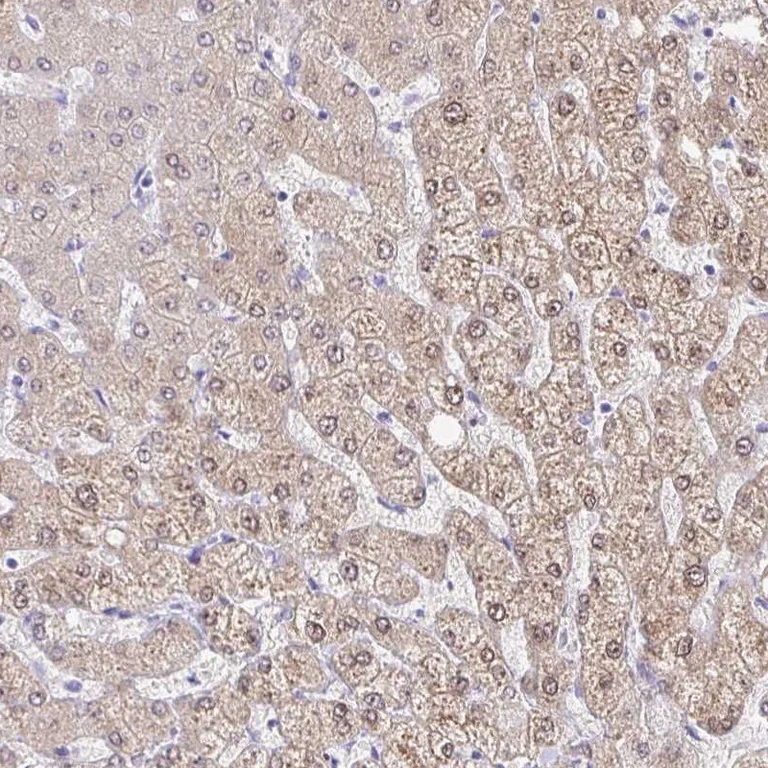
Immunohistochemistry (Formalin/PFA-fixed paraffin-embedded sections) - Anti-AKR1D1 antibody (AB254943)

Paraffin-embedded human liver tissue stained for AKR1D1 using ab254943 at 1/50 dilution in immunohistochemical analysis.
Immunohistochemistry (Formalin/PFA-fixed paraffin-embedded sections) - Anti-AKR1D1 antibody (AB254943)
  • IHC-P

Unknown

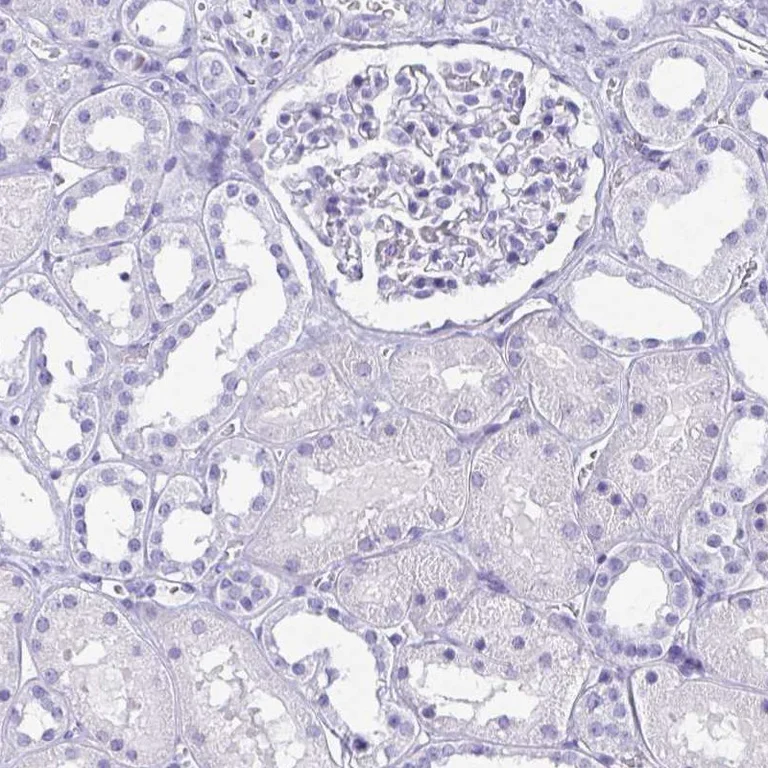
Immunohistochemistry (Formalin/PFA-fixed paraffin-embedded sections) - Anti-AKR1D1 antibody (AB254943)

Paraffin-embedded human kidney tissue stained for AKR1D1 using ab254943 at 1/50 dilution in immunohistochemical analysis. Low expression as expected.

Key facts

Host species

Rabbit

Clonality

Polyclonal

Isotype

IgG

Carrier free

No

Reacts with

Human

Applications

IHC-P

applications

Immunogen

Recombinant Fragment Protein within Human AKR1D1 aa 1-50. The exact immunogen used to generate this antibody is proprietary information.

P51857

Reactivity data

{ "title": "Reactivity Data", "filters": { "stats": ["", "Species", "Dilution Info", "Notes"], "tabs": { "all-applications": {"fullname" : "All Applications", "shortname": "All Applications"}, "IHCP" : {"fullname" : "Immunohistochemistry (Formalin/PFA-fixed paraffin-embedded sections)", "shortname":"IHC-P"} }, "product-promise": { "all": "all", "testedAndGuaranteed": "tested", "guaranteed": "expected", "predicted": "predicted", "notRecommended": "not-recommended" } }, "values": { "Human": { "IHCP-species-checked": "testedAndGuaranteed", "IHCP-species-dilution-info": "1/20 - 1/50", "IHCP-species-notes": "<p></p> Perform heat-mediated antigen retrieval with citrate buffer pH 6 before commencing with IHC staining protocol." } } }

Properties and storage information

Form
Liquid
Purification technique
Affinity purification Immunogen
Storage buffer
pH: 7.2 Preservative: 0.02% Sodium azide Constituents: PBS, 40% Glycerol (glycerin, glycerine)
Shipped at conditions
Blue Ice
Appropriate short-term storage duration
1-2 weeks
Appropriate short-term storage conditions
+4°C
Appropriate long-term storage conditions
-20°C
Aliquoting information
Upon delivery aliquot
Storage information
Avoid freeze / thaw cycle

Supplementary information

This supplementary information is collated from multiple sources and compiled automatically.

AKR1D1 also known as 3-oxo-5-beta-steroid 4-dehydrogenase is an enzyme that catalyzes the reduction of delta4-3-ketosteroids converting them into their respective 5-beta-reduced metabolites. The protein has a molecular mass of approximately 37 kDa. It is expressed primarily in the liver where it plays a central role in steroid metabolism. The gene encoding AKR1D1 locates on chromosome 7 and it belongs to the aldo-keto reductase superfamily which comprises enzymes that reduce carbonyl-containing compounds to their respective alcohols.
Biological function summary

AKR1D1 influences bile acid synthesis and steroid hormone metabolism. It does not exist as part of a larger complex but instead functions as a monomer. The reduction process it facilitates affects various steroid molecules including glucocorticoids and androgens. This activity aids in maintaining metabolic homeostasis by regulating the biosynthesis of bile acids which are critical for fat absorption and cholesterol balance. By modulating metabolites AKR1D1 also affects cellular signaling pathways indirectly.

Pathways

AKR1D1 contributes significantly to the bile acid biosynthesis pathway and steroid metabolism pathways. In the bile acid pathway the enzyme's activity helps convert cholesterol into bile acids. In the steroid metabolism pathway its interactions impact the synthesis and deactivation of steroids like cortisol and aldosterone. Although it does not form complexes AKR1D1 functionally relates to proteins like CYP7A1 and HSD11B1 within these pathways. These interactions further support the enzyme's role in maintaining hormonal balance and metabolic regulation.

AKR1D1 mutations or dysfunctions associate with bile acid synthesis disorders and congenital adrenal hyperplasia. Disruptions in its function can lead to improper steroid and bile acid levels resulting in metabolic complications. Mutations affecting this enzyme might cause disorders due to impaired steroid deactivation and bile acid synthesis. In these conditions it relates to proteins like CYP21A2 in the context of adrenal hyperplasia highlighting the interconnected nature of its metabolic roles and potential pathophysiological impacts.

Product protocols

For this product, it's our understanding that no specific protocols are required. You can visit:

Target data

Catalyzes the stereospecific NADPH-dependent reduction of the C4-C5 double bond of bile acid intermediates and steroid hormones carrying a delta(4)-3-one structure to yield an A/B cis-ring junction. This cis-configuration is crucial for bile acid biosynthesis and plays important roles in steroid metabolism. Capable of reducing a broad range of delta-(4)-3-ketosteroids from C18 (such as, 17beta-hydroxyestr-4-en-3-one) to C27 (such as, 7alpha-hydroxycholest-4-en-3-one).
See full target information AKR1D1

Alternative Names

SRD5B1, AKR1D1, Aldo-keto reductase family 1 member D1, 3-oxo-5-beta-steroid 4-dehydrogenase, Delta(4)-3-ketosteroid 5-beta-reductase, Delta(4)-3-oxosteroid 5-beta-reductase

Publications (2)

Recent publications for all applications. Explore the full listand refine your search

Cell death & disease 16:564 PubMed40715045

2025

The deubiquitinase USP24 suppresses ferroptosis in triple-negative breast cancer by stabilizing DHODH protein.

Applications

Unspecified application

Species

Unspecified reactive species

Li Yang,Xiaoqin An,Shangzhu Yang,Xiaowen Lin,Ziyuan Chen,Qian Xue,Xi Chen,Yuan Wang,Ding Yan,Shirui Chen,Yuqing Fan,Daolin Tang,Wenfeng Yu,Jinbao Liu,Xin Chen

Aging 12: PubMed33493134

2021

Diagnostic and prognostic values of AKR1C3 and AKR1D1 in hepatocellular carcinoma.

Applications

Unspecified application

Species

Unspecified reactive species

Pengfei Zhu,Ruo Feng,Xu Lu,Yuan Liao,Zhicheng Du,Wenlong Zhai,Kunlun Chen
View all publications

Product promise

We are committed to supporting your work with high-quality reagents, and we're here for you every step of the way. In the unlikely event that one of our products does not perform as expected, you're protected by our Product Promise.
For full details, please see our Terms & Conditions

Please note: All products are 'FOR RESEARCH USE ONLY. NOT FOR USE IN DIAGNOSTIC OR THERAPEUTIC PROCEDURES'.

For licensing inquiries, please contact partnerships@abcam.com