Alexa Fluor® 750 Anti-Amyloid Precursor Protein antibody [Y188]
- Recombinant
- RabMAb
- What is this?
Be the first to review this product! Submit a review
|
(0 Publication)
Related conjugates and formulations (10)
-
Anti-Amyloid Precursor Protein antibody [Y188]
-
Anti-Amyloid Precursor Protein antibody [Y188] - BSA and Azide free
-
Anti-Amyloid Precursor Protein antibody [Y188] - Low endotoxin, Azide free
-
519 Alexa Fluor® 488
Alexa Fluor® 488 Anti-Amyloid Precursor Protein antibody [Y188]
-
565 Alexa Fluor® 555
Alexa Fluor® 555 Anti-Amyloid Precursor Protein antibody [Y188]
-
603 Alexa Fluor® 568
Alexa Fluor® 568 Anti-Amyloid Precursor Protein antibody [Y188]
-
617 Alexa Fluor® 594
Alexa Fluor® 594 Anti-Amyloid Precursor Protein antibody [Y188]
-
665 Alexa Fluor® 647
Alexa Fluor® 647 Anti-Amyloid Precursor Protein antibody [Y188]
-
HRP Anti-Amyloid Precursor Protein antibody [Y188]
-
578 PE
PE Anti-Amyloid Precursor Protein antibody [Y188]
Complementary Products

Primary Antibodies
AB281588
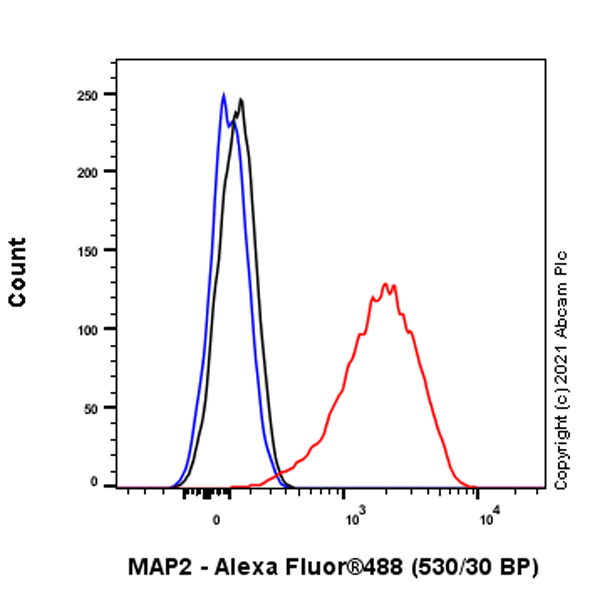
Anti-MAP2 antibody [RM1010] - Neuronal Marker
RabMAb|Recombinant|Lab Essentials|20ul selling size
- 0
- 0
Primary Antibodies
AB216309
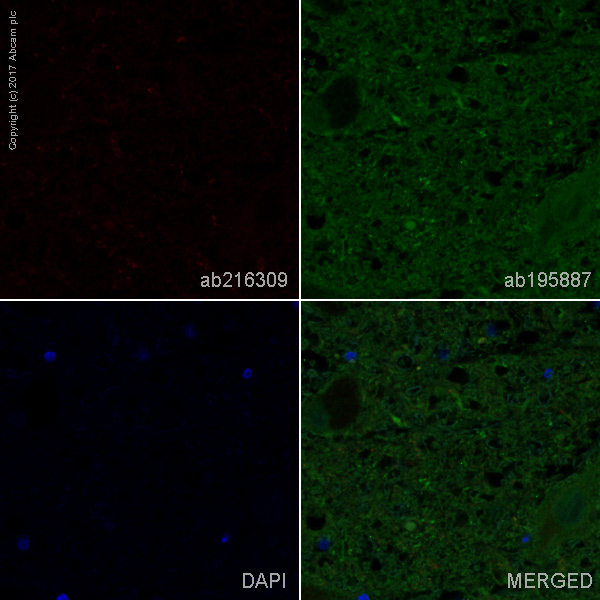
Alexa Fluor® 647 Anti-Alpha-synuclein aggregate antibody [MJFR-14-6-4-2] - Conformation-Specific
RabMAb|Recombinant
- 0
- 0
Primary Antibodies
AB76128
BOND RX™ Validated|20ul selling size|RabMAb|Recombinant|KD Validated

- 5
- 1
Primary Antibodies
AB190565
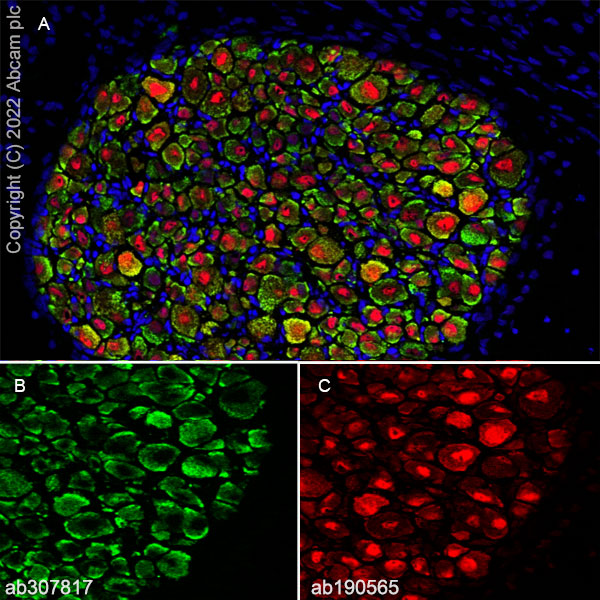
Alexa Fluor® 647 Anti-NeuN antibody [EPR12763] - Neuronal Marker
BOND RX™ Validated|RabMAb|Recombinant
- 5
- 7
Reactivity data
Product details
The immunogen used for this product is within Human Amyloid Precursor Protein aa 750 to the C-terminus and therefore may detect gamma secretase fragments 50, 57 and 59 in addition to fragments C31, C80, C83 and C99. Cross-reactivity with these fragments has not been confirmed experimentally.
Patented technology
Our RabMAb® technology is a patented hybridoma-based technology for making rabbit monoclonal antibodies. For details on our patents, please refer to RabMAb® patents.
What are the advantages of a recombinant monoclonal antibody?
This product is a recombinant monoclonal antibody, which offers several advantages including:
- - High batch-to-batch consistency and reproducibility
- - Improved sensitivity and specificity
- - Long-term security of supply
- - Animal-free batch production
For more information, read more on recombinant antibodies.
How are conjugated primary antibodies validated?
This conjugated primary antibody is released using a quantitative quality control method that evaluates binding affinity post-conjugation and efficiency of antibody labeling.
For suitable applications and species reactivity, please refer to the unconjugated version of this clone.
Alexa Fluor® is a registered trademark of Molecular Probes, Inc, a Thermo Fisher Scientific Company. The Alexa Fluor® dye included in this product is provided under an intellectual property license from Life Technologies Corporation. As this product contains the Alexa Fluor® dye, the purchase of this product conveys to the buyer the non-transferable right to use the purchased product and components of the product only in research conducted by the buyer (whether the buyer is an academic or for-profit entity). As this product contains the Alexa Fluor® dye the sale of this product is expressly conditioned on the buyer not using the product or its components, or any materials made using the product or its components, in any activity to generate revenue, which may include, but is not limited to use of the product or its components: in manufacturing; (ii) to provide a service, information, or data in return for payment (iii) for therapeutic, diagnostic or prophylactic purposes; or (iv) for resale, regardless of whether they are sold for use in research. For information on purchasing a license to this product for purposes other than research, contact Life Technologies Corporation, 5781 Van Allen Way, Carlsbad, CA 92008 USA or outlicensing@thermofisher.com.
Properties and storage information
Form
Purification technique
Storage buffer
Shipped at conditions
Appropriate short-term storage duration
Appropriate short-term storage conditions
Appropriate long-term storage conditions
Aliquoting information
Storage information
Supplementary information
This supplementary information is collated from multiple sources and compiled automatically.
Biological function summary
The processing of APP plays a fundamental role in neuronal growth survival and repair. APP is cleaved into fragments that can regulate synaptic function and plasticity. It does not operate as a part of a complex but interacts with various cellular components. The protein participates in signaling pathways influencing cellular adhesion motility and neurite outgrowth. APP’s numerous interaction partners facilitate its involvement in different cellular processes highlighting its critical role in normal cell function.
Pathways
The APP is a central component in the amyloidogenic pathway where its cleavage by beta-secretase and gamma-secretase yields beta-amyloid. This pathway is one of two primary metabolic routes for APP—alternative enzymatic processing through the non-amyloidogenic pathway precludes beta-amyloid formation releasing peptides that do not aggregate. Enzymes like BACE1 (beta-secretase 1) and presenilin are important in the amyloidogenic pathway directly resulting in the production of the neurotoxic amyloid beta-peptide.
Product protocols
- Visit the General protocols
- Visit the Troubleshooting
Target data
Alternative Names
Product promise
Please note: All products are 'FOR RESEARCH USE ONLY. NOT FOR USE IN DIAGNOSTIC OR THERAPEUTIC PROCEDURES'.
For licensing inquiries, please contact partnerships@abcam.com