JavaScript is disabled in your browser. Please enable JavaScript to view this website.
AB52646

Anti-Amphiphysin antibody [EP2060Y]

Be the first to review this product! Submit a review

|

(3 Publications )
Rabbit Recombinant Monoclonal Amphiphysin antibody. Suitable for IHC-P, WB and reacts with Human samples. Cited in 3 publications.
3 Images
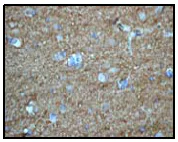
Immunohistochemistry (Formalin/PFA-fixed paraffin-embedded sections) - Anti-Amphiphysin antibody [EP2060Y] (AB52646)
  • IHC-P

Unknown

Immunohistochemistry (Formalin/PFA-fixed paraffin-embedded sections) - Anti-Amphiphysin antibody [EP2060Y] (AB52646)

ab52646 (1/100) staining human Amphiphysin in human brain tissue by immunohistochemistry using paraffin embedded tissue.

Perform heat mediated antigen retrieval before commencing with IHC staining protocol.
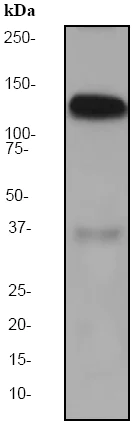
Western blot - Anti-Amphiphysin antibody [EP2060Y] (AB52646)
  • WB

Unknown

Western blot - Anti-Amphiphysin antibody [EP2060Y] (AB52646)

All lanes:

Western blot - Anti-Amphiphysin antibody [EP2060Y] (ab52646) at 1/100000 dilution

All lanes:

Human brain lysate at 10 µg

Secondary

All lanes:

Goat anti-Rabbit HRP labeled at 1/2000 dilution

Predicted band size: 76 kDa

Observed band size: 128 kDa

false
Western blot - Anti-Amphiphysin antibody [EP2060Y] (AB52646)
  • WB

CiteAb

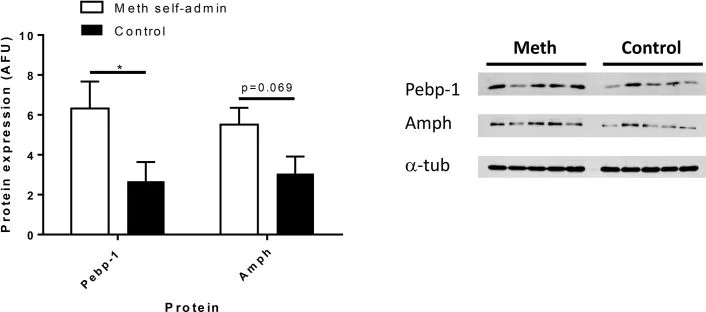
Western blot - Anti-Amphiphysin antibody [EP2060Y] (AB52646)

Amphiphysin western blot using anti-Amphiphysin antibody [EP2060Y] ab52646. Publication image and figure legend from Bosch, P. J., Peng, L., et al., 2015, PLoS One, PubMed 26484527.

ab52646 was used in this publication in western blot. This may not be the same as the application(s) guaranteed by Abcam. For a full list of applications guaranteed by Abcam for ab52646 please see the product overview.

Validation of protein expression.Western blot showed upregulation of phosphatidylethanolamine binding protein (*p<0.05, 1-tailed t-test, n = 5) and a trend towards increased amphiphysin (p = 0.069, 1-tailed t-test, n = 5). Protein expression was normalized to alpha-tubulin. Key : Amph, amphiphysin; Pebp1, phosphatidylethanolamine binding protein; α-tub, alpha tubulin.

false

  • Carrier free

    Anti-Amphiphysin antibody [EP2060Y] - BSA and Azide free

Key facts

Host species

Rabbit

Clonality

Monoclonal

Clone number

EP2060Y

Isotype

IgG

Carrier free

No

Reacts with

Human

Applications

IHC-P, WB

applications

Immunogen

The exact immunogen used to generate this antibody is proprietary information.

Reactivity data

{ "title": "Reactivity Data", "filters": { "stats": ["", "Species", "Dilution Info", "Notes"], "tabs": { "all-applications": {"fullname" : "All Applications", "shortname": "All Applications"}, "IHCP" : {"fullname" : "Immunohistochemistry (Formalin/PFA-fixed paraffin-embedded sections)", "shortname":"IHC-P"}, "IP" : {"fullname" : "Immunoprecipitation", "shortname":"IP"}, "FlowCyt" : {"fullname" : "Flow Cytometry", "shortname":"Flow Cyt"}, "WB" : {"fullname" : "Western blot", "shortname":"WB"}, "ICCIF" : {"fullname" : "Immunocytochemistry/ Immunofluorescence", "shortname":"ICC/IF"} }, "product-promise": { "all": "all", "testedAndGuaranteed": "tested", "guaranteed": "expected", "predicted": "predicted", "notRecommended": "not-recommended" } }, "values": { "Human": { "IHCP-species-checked": "testedAndGuaranteed", "IHCP-species-dilution-info": "1/100 - 1/250", "IHCP-species-notes": "<p></p>", "IP-species-checked": "notRecommended", "IP-species-dilution-info": "", "IP-species-notes": "<p></p>", "FlowCyt-species-checked": "notRecommended", "FlowCyt-species-dilution-info": "", "FlowCyt-species-notes": "<p></p>", "WB-species-checked": "testedAndGuaranteed", "WB-species-dilution-info": "1/25000 - 1/50000", "WB-species-notes": "<p></p>", "ICCIF-species-checked": "notRecommended", "ICCIF-species-dilution-info": "", "ICCIF-species-notes": "<p></p>" }, "Mouse": { "IHCP-species-checked": "predicted", "IHCP-species-dilution-info": "", "IHCP-species-notes": "", "IP-species-checked": "notRecommended", "IP-species-dilution-info": "", "IP-species-notes": "", "FlowCyt-species-checked": "notRecommended", "FlowCyt-species-dilution-info": "", "FlowCyt-species-notes": "", "WB-species-checked": "predicted", "WB-species-dilution-info": "", "WB-species-notes": "", "ICCIF-species-checked": "notRecommended", "ICCIF-species-dilution-info": "", "ICCIF-species-notes": "" }, "Rat": { "IHCP-species-checked": "predicted", "IHCP-species-dilution-info": "", "IHCP-species-notes": "", "IP-species-checked": "notRecommended", "IP-species-dilution-info": "", "IP-species-notes": "", "FlowCyt-species-checked": "notRecommended", "FlowCyt-species-dilution-info": "", "FlowCyt-species-notes": "", "WB-species-checked": "predicted", "WB-species-dilution-info": "", "WB-species-notes": "", "ICCIF-species-checked": "notRecommended", "ICCIF-species-dilution-info": "", "ICCIF-species-notes": "" } } }

Product details

Patented technology
Our RabMAb® technology is a patented hybridoma-based technology for making rabbit monoclonal antibodies. For details on our patents, please refer to RabMAb® patents.

What are the advantages of a recombinant monoclonal antibody?
This product is a recombinant monoclonal antibody, which offers several advantages including:

  • - High batch-to-batch consistency and reproducibility
  • - Improved sensitivity and specificity
  • - Long-term security of supply
  • - Animal-free batch production

For more information, read more on recombinant antibodies.

Properties and storage information

Form
Liquid
Purification technique
Affinity purification Protein A
Storage buffer
pH: 7.2 - 7.4 Preservative: 0.01% Sodium azide Constituents: PBS, 40% Glycerol (glycerin, glycerine), 0.05% BSA
Shipped at conditions
Conditional Ambient
Appropriate short-term storage conditions
+4°C
Appropriate long-term storage conditions
-20°C
Aliquoting information
Upon delivery aliquot
Storage information
Avoid freeze / thaw cycle

Supplementary information

This supplementary information is collated from multiple sources and compiled automatically.

Amphiphysin also known as BIN1 or PHIPBP1 functions mechanically as a protein implicated in endocytosis. It has a molecular mass around 128 kDa. You find it expressed in various tissues but most notably in the brain and muscle where it plays essential roles in synaptic vesicle recycling. This protein has a BAR domain that allows it to bind to lipid membranes facilitating membrane curvature necessary for vesicle budding in neurons.
Biological function summary

In many cellular contexts Amphiphysin acts in forming a heterodimer complex with Dynamin which is necessary for synaptic vesicle endocytosis. The protein serves a role in membrane dynamics and is involved in the scission of newly formed vesicles from the plasma membrane. Using Amphiphysin antibodies can help detect or isolate this protein aiding in the study of synaptic transmission and neuromuscular functions.

Pathways

The protein plays a role in clathrin-mediated endocytosis and interacts closely with the protein Clathrin. Amphiphysin antibodies help in studying these relationships as Amphiphysin modulates actin cytoskeleton organization. It also relates to the Dynamin family through its function in synaptic vesicle retrieval highlighting its central role within the synaptic function pathway.

Mutations or dysregulation of Amphiphysin relate to conditions like Stiff Person Syndrome and Barre-Liéou syndrome. These are neurological disorders where the malfunction of Amphiphysin adversely affects synaptic function and it may interact with GABAergic pathways. Anti-amphiphysin antibodies can be used in diagnostics to identify autoimmune response in these disorders showing the protein's significance in maintaining proper neurological health.

Product protocols

For this product, it's our understanding that no specific protocols are required. You can visit:

Target data

May participate in mechanisms of regulated exocytosis in synapses and certain endocrine cell types. May control the properties of the membrane associated cytoskeleton.
See full target information AMPH

Alternative Names

AMPH1, AMPH, Amphiphysin

Publications (3)

Recent publications for all applications. Explore the full listand refine your search

EBioMedicine 46:32-41 PubMed31331834

2019

Quantitative proteomics reveals reduction of endocytic machinery components in gliomas.

Applications

Unspecified application

Species

Unspecified reactive species

Dominik P Buser,Marie-Françoise Ritz,Suzette Moes,Cristobal Tostado,Stephan Frank,Martin Spiess,Luigi Mariani,Paul Jenö,Jean-Louis Boulay,Gregor Hutter

PloS one 10:e0139829 PubMed26484527

2015

Proteomics Analysis of Dorsal Striatum Reveals Changes in Synaptosomal Proteins following Methamphetamine Self-Administration in Rats.

Applications

WB

Species

Unspecified reactive species

Peter J Bosch,Lifeng Peng,Bronwyn M Kivell

Clinical proteomics 9:12 PubMed23198679

2012

Quantitative proteomics for identifying biomarkers for tuberculous meningitis.

Applications

IHC

Species

Unspecified reactive species

Ghantasala S Sameer Kumar,Abhilash K Venugopal,Anita Mahadevan,Santosh Renuse,H C Harsha,Nandini A Sahasrabuddhe,Harsh Pawar,Rakesh Sharma,Praveen Kumar,Sudha Rajagopalan,Keith Waddell,Yarappa L Ramachandra,Parthasarathy Satishchandra,Raghothama Chaerkady,T S Keshava Prasad,K Shankar,Akhilesh Pandey
View all publications

Product promise

We are committed to supporting your work with high-quality reagents, and we're here for you every step of the way. In the unlikely event that one of our products does not perform as expected, you're protected by our Product Promise.
For full details, please see our Terms & Conditions

Please note: All products are 'FOR RESEARCH USE ONLY. NOT FOR USE IN DIAGNOSTIC OR THERAPEUTIC PROCEDURES'.

For licensing inquiries, please contact partnerships@abcam.com