Anti-Apolipoprotein B antibody [7B8]
Be the first to review this product! Submit a review
|
(2 Publications )
- IHC-P
Supplier Data
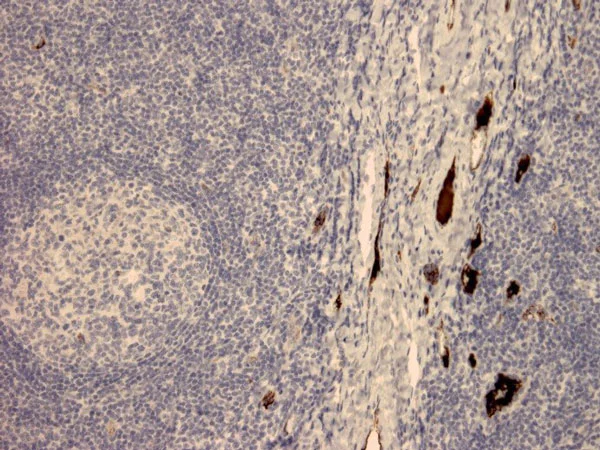
Immunohistochemistry (Formalin/PFA-fixed paraffin-embedded sections) - Anti-Apolipoprotein B antibody [7B8] (AB39560)
Immunohistochemistry (Formalin/PFA-fixed paraffin-embedded sections) analysis of human tonsil tissue labelling Apolipoprotein B with ab39560 at a dilution of 1/400. Plasma of the veins was stained strongly.
- IHC-P
Supplier Data
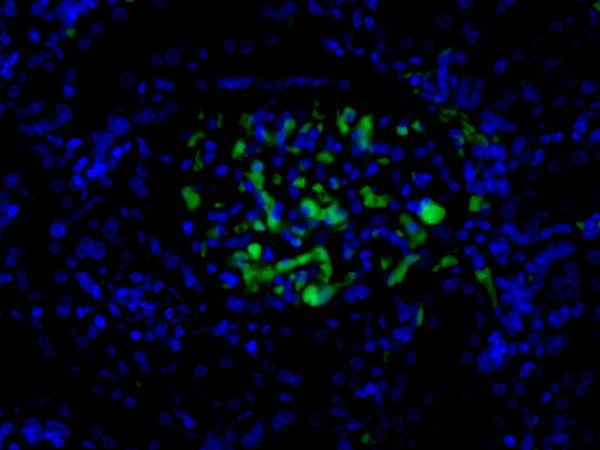
Immunohistochemistry (Formalin/PFA-fixed paraffin-embedded sections) - Anti-Apolipoprotein B antibody [7B8] (AB39560)
Immunohistochemistry (Formalin/PFA-fixed paraffin-embedded sections) analysis of human kidney tissue labelling Apolipoprotein B with ab39560 at a dilution of 1/100. Signal is strong in the veins of the glomerulus.
- IHC-P
Supplier Data
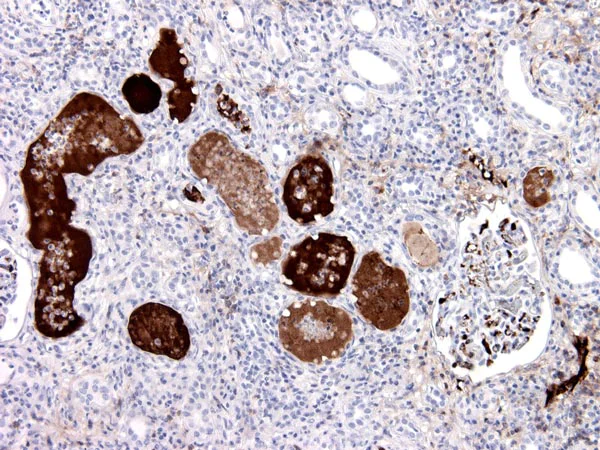
Immunohistochemistry (Formalin/PFA-fixed paraffin-embedded sections) - Anti-Apolipoprotein B antibody [7B8] (AB39560)
Immunohistochemistry (Formalin/PFA-fixed paraffin-embedded sections) analysis of human kidney tissue labelling Apolipoprotein B with ab39560 at a dilution of 1/400. Plasma veins were stained strongly.
Alternative Products
Primary Antibodies
AB139401
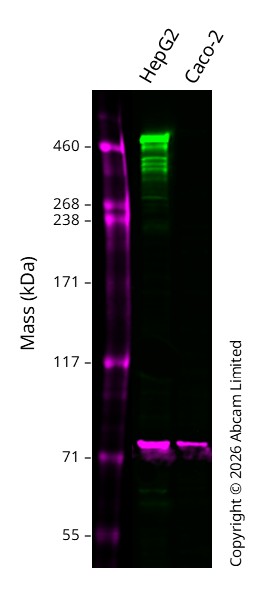
Anti-Apolipoprotein B antibody [EPR2914]
20ul selling size|RabMAb|Recombinant
- 0
- 0
Primary Antibodies
AB231683
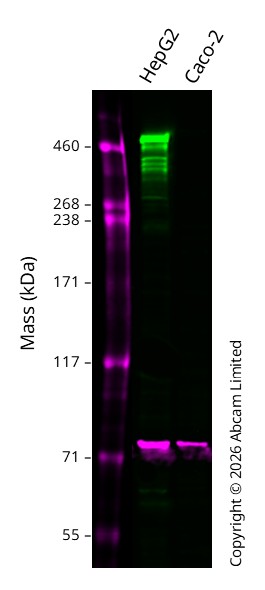
Anti-Apolipoprotein B antibody [EPR2914] - BSA and Azide free
RabMAb|Recombinant
- 0
- 0
Complementary Products
Primary Antibodies
AB52945
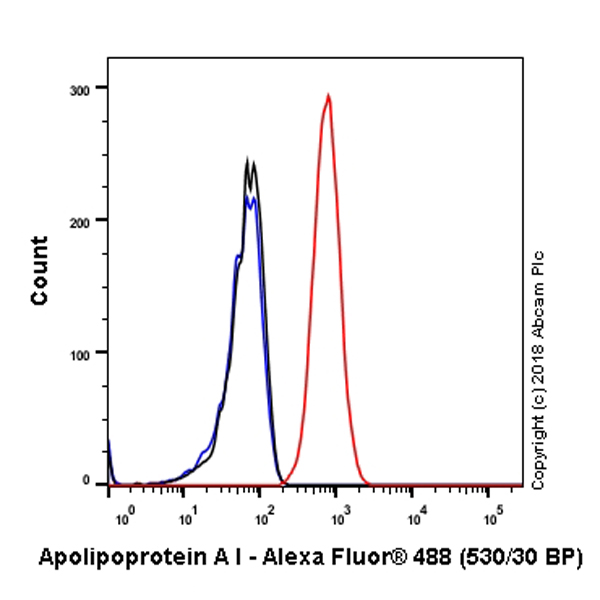
Anti-Apolipoprotein A I antibody [EP1368Y]
20ul selling size|RabMAb|Recombinant
- 4
- 9

Primary Antibodies
AB183597
Anti-Apolipoprotein E antibody [EPR19392]
20ul selling size|RabMAb|Recombinant|KO Validated

- 0
- 0
Primary Antibodies
AB125011
Anti-TSG101 antibody [EPR7130(B)]
20ul selling size|BOND RX™ Validated|RabMAb|Recombinant

- 4
- 10
Reactivity data
Properties and storage information
Form
Purification technique
Storage buffer
Shipped at conditions
Appropriate short-term storage duration
Appropriate short-term storage conditions
Appropriate long-term storage conditions
Storage information
Supplementary information
This supplementary information is collated from multiple sources and compiled automatically.
Biological function summary
ApoB plays a significant role in lipid transport and metabolism. It is a critical component of the lipoprotein particle complex which is responsible for the transport of lipids such as cholesterol and triglycerides through the bloodstream. ApoB helps in the binding of lipoproteins to cell receptors facilitating the uptake of lipids by tissues. Its presence on the surface of lipoproteins makes it important for normal cholesterol homeostasis in the human body.
Pathways
ApoB is integrated within the lipid metabolism pathway. It interacts with proteins such as microsomal triglyceride transfer protein (MTP) during the assembly and secretion of lipoproteins. This pathway is essential for the normal transport of lipids throughout the body and influences processes like absorption of dietary fats. ApoB also plays a role in the pathways related to atherosclerosis where it influences the deposition of cholesterol in arterial walls.
Product protocols
- Visit the General protocols
- Visit the Troubleshooting
Target data
Alternative Names
Publications (2)
Recent publications for all applications. Explore the full list and refine your search
Nutrition & metabolism 17:22 PubMed32206077
2020
Applications
Unspecified application
Species
Unspecified reactive species
Journal of proteome research 17:2156-2164 PubMed29649363
2018
Applications
Unspecified application
Species
Unspecified reactive species
Product promise
Please note: All products are 'FOR RESEARCH USE ONLY. NOT FOR USE IN DIAGNOSTIC OR THERAPEUTIC PROCEDURES'.
For licensing inquiries, please contact partnerships@abcam.com