Goat Polyclonal ARPC1A antibody. Suitable for WB and reacts with Rat, Mouse, Human samples. Cited in 2 publications. Immunogen corresponding to Synthetic Peptide within Human ARPC1A aa 350-400.
View Alternative Names
SOP2L, ARPC1A, Actin-related protein 2/3 complex subunit 1A, SOP2-like protein
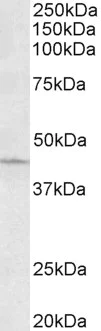
- WB
Supplier Data
Western blot - Anti-ARPC1A antibody (AB133160)
Primary incubation for 1 hour.
All lanes:
Western blot - Anti-ARPC1A antibody (ab133160) at 0.3 µg/mL
All lanes:
HeLa cell lysate (in RIPA buffer) at 35 µg
Predicted band size: 42 kDa
true
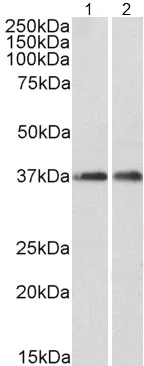
- WB
Supplier Data
Western blot - Anti-ARPC1A antibody (AB133160)
Primary incubation for 1 hour.
All lanes:
Western blot - Anti-ARPC1A antibody (ab133160) at 0.1 µg/mL
Lane 1:
Mouse brain lysate (in RIPA buffer) at 35 µg
Lane 2:
Adult rat brain lysate (in RIPA buffer) at 35 µg
Predicted band size: 42 kDa
Observed band size: 37 kDa
true
Complementary Products
Primary Antibodies
AB182858
Anti-Bcl-2 antibody [EPR17509]
BOND RX™ Validated|RabMAb|Recombinant|KO Validated|20ul selling size

- 5
- 13

Primary Antibodies
AB184787
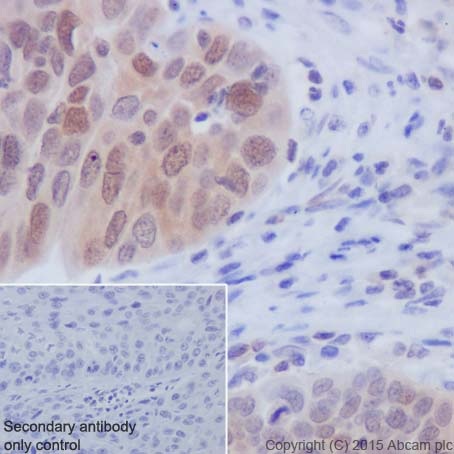
Anti-Caspase-3 antibody [EPR18297]
20ul selling size|RabMAb|Recombinant|KO Validated
- 3
- 3
Primary Antibodies
AB108629
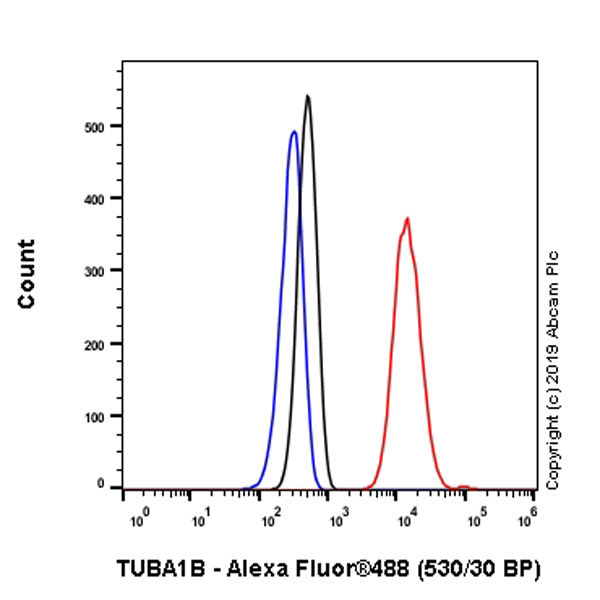
Anti-TUBA1B antibody [EPR1333] - Loading Control
20ul selling size|BOND RX™ Validated|RabMAb|Recombinant|Lab Essentials
- 0
- 0
Reactivity data
Properties and storage information
Form
Purification technique
Purification notes
Storage buffer
Shipped at conditions
Appropriate short-term storage duration
Appropriate short-term storage conditions
Appropriate long-term storage conditions
Aliquoting information
Storage information
Supplementary information
This supplementary information is collated from multiple sources and compiled automatically.
Biological function summary
The ARP2/3 complex which includes ARPC1A facilitates the formation of branched actin networks. This function supports important cellular processes like endocytosis cell migration and cell-cell adhesion. As part of the multiprotein ARP2/3 complex ARPC1A cooperates with other subunits to initiate and stimulate rapid actin polymerization providing a scaffold for cellular structure and transport pathways.
Pathways
ARPC1A participates actively in the Arp2/3-mediated actin nucleation pathway as well as pathways involved in cell motility and morphogenesis. This protein works closely with members of the Wiskott-Aldrich syndrome protein (WASP) family which activate the ARP2/3 complex. Additionally ARPC1A interacts within the Rho GTPase signaling pathways contributing to cytoskeletal rearrangements.
Product protocols
- Visit the General protocols
- Visit the Troubleshooting
Target data
Publications (2)
Recent publications for all applications. Explore the full list and refine your search
Science advances 9:eadd6495 PubMed36662867
2023
Applications
Unspecified application
Species
Unspecified reactive species
Oncotarget 6:34704-17 PubMed26430963
2015
Applications
Unspecified application
Species
Unspecified reactive species
Product promise
Please note: All products are 'FOR RESEARCH USE ONLY. NOT FOR USE IN DIAGNOSTIC OR THERAPEUTIC PROCEDURES'.
For licensing inquiries, please contact partnerships@abcam.com