JavaScript is disabled in your browser. Please enable JavaScript to view this website.
AB90435

Anti-Bad antibody

4

(1 Review)

|

(40 Publications)

Rabbit Polyclonal BAD antibody. Suitable for WB, IHC-P and reacts with Mouse samples. Cited in 40 publications.

View Alternative Names

Bbc6, Bad, Bcl2-associated agonist of cell death, BAD, Bcl-2-binding component 6, Bcl-xL/Bcl-2-associated death promoter, Bcl2 antagonist of cell death
1 Images
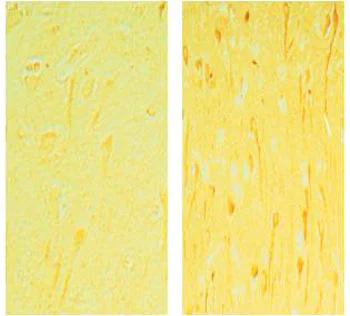
Immunohistochemistry (Formalin/PFA-fixed paraffin-embedded sections) - Anti-Bad antibody (AB90435)
  • IHC-P

Unknown

Immunohistochemistry (Formalin/PFA-fixed paraffin-embedded sections) - Anti-Bad antibody (AB90435)

ab90435, at a 1/50 dilution, staining BAD in the neurons of paraffin embedded Alzheimer diseased brain tissue (right) by Immunohistochemistry. Control brain tissue (left).

Key facts

Host species

Rabbit

Clonality

Polyclonal

Isotype

IgG

Carrier free

No

Reacts with

Mouse

Applications

WB, IHC-P

applications

Immunogen

The exact immunogen used to generate this antibody is proprietary information.

Specificity

This antibody specifically binds the Bad protein, but does not recognize Bad/Bcl2 heterodimers in Immunoprecipitation assays.

Reactivity data

{ "title": "Reactivity Data", "filters": { "stats": ["", "Species", "Dilution Info", "Notes"], "tabs": { "all-applications": {"fullname" : "All Applications", "shortname": "All Applications"}, "WB" : {"fullname" : "Western blot", "shortname":"WB"}, "IHCP" : {"fullname" : "Immunohistochemistry (Formalin/PFA-fixed paraffin-embedded sections)", "shortname":"IHC-P"} }, "product-promise": { "all": "all", "testedAndGuaranteed": "tested", "guaranteed": "expected", "predicted": "predicted", "notRecommended": "not-recommended" } }, "values": { "Mouse": { "WB-species-checked": "testedAndGuaranteed", "WB-species-dilution-info": "1 µg/mL", "WB-species-notes": "<p></p>", "IHCP-species-checked": "guaranteed", "IHCP-species-dilution-info": "1/50", "IHCP-species-notes": "<p></p>" } } }

Properties and storage information

Form
Liquid
Purification technique
Affinity purification Protein A
Storage buffer
Preservative: 0.09% Sodium azide Constituents: PBS, 50% Glycerol (glycerin, glycerine)
Shipped at conditions
Blue Ice
Appropriate short-term storage conditions
+4°C
Appropriate long-term storage conditions
-20°C
Aliquoting information
Upon delivery aliquot
Storage information
Avoid freeze / thaw cycle

Supplementary information

This supplementary information is collated from multiple sources and compiled automatically.

The Bad protein also known as Bcl-2-associated death promoter plays a critical role in apoptosis regulation. It possesses a molecular weight of approximately 23 kDa. Bad is expressed widely in tissues and is a member of the Bcl-2 family of proteins. This family is well-known for its involvement in the regulation of cell death both promoting and inhibiting depending on the protein’s interactions.
Biological function summary

Its main role is to promote apoptosis by binding to anti-apoptotic proteins like Bcl-2 and Bcl-XL displacing pro-apoptotic Bax and Bak proteins to trigger cell death. Bad functions as part of the mitochondrial apoptosis pathway and is known to form complexes with phosphorylated proteins. Phosphorylation of Bad by kinases can lead to its sequestration to the cytoplasm reducing apoptosis.

Pathways

Its action is pivotal in the PI3K/Akt signaling pathway. This pathway involves growth factors and cell survival signals where phosphorylation of Bad inhibits its pro-apoptotic activity. Bad interacts with proteins like Akt and 14-3-3 to modulate cell survival. Disruption in its regulation through these pathways may lead to abnormal cell survival or death.

Bad has implications in cancer and neurodegenerative diseases. Cancer cells often exhibit impaired apoptotic pathways where overexpression of Bad can ameliorate responsiveness to therapy. In neurodegenerative diseases such as Alzheimer's dysregulation of its function can contribute to cell death. The protein’s interaction with Bcl-2 and Bcl-XL is significant in these contexts influencing disease propagation and severity.

Product protocols

For this product, it's our understanding that no specific protocols are required. You can visit:

Target data

Promotes cell death. Successfully competes for the binding to Bcl-X(L), Bcl-2 and Bcl-W, thereby affecting the level of heterodimerization of these proteins with BAX. Can reverse the death repressor activity of Bcl-X(L), but not that of Bcl-2. Appears to act as a link between growth factor receptor signaling and the apoptotic pathways.
See full target information Bad

Publications (40)

Recent publications for all applications. Explore the full list and refine your search

International journal of molecular sciences 26: PubMed39796130

2025

Silencing of Epidermal Growth Factor-like Domain 8 Promotes Proliferation and Cancer Aggressiveness in Human Ovarian Cancer Cells by Activating ERK/MAPK Signaling Cascades.

Applications

Unspecified application

Species

Unspecified reactive species

Yong-Jung Song,Ji-Eun Kim,Lata Rajbongshi,Ye-Seon Lim,Ye-Jin Ok,Seon-Yeong Hwang,Hye-Yun Park,Jin-Eui Lee,Sae-Ock Oh,Byoung-Soo Kim,Dongjun Lee,Hwi-Gon Kim,Sik Yoon

Oncology letters 24:261 PubMed35765271

2022

MicroRNA-409-5p inhibits cell proliferation, and induces G/M phase arrest and apoptosis by targeting DLGAP5 in ovarian cancer cells.

Applications

Unspecified application

Species

Unspecified reactive species

Weiwei Li,Ji Lin,Jianfen Huang,Zhuoying Chen,Qunying Sheng,Fang Yang,Xue Yang,Xiaojie Cui

Bioengineered 13:3596-3607 PubMed35112987

2022

Mitophagy alleviates ischemia/reperfusion-induced microvascular damage through improving mitochondrial quality control.

Applications

Unspecified application

Species

Unspecified reactive species

Dan Wu,Haizhe Ji,Wenjuan Du,Lina Ren,Geng Qian

In vivo (Athens, Greece) 35:2599-2608 PubMed34410947

2021

Anticancer Effect of ERM210 on Liver Cancer Cells Through ROS/Mitochondria-dependent Apoptosis Signaling Pathways.

Applications

Unspecified application

Species

Unspecified reactive species

Jaihyung Lee,Yi-Xi Gong,Dan-Ping Xie,Hyunjeong Jeong,Hoyoung Seo,Jihwan Kim,Yang Ho Park,Hu-Nan Sun,Taeho Kwon

Frontiers in pharmacology 12:713715 PubMed34381366

2021

The Dual Dose-Dependent Effects of Corticosterone on Hippocampal Cell Apoptosis After Traumatic Brain Injury Depend on the Activation Ratio of Mineralocorticoid Receptors to Glucocorticoid Receptors.

Applications

Unspecified application

Species

Unspecified reactive species

Bin Zhang,Mengshi Yang,Qiongyu Yan,Xiaojian Xu,Fei Niu,Jinqian Dong,Yuan Zhuang,Shenghua Lu,Qianqian Ge,Baiyun Liu

Frontiers in physiology 12:707634 PubMed34305656

2021

Mitofusin-2 Enhances Mitochondrial Contact With the Endoplasmic Reticulum and Promotes Diabetic Cardiomyopathy.

Applications

Unspecified application

Species

Unspecified reactive species

Jing Zhang,Feng Zhang,Yanou Wang

Experimental and therapeutic medicine 21:486 PubMed33790995

2021

Klotho overexpression suppresses apoptosis by regulating the Hsp70/Akt/Bad pathway in H9c2(2-1) cells.

Applications

Unspecified application

Species

Unspecified reactive species

Jinpeng Hu,Bin Su,Xuewen Li,Yuming Li,Jihong Zhao

Journal of neuroinflammation 17:318 PubMed33100225

2020

Corticosteroid receptor rebalancing alleviates critical illness-related corticosteroid insufficiency after traumatic brain injury by promoting paraventricular nuclear cell survival via Akt/CREB/BDNF signaling.

Applications

Unspecified application

Species

Unspecified reactive species

Bin Zhang,Miao Bai,Xiaojian Xu,Mengshi Yang,Fei Niu,Fei Gao,Baiyun Liu

PloS one 15:e0235404 PubMed32785222

2020

The role of serum inflammatory cytokines and berberine in the insulin signaling pathway among women with polycystic ovary syndrome.

Applications

Unspecified application

Species

Unspecified reactive species

Hongying Kuang,Yuwei Duan,Dan Li,Yanwen Xu,Wenxia Ai,Wei Li,Ying Wang,Sha Liu,Mushan Li,Xiaoqiu Liu,Manqi Shao

Anticancer research 40:3819-3830 PubMed32620621

2020

Anti-tumor Properties of Extracts in H-Ras Liver Cancer Are Mediated Through ROS-dependent Mitochondrial Dysfunction.

Applications

Unspecified application

Species

Unspecified reactive species

Dan-Ping Xie,Yi-Xi Gong,Ying-Hua Jin,Chen-Xi Ren,Yue Liu,Ying-Hao Han,Mei-Hua Jin,Dan Zhu,Qiu-Zhen Pan,Li-Yun Yu,Dong-Seok Lee,Jaihyung Lee,Jihwan Kim,Yang Ho Park,Jin Won Hyun,Taeho Kwon,Yu-Dong Cui,Hu-Nan Sun
View all publications

Product promise

We are committed to supporting your work with high-quality reagents, and we're here for you every step of the way. In the unlikely event that one of our products does not perform as expected, you're protected by our Product Promise.
For full details, please see our Terms & Conditions

Please note: All products are 'FOR RESEARCH USE ONLY. NOT FOR USE IN DIAGNOSTIC OR THERAPEUTIC PROCEDURES'.

For licensing inquiries, please contact partnerships@abcam.com