Anti-CCL4/MIP-1 beta antibody
Be the first to review this product! Submit a review
|
(1 Publication)
- WB
Unknown
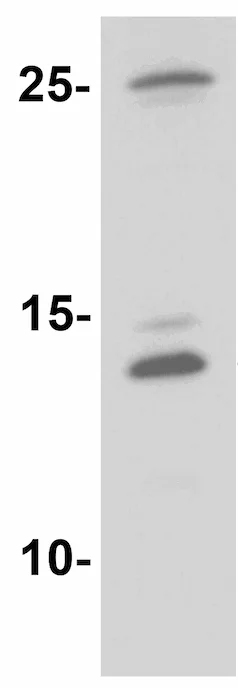
Western blot - Anti-CCL4/MIP-1 beta antibody (AB167045)
All lanes:
Western blot - Anti-CCL4/MIP-1 beta antibody (ab167045) at 1 µg/mL
All lanes:
Rat brain lysate at 15 µg
Predicted band size: 10 kDa
false
Alternative Products
Primary Antibodies
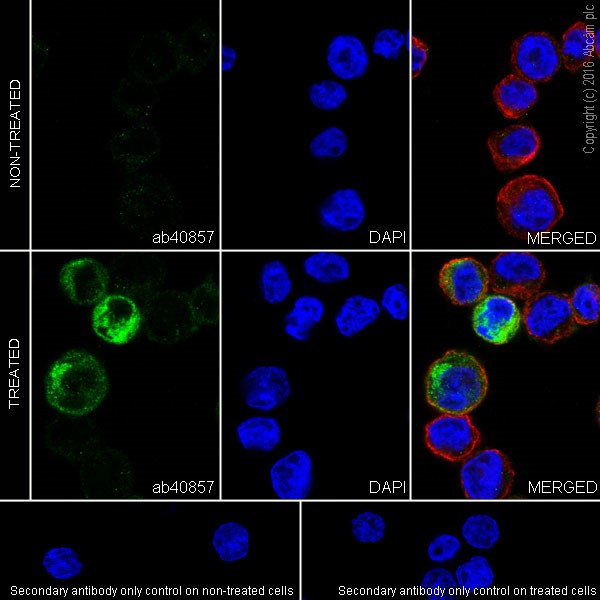
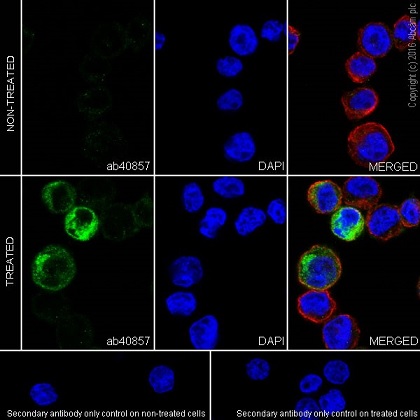
AB40857
Anti-CCL4/MIP-1 beta + CCL4L1 antibody [EPR494]
20ul selling size|RabMAb|Recombinant
- 0
- 0
Primary Antibodies
AB232158
Anti-CCL4/MIP-1 beta + CCL4L1 antibody [EPR494] - BSA and Azide free
RabMAb|Recombinant
- 0
- 0
Primary Antibodies
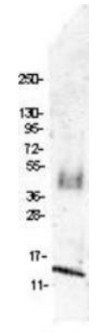
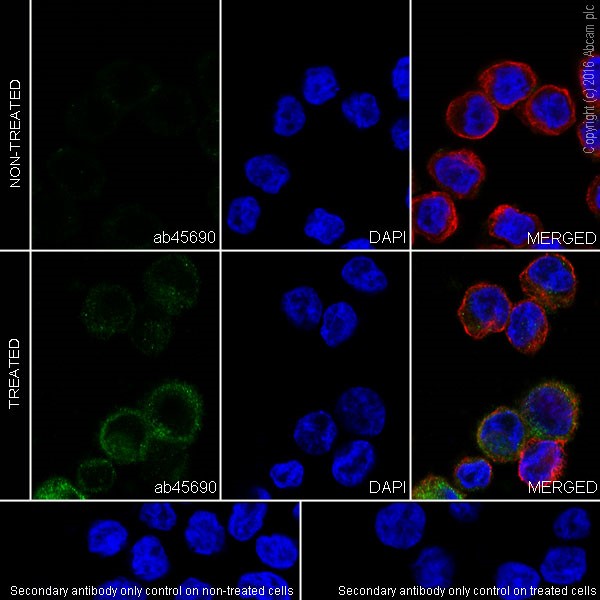
AB45690
Anti-CCL4/MIP-1 beta antibody [EP521Y]
20ul selling size|RabMAb|Recombinant|KO Validated
- 1
- 1
Complementary Products
Primary Antibodies
AB259372
Anti-CCL3 / MIP-1 alpha + CCL3L1 antibody [EPR23751-54]
BOND RX™ Validated|RabMAb|Recombinant|20ul selling size
- 0
- 0
Primary Antibodies
AB315478
BOND RX™ Validated|20ul selling size|RabMAb|Recombinant|KO Validated
- 0
- 0
Primary Antibodies
AB288437
Anti-CXCR3 antibody [EPR25373-32]
BOND RX™ Validated|20ul selling size|RabMAb|Recombinant
- 4
- 1
Primary Antibodies
AB259863
Anti-CXCL11 antibody [EPR23814-16]
20ul selling size|RabMAb|Recombinant

- 0
- 0
Reactivity data
Properties and storage information
Form
Purification technique
Purification notes
Storage buffer
Shipped at conditions
Appropriate short-term storage duration
Appropriate short-term storage conditions
Appropriate long-term storage conditions
Aliquoting information
Supplementary information
This supplementary information is collated from multiple sources and compiled automatically.
Biological function summary
CCL4 is critical in immune system modulation. It coordinates leukocyte activation and trafficking contributing to inflammation and immune surveillance. It does not function in isolation but rather interacts with other chemokines and receptors. CCL4 alongside its sibling chemokines forms a dynamic network that ensures a balanced immune response. It connects to receptors such as CCR5 playing substantial roles in its activities.
Pathways
CCL4 participates in essential signaling cascades that mediate immune responses. It is notably part of the chemokine signaling pathway which is instrumental in directing cell movement. CCL4 also engages with proteins like CCR5 in the inflammatory and immune response pathways. This interaction enhances communication between cells required for effective pathogen defense.
Product protocols
- Visit the General protocols
- Visit the Troubleshooting
Target data
Alternative Names
Publications (1)
Recent publications for all applications. Explore the full listand refine your search
Environmental toxicology 37:2398-2411 PubMed35730485
2022
Applications
Unspecified application
Species
Unspecified reactive species
Product promise
Please note: All products are 'FOR RESEARCH USE ONLY. NOT FOR USE IN DIAGNOSTIC OR THERAPEUTIC PROCEDURES'.
For licensing inquiries, please contact partnerships@abcam.com