
- IHC-P
Supplier Data
Immunohistochemistry (Formalin/PFA-fixed paraffin-embedded sections) - Anti-CCR7/CD197 antibody (AB191575)
Immunohistochemical analysis of paraffin-embedded Human spleen tissue labeling CCR7 with ab191575 at 20 μg/ml.
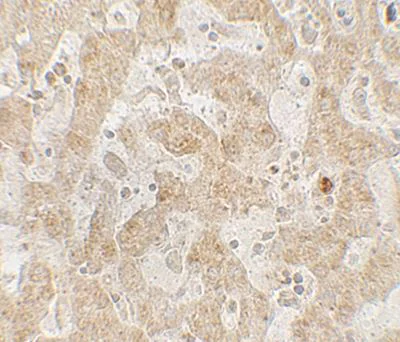
- IHC-P
Supplier Data
Immunohistochemistry (Formalin/PFA-fixed paraffin-embedded sections) - Anti-CCR7/CD197 antibody (AB191575)
Immunohistochemical analysis of paraffin-embedded Human spleen tissue labeling CCR7 with ab191575 at 5 μg/ml.
- WB
Supplier Data
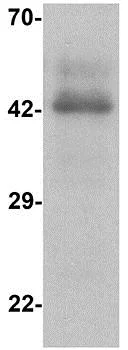
Western blot - Anti-CCR7/CD197 antibody (AB191575)
All lanes:
Western blot - Anti-CCR7/CD197 antibody (ab191575) at 1 µg/mL
All lanes:
Human spleen tissue lysate at 15 µg
Predicted band size: 43 kDa
false
Alternative Products

Complementary Products
Primary Antibodies
AB133616
BOND RX™ Validated|RabMAb|Recombinant|Lab Essentials|20ul selling size

- 5
- 20
Primary Antibodies
AB52632
Anti-CD11c antibody [EP1347Y] - C-terminal
BOND RX™ Validated|20ul selling size|RabMAb|Recombinant

- 5
- 18
Primary Antibodies
AB215977
Anti-CD16 antibody [EPR16784] - Low endotoxin, Azide free
BOND RX™ Validated|RabMAb|Recombinant

- 4
- 1
Primary Antibodies
AB303476
Alexa Fluor® 647 Anti-CD127 antibody [EPR22835-249]
RabMAb|Recombinant

- 0
- 0
Reactivity data
Properties and storage information
Form
Purification technique
Storage buffer
Shipped at conditions
Appropriate short-term storage duration
Appropriate short-term storage conditions
Appropriate long-term storage conditions
Aliquoting information
Storage information
Supplementary information
This supplementary information is collated from multiple sources and compiled automatically.
Biological function summary
CCR7 plays an important role in directing the migration and homeostasis of T cells and dendritic cells. It is not part of a larger protein complex but interacts functionally with specific signaling enzymes upon activation. CCR7 is important for the function of the immune system aiding in the development of adaptive immunity by controlling lymphocyte movement and positioning in lymphoid tissues. This receptor assists in guiding cells to specific lymphoid organs where immune responses are initiated and maintained.
Pathways
CCR7 is significantly involved in the CCL19/CCL21 chemokine signaling pathways which help direct immune cell positioning. CCR7 interacts with these chemokines to regulate the trafficking of cells to lymphoid tissues. Additionally it works in tandem with other receptors like CCR5 in the regulation of immune cell mobilization. These pathways are essential in coordinating the immune response during infection and inflammation.
Product protocols
- Visit the General protocols
- Visit the Troubleshooting
Target data
Alternative Names
Publications (9)
Recent publications for all applications. Explore the full listand refine your search
Oncology research 33:199-212 PubMed39735670
2024
Applications
Unspecified application
Species
Unspecified reactive species
Cancer control : journal of the Moffitt Cancer Center 31:10732748241238616 PubMed38553809
2024
Applications
Unspecified application
Species
Unspecified reactive species
Bioengineering & translational medicine 8:e10528 PubMed37476066
2023
Applications
Unspecified application
Species
Unspecified reactive species
PeerJ 11:e14929 PubMed36846458
2023
Applications
Unspecified application
Species
Unspecified reactive species
Neural regeneration research 16:1836-1847 PubMed33510091
2021
Applications
Unspecified application
Species
Unspecified reactive species
Journal of neuroinflammation 17:255 PubMed32861243
2020
Applications
Unspecified application
Species
Unspecified reactive species
Acta biomaterialia 97:187-199 PubMed31386930
2019
Applications
Unspecified application
Species
Unspecified reactive species
Journal of cellular physiology 234:13145-13156 PubMed30584667
2018
Applications
Unspecified application
Species
Unspecified reactive species
Journal of the American Heart Association 4: PubMed25814626
2015
Applications
IHC-P
Species
Human
Product promise
Please note: All products are 'FOR RESEARCH USE ONLY. NOT FOR USE IN DIAGNOSTIC OR THERAPEUTIC PROCEDURES'.
For licensing inquiries, please contact partnerships@abcam.com