Anti-CD147 antibody [OX47] - BSA and Azide free
Be the first to review this product! Submit a review
|
(1 Publication)
- Flow Cyt
Lab
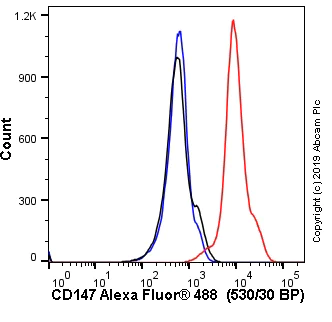
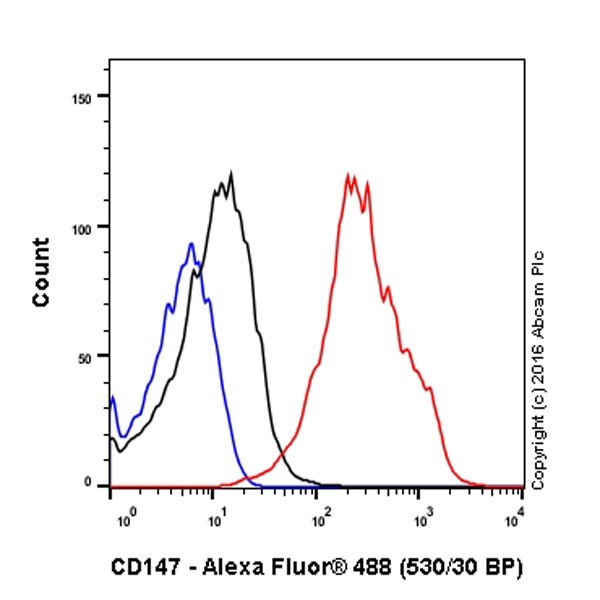
Flow Cytometry - Anti-CD147 antibody [OX47] - BSA and Azide free (AB244578)
This data was developed using the same antibody clone in a different buffer formulation (ab238462).
Overlay histogram showing Lewis rat splenocytes stained with ab238462 (red line). The cells were incubated in 1x PBS containing 10 % rat serum to block FC receptors and non-specific protein-protein interaction followed by the antibody (ab238462) (1x<sup>106</sup> in 100 μl at 0.2 μg/ml) for 30 min on ice.
The secondary antibody Goat anti-mouse IgG H&L (Alexa Fluor <sup>®;</sup> 488, pre-adsorbed) (ab150117) was used at 1/2000 for 30 min on ice.
Isotype control antibody (black line) was mouse IgG1κ (ab170190) used at the same concentration and conditions as the primary antibody. Unlabelled sample (blue line) was also used as a control.
Acquisition of >5,000 events were collected using a 50 mW Blue laser (488nm) and 530/30 bandpass filter. Events were gated on live single cells.
- IHC-Fr
Supplier Data
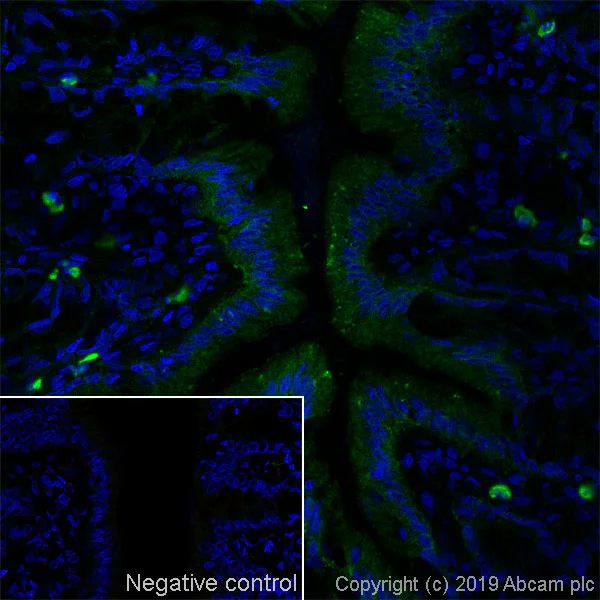
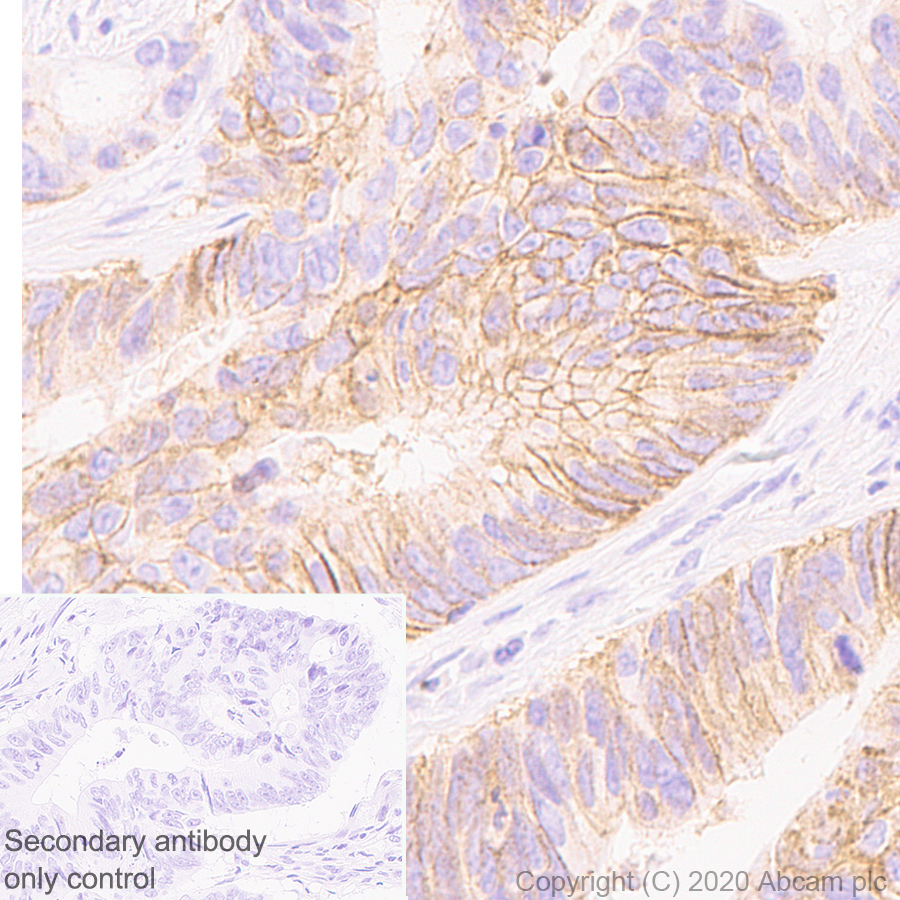
Immunohistochemistry (Frozen sections) - Anti-CD147 antibody [OX47] - BSA and Azide free (AB244578)
This data was developed using the same antibody clone in a different buffer formulation containing PBS and sodium azide (ab238462).
IHC image of CD147 staining in a section of frozen normal rat colon*.
The section was fixed using 10% formaldehyde in 1XPBS for 10 minutes. No antigen retrieval step was performed prior to staining. Non-specific protein-protein interactions were then blocked in TBS containing 0.025% (v/v) Triton X-100, 0.3M glycine and 1% (w/v) BSA for 1h at room temperature. The section was then incubated overnight at +4C in TBS containing 0.025% (v/v) Triton X-100 and 1% (w/v) BSA with ab238462 (shown in green) at 5g/ml.
The section was then incubated with ab150117 (Goat polyclonal Secondary Antibody to Mouse IgG - H&L (Alexa Fluor® 488, 1/1000)) presabsorbed for 1 hour at room temperature. The secondary-only control image is taken from an identical assay without primary antibody. The section was then mounted using Fluoromount®.
Image was taken with a confocal microscope (Leica-Microsystems, TCS SP8).For IHC staining systems (automated and non-automated), customers should optimize variable parameters such as antibody concentrations and incubation times.
*Tissue obtained from Charles River.
Related conjugates and formulations (1)
-
Anti-CD147 antibody [OX47]
Alternative Products
Primary Antibodies
AB212057
Anti-CD147 antibody [EPR18008-67]
20ul selling size|RabMAb|Recombinant
- 0
- 0
Primary Antibodies
AB108308
20ul selling size|BOND RX™ Validated|RabMAb|Recombinant|KO Validated
- 3
- 1
Primary Antibodies
AB251535
Anti-CD147 antibody [EPR18008-67] - BSA and Azide free
RabMAb|Recombinant

- 0
- 0
Primary Antibodies
AB222389
Anti-CD147 antibody [EPR18008-8] - BSA and Azide free
RabMAb|Recombinant
- 0
- 0
Primary Antibodies
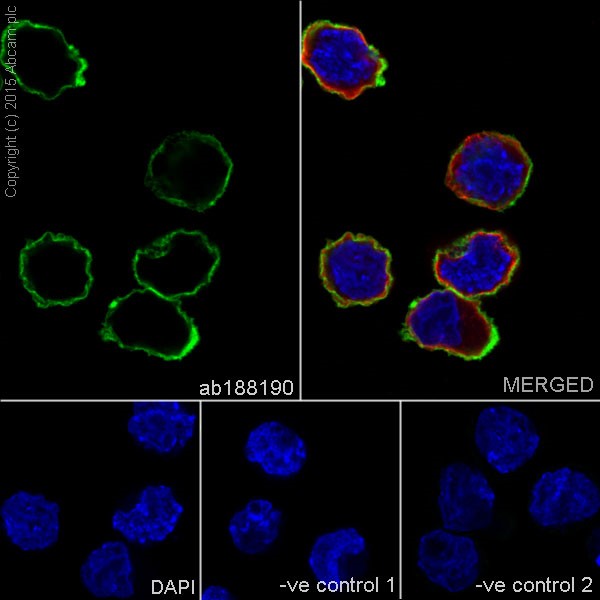
AB188190
Anti-CD147 antibody [EPR18008-8]
20ul selling size|RabMAb|Recombinant
- 0
- 0
Complementary Products
Primary Antibodies
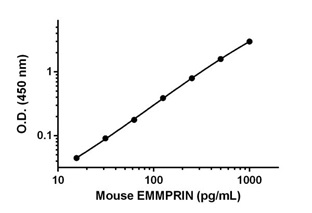
AB115730
Anti-Glucose Transporter GLUT1 antibody [EPR3915]
BOND RX™ Validated|20ul selling size|RabMAb|Recombinant|KO Validated

- 4
- 20
Primary Antibodies
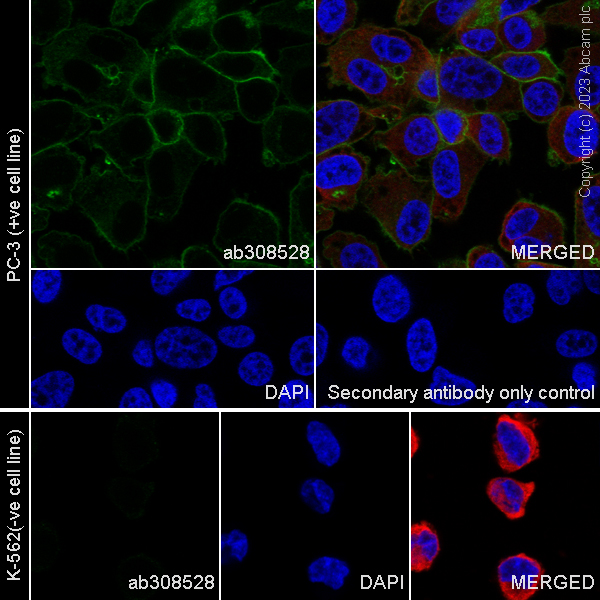
AB308528
Anti-SLC16A3/MCT 4 antibody [EPR28177-30]
BOND RX™ Validated|20ul selling size|RabMAb|Recombinant
- 0
- 0
Primary Antibodies
AB283575
BOND RX™ Validated|20ul selling size|RabMAb|Recombinant|KO Validated|Trial Size

- 0
- 0
Reactivity data
Product details
ab244578 is the carrier-free version of ab238462.
Want a custom formulation?
This antibody clone is manufactured by Abcam. If you require a custom buffer formulation or conjugation for your experiments, please contact orders@abcam.com
Conjugation ready
Our carrier-free antibodies are typically supplied in a PBS-only formulation, purified and free of BSA, sodium azide and glycerol. This conjugation-ready format is designed for use with fluorochromes, metal isotopes, oligonucleotides, and enzymes, which makes them ideal for antibody labelling, functional and cell-based assays, flow-based assays (e.g. mass cytometry) and Multiplex Imaging applications.
Use our conjugation kits for antibody conjugates that are ready-to-use in as little as 20 minutes with 1 minute hands-on-time and 100% antibody recovery: available for fluorescent dyes, HRP, biotin and gold.
Compatibility
This product is compatible with the Maxpar® Antibody Labeling Kit from Fluidigm, without the need for antibody preparation. Maxpar® is a trademark of Fluidigm Canada Inc.
Properties and storage information
Form
Purification technique
Storage buffer
Shipped at conditions
Appropriate short-term storage duration
Appropriate short-term storage conditions
Appropriate long-term storage conditions
Aliquoting information
Storage information
Supplementary information
This supplementary information is collated from multiple sources and compiled automatically.
Biological function summary
CD147 engages in multiple roles beyond its mechanical functions. It functions as a part of protein complexes and is involved in processes such as regulation of matrix metalloproteinases (MMPs) which are pivotal in tissue remodeling and repair. It can modulate inflammatory responses and is essential for cellular signaling pathways that affect cellular metabolism and growth. The involvement of CD147 in immune responses indicates its importance in various physiological processes.
Pathways
CD147 plays a significant role in the MAPK and NF-kB signaling pathways which are fundamental for controlling inflammatory responses and cell survival. It interacts with proteins such as integrins and cyclophilins which are important for mediating these pathways. These interactions highlight CD147's impact on cellular dynamics and its potential role in modulating the cellular environment in response to external stimuli.
Product protocols
- Visit the General protocols
- Visit the Troubleshooting
Target data
Alternative Names
Publications (1)
Recent publications for all applications. Explore the full listand refine your search
Lab on a chip 21:1549-1562 PubMed33629685
2021
Applications
Unspecified application
Species
Unspecified reactive species
Product promise
Please note: All products are 'FOR RESEARCH USE ONLY. NOT FOR USE IN DIAGNOSTIC OR THERAPEUTIC PROCEDURES'.
For licensing inquiries, please contact partnerships@abcam.com