JavaScript is disabled in your browser. Please enable JavaScript to view this website.
AB185304

Anti-CYB561A3 antibody

Be the first to review this product! Submit a review

|

(1 Publication)

Rabbit Polyclonal CYB561A3 antibody. Suitable for IHC-P, WB and reacts with Human samples. Cited in 1 publication. Immunogen corresponding to Recombinant Fragment Protein within Human CYB561A3 aa 200-250.
2 Images
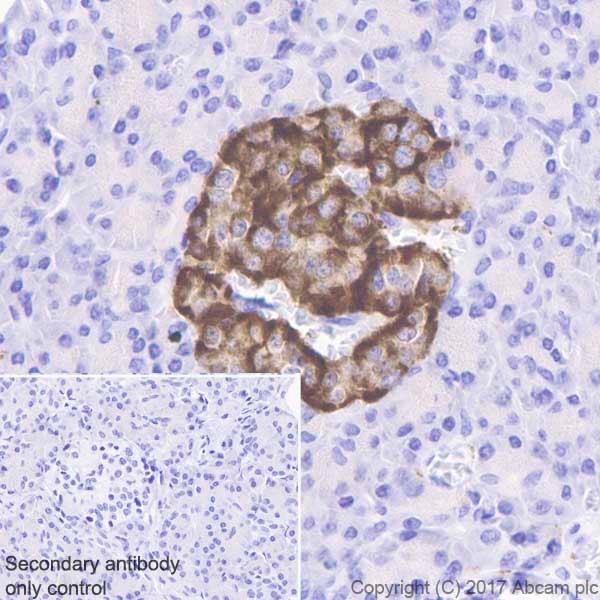
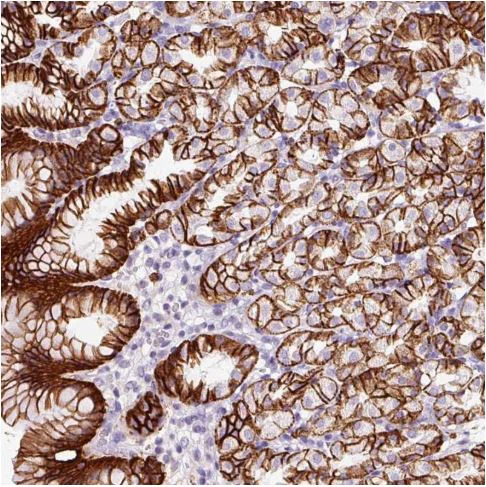
Immunohistochemistry (Formalin/PFA-fixed paraffin-embedded sections) - Anti-CYB561A3 antibody (AB185304)
  • IHC-P

Supplier Data

Immunohistochemistry (Formalin/PFA-fixed paraffin-embedded sections) - Anti-CYB561A3 antibody (AB185304)

Immunohistochemical analysis of paraffin-embedded human stomach tissue labeling CYB561A3 in the membrane and cytoplasm of glandular cells with ab185304 at a 1/200 dilution.

Performed heat mediated antigen retrieval with citrate buffer pH 6 before commencing with IHC staining protocol.
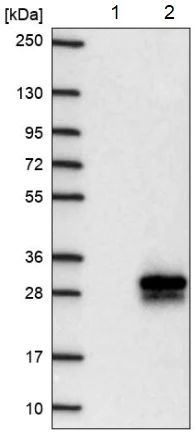
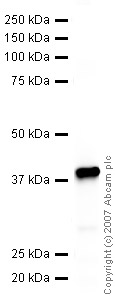
Western blot - Anti-CYB561A3 antibody (AB185304)
  • WB

Supplier Data

Western blot - Anti-CYB561A3 antibody (AB185304)

All lanes:

Western blot - Anti-CYB561A3 antibody (ab185304) at 0.4 µg/mL

Lane 1:

Control (vector only transfected) - HEK-293T (human epithelial cell line from embryonic kidney transformed with large T antigen) whole cell lysate

Lane 2:

CYB561A3 over-expression - HEK-293T whole cell lysate, (Co-expressed with a C-terminal myc-DDK tag (~3.1 kDa))

Predicted band size: 27 kDa

false

Key facts

Host species

Rabbit

Clonality

Polyclonal

Isotype

IgG

Carrier free

No

Reacts with

Human

Applications

IHC-P, WB

applications

Immunogen

Recombinant Fragment Protein within Human CYB561A3 aa 200-250. The exact immunogen used to generate this antibody is proprietary information.

Q8NBI2

Reactivity data

{ "title": "Reactivity Data", "filters": { "stats": ["", "Species", "Dilution Info", "Notes"], "tabs": { "all-applications": {"fullname" : "All Applications", "shortname": "All Applications"}, "IHCP" : {"fullname" : "Immunohistochemistry (Formalin/PFA-fixed paraffin-embedded sections)", "shortname":"IHC-P"}, "WB" : {"fullname" : "Western blot", "shortname":"WB"} }, "product-promise": { "all": "all", "testedAndGuaranteed": "tested", "guaranteed": "expected", "predicted": "predicted", "notRecommended": "not-recommended" } }, "values": { "Human": { "IHCP-species-checked": "testedAndGuaranteed", "IHCP-species-dilution-info": "1/200 - 1/500", "IHCP-species-notes": "<p></p> Perform heat-mediated antigen retrieval with citrate buffer pH 6 before commencing with IHC staining protocol.", "WB-species-checked": "testedAndGuaranteed", "WB-species-dilution-info": "0.04-0.4 µg/mL", "WB-species-notes": "<p></p>" } } }

Properties and storage information

Form
Liquid
Purification technique
Affinity purification Immunogen
Storage buffer
pH: 7.2 Preservative: 0.02% Sodium azide Constituents: PBS, 40% Glycerol (glycerin, glycerine)
Shipped at conditions
Blue Ice
Appropriate short-term storage duration
1-2 weeks
Appropriate short-term storage conditions
+4°C
Appropriate long-term storage conditions
-20°C
Aliquoting information
Upon delivery aliquot
Storage information
Avoid freeze / thaw cycle

Supplementary information

This supplementary information is collated from multiple sources and compiled automatically.

The CYB561A3 protein also referred to as chromaffin granule-associated cytochrome b561 is a cytochrome b561 family member. It has a molecular mass of approximately 27 kDa. This protein functions mechanically as an electron transporter across membranes mainly present in the adrenal medulla and other neuroendocrine tissues. CYB561A3 facilitates electron transfer from ascorbate to monodehydroascorbate radicals which is essential for its activity in electron donor pathways.
Biological function summary

This electron transport activity of CYB561A3 plays a significant role in catecholamine metabolism which is important for neurotransmitter production and regulation. It integrates into the chromaffin granule membrane impacting neuroendocrine secretions particularly adrenaline and noradrenaline. CYB561A3 works in concert with other proteins to maintain the redox environment necessary for enzymatic functions essential in neurochemical signaling.

Pathways

CYB561A3 actively integrates into the catecholamine biosynthesis pathway where it aligns with key enzymes such as dopamine beta-hydroxylase. This pathway is vital in converting dopamine to norepinephrine impacting nerve signal transmission and stress response. Another associated pathway includes the antioxidant regeneration process where CYB561A3 assists in maintaining ascorbate levels an important antioxidant. This enzymatic activity links CYB561A3 to proteins involved in maintaining oxidative balance like superoxide dismutase.

CYB561A3's function links to conditions such as pheochromocytoma a tumor that can influence hormone-secreting chromaffin cells. Dysregulation of CYB561A3 can impact catecholamine synthesis affecting stress and cardiovascular responses. Additionally its relation to oxidative stress management connects CYB561A3 to neurodegenerative diseases. Studies have suggested its interaction with proteins like p53 which can influence cellular responses to stress and contribute to disease progression.

Product protocols

For this product, it's our understanding that no specific protocols are required. You can visit:

Target data

Transmembrane reductase that uses ascorbate as an electron donor in the cytoplasm and transfers electrons across membranes to reduce iron cations Fe(3+) into Fe(2+) in the lumen of the late endosome and lysosome. Reduced iron can then be extruded from the late endosome and lysosome to the cytoplasm by divalent metal-specific transporters. It is therefore most probably involved in endosomal and lysosomal cellular iron homeostasis.
See full target information CYB561A3

Alternative Names

CYBASC3, PSEC0259, CYB561A3, Lysosomal membrane ascorbate-dependent ferrireductase CYB561A3, Cytochrome b ascorbate-dependent protein 3, Cytochrome b561 family member A3, Lysosomal cytochrome b, LCytb

Publications (1)

Recent publications for all applications. Explore the full listand refine your search

BMC cancer 24:354 PubMed38504172

2024

ART1 knockdown decreases the IL-6-induced proliferation of colorectal cancer cells.

Applications

Unspecified application

Species

Unspecified reactive species

Ting Lin,Shuxian Zhang,Yi Tang,Ming Xiao,Ming Li,Hanjuan Gong,Hailun Xie,Yalan Wang
View all publications

Product promise

We are committed to supporting your work with high-quality reagents, and we're here for you every step of the way. In the unlikely event that one of our products does not perform as expected, you're protected by our Product Promise.
For full details, please see our Terms & Conditions

Please note: All products are 'FOR RESEARCH USE ONLY. NOT FOR USE IN DIAGNOSTIC OR THERAPEUTIC PROCEDURES'.

For licensing inquiries, please contact partnerships@abcam.com