JavaScript is disabled in your browser. Please enable JavaScript to view this website.
AB203130

Anti-EAAT2 antibody

Be the first to review this product! Submit a review

|

(4 Publications )

Rabbit Polyclonal EAAT2 antibody. Suitable for WB, IHC-P and reacts with Mouse, Rat, Human samples. Cited in 4 publications. Immunogen corresponding to Synthetic Peptide within Human SLC1A2 aa 100-200 conjugated to Keyhole Limpet Haemocyanin.
1 Images
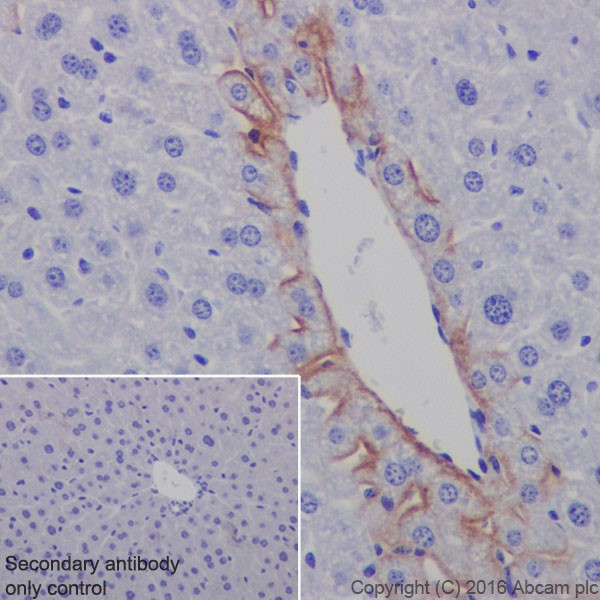
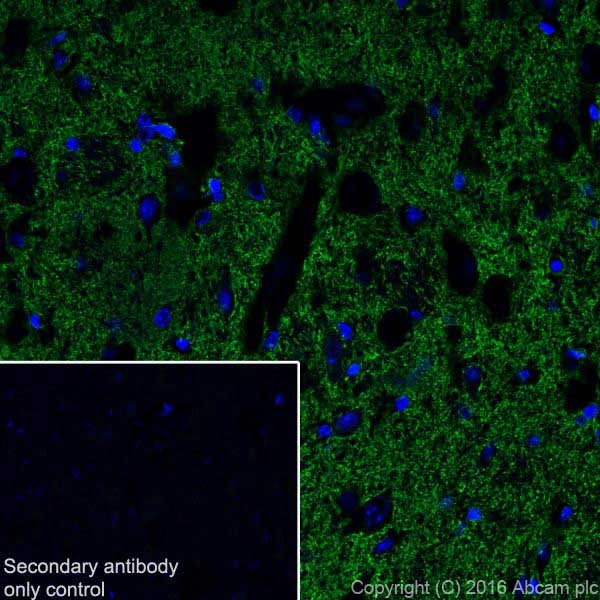
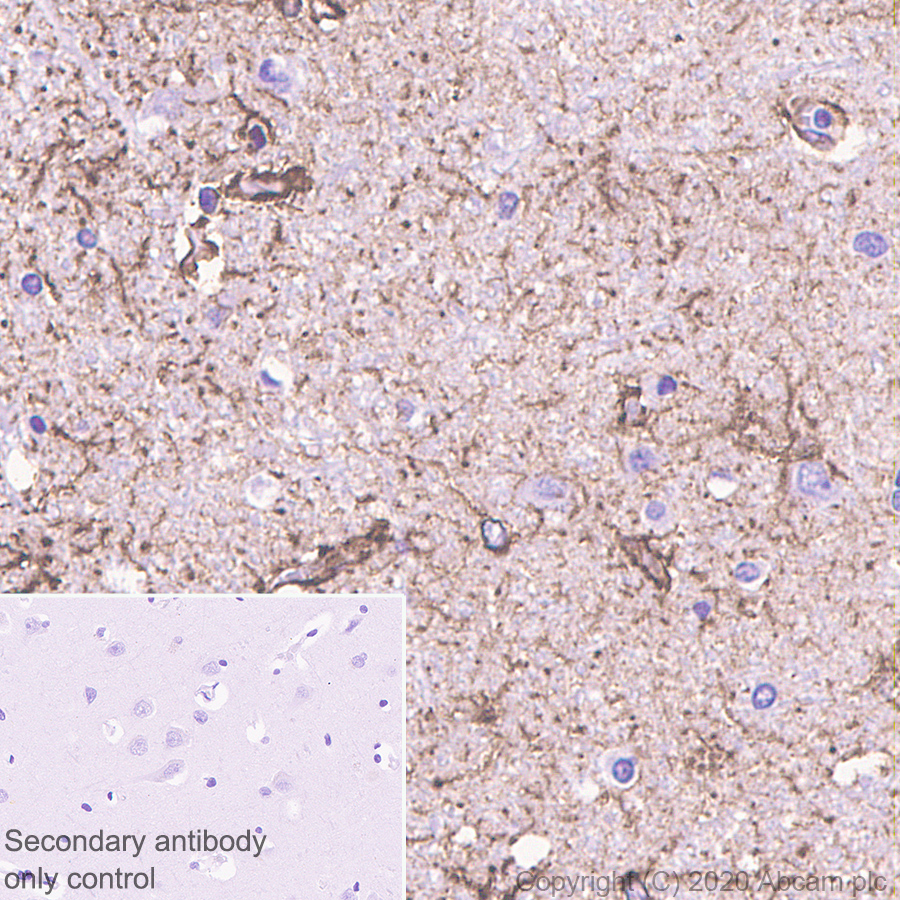
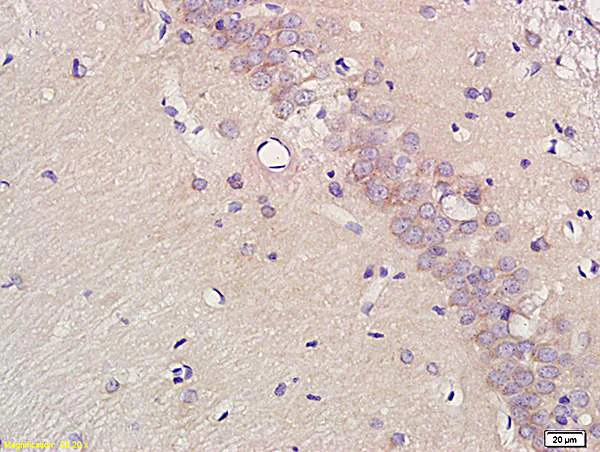
Immunohistochemistry (Formalin/PFA-fixed paraffin-embedded sections) - Anti-EAAT2 antibody (AB203130)
  • IHC-P

Supplier Data

Immunohistochemistry (Formalin/PFA-fixed paraffin-embedded sections) - Anti-EAAT2 antibody (AB203130)

Immunohistochemical analysis of formalin-fixed, paraffin-embedded Rat brain tissue labeling EAAT2 with ab203130 at 1/200 dilution, followed by conjugation to the secondary antibody and DAB staining.

Key facts

Host species

Rabbit

Clonality

Polyclonal

Isotype

IgG

Carrier free

No

Reacts with

Rat, Human, Mouse

Applications

WB, IHC-P

applications

Immunogen

Synthetic Peptide within Human SLC1A2 aa 100-200 conjugated to Keyhole Limpet Haemocyanin. The exact immunogen used to generate this antibody is proprietary information.

P43004

Reactivity data

{ "title": "Reactivity Data", "filters": { "stats": ["", "Species", "Dilution Info", "Notes"], "tabs": { "all-applications": {"fullname" : "All Applications", "shortname": "All Applications"}, "WB" : {"fullname" : "Western blot", "shortname":"WB"}, "IHCP" : {"fullname" : "Immunohistochemistry (Formalin/PFA-fixed paraffin-embedded sections)", "shortname":"IHC-P"} }, "product-promise": { "all": "all", "testedAndGuaranteed": "tested", "guaranteed": "expected", "predicted": "predicted", "notRecommended": "not-recommended" } }, "values": { "Human": { "WB-species-checked": "guaranteed", "WB-species-dilution-info": "", "WB-species-notes": "<p></p>", "IHCP-species-checked": "predicted", "IHCP-species-dilution-info": "", "IHCP-species-notes": "" }, "Mouse": { "WB-species-checked": "guaranteed", "WB-species-dilution-info": "", "WB-species-notes": "<p></p>", "IHCP-species-checked": "predicted", "IHCP-species-dilution-info": "", "IHCP-species-notes": "" }, "Rat": { "WB-species-checked": "guaranteed", "WB-species-dilution-info": "", "WB-species-notes": "<p></p>", "IHCP-species-checked": "testedAndGuaranteed", "IHCP-species-dilution-info": "1/100 - 1/500", "IHCP-species-notes": "<p>(or 1/50 - 1/200 using a fluorescent secondary antibody).</p>" } } }

Properties and storage information

Form
Liquid
Purification technique
Affinity purification Protein A
Storage buffer
pH: 7.4 Preservative: 0.02% Proclin 300 Constituents: 50% Glycerol (glycerin, glycerine), 48.98% TBS, 1X, 1% BSA
Shipped at conditions
Blue Ice
Appropriate short-term storage duration
1-2 weeks
Appropriate short-term storage conditions
+4°C
Appropriate long-term storage conditions
-20°C
Aliquoting information
Upon delivery aliquot
Storage information
Avoid freeze / thaw cycle

Supplementary information

This supplementary information is collated from multiple sources and compiled automatically.

EAAT2 also known as excitatory amino acid transporter 2 or GLT-1 is a protein responsible for reuptake of glutamate from the synaptic cleft into glial cells preventing excitotoxicity. The protein has a mass of approximately 73 kDa and prominently expresses in the central nervous system particularly in astrocytes. By regulating extracellular glutamate levels EAAT2 helps maintain neurotransmitter balance critical for healthy neuron function.
Biological function summary

EAAT2 plays an important role in maintaining synaptic transmission and preventing overexcitation that can lead to neuronal damage. It is part of a transporter complex responsible for the movement of glutamate across the cell membrane working together with ions like sodium and potassium. Due to its significant role in the regulation of neurotransmitter levels in the brain EAAT2 is considered an important player in neural communication processes.

Pathways

EAAT2 is integral to the glutamatergic signaling pathway where its activity supports glutamate recycling and homeostasis. This pathway is important for normal cognitive functions such as learning and memory. EAAT2 works closely with other proteins such as EAAT1 in efforts to regulate glutamate concentrations in the extracellular space impacting synaptic strength and plasticity in the nervous system.

Malfunctions of EAAT2 are associated with conditions like amyotrophic lateral sclerosis (ALS) and Alzheimer's disease. In ALS EAAT2 dysfunction leads to accumulation of neurotoxic levels of glutamate causing motor neuron death. Similarly in Alzheimer’s disease impaired regulation of EAAT2 contributes to neurodegeneration through a related increase in neuronal excitotoxicity. Both conditions emphasize the critical importance of EAAT2 in neuroprotection and maintenance of normal brain function.

Product protocols

For this product, it's our understanding that no specific protocols are required. You can visit:

Target data

Sodium-dependent, high-affinity amino acid transporter that mediates the uptake of L-glutamate and also L-aspartate and D-aspartate (PubMed : 14506254, PubMed : 15265858, PubMed : 26690923, PubMed : 7521911). Functions as a symporter that transports one amino acid molecule together with two or three Na(+) ions and one proton, in parallel with the counter-transport of one K(+) ion (PubMed : 14506254). Mediates Cl(-) flux that is not coupled to amino acid transport; this avoids the accumulation of negative charges due to aspartate and Na(+) symport (PubMed : 14506254). Essential for the rapid removal of released glutamate from the synaptic cleft, and for terminating the postsynaptic action of glutamate (By similarity).
See full target information SLC1A2

Alternative Names

EAAT2, GLT1, SLC1A2, Excitatory amino acid transporter 2, Glutamate/aspartate transporter II, Sodium-dependent glutamate/aspartate transporter 2, Solute carrier family 1 member 2

Publications (4)

Recent publications for all applications. Explore the full listand refine your search

Neural regeneration research 18:2285-2290 PubMed37056149

2023

Astrocyte-neuron communication mediated by the Notch signaling pathway: focusing on glutamate transport and synaptic plasticity.

Applications

Unspecified application

Species

Unspecified reactive species

Ke-Xin Li,Meng Lu,Meng-Xu Cui,Xiao-Ming Wang,Yang Zheng

Frontiers in cellular neuroscience 15:792652 PubMed35173582

2022

Uncoupling the Excitatory Amino Acid Transporter 2 From Its C-Terminal Interactome Restores Synaptic Glutamate Clearance at Corticostriatal Synapses and Alleviates Mutant Huntingtin-Induced Hypokinesia.

Applications

Unspecified application

Species

Unspecified reactive species

Stefan Hirschberg,Anton Dvorzhak,Seyed M A Rasooli-Nejad,Svilen Angelov,Marieluise Kirchner,Philipp Mertins,Gilla Lättig-Tünnemann,Christoph Harms,Dietmar Schmitz,Rosemarie Grantyn

Brain research bulletin 161:136-146 PubMed32433937

2020

Midazolam contributes to neuroprotection against hypoxia/reoxygenation-induced brain injury in neonatal rats via regulation of EAAT2.

Applications

Unspecified application

Species

Unspecified reactive species

Zhiyin Tang,Fan Yang,Yunxia Dong,Chenguang Ma,Shiwei Sun,Yangyang Shan,Yongfang Zhang,Hongtao Liu

Frontiers in neurology 9:925 PubMed30429824

2018

Inhibition of p38 MAPK Signaling Regulates the Expression of EAAT2 in the Brains of Epileptic Rats.

Applications

Unspecified application

Species

Unspecified reactive species

Zhang Yang,Jing Wang,Changyin Yu,Ping Xu,Jun Zhang,Yan Peng,Zhong Luo,Hao Huang,Junwei Zeng,Zucai Xu
View all publications

Product promise

We are committed to supporting your work with high-quality reagents, and we're here for you every step of the way. In the unlikely event that one of our products does not perform as expected, you're protected by our Product Promise.
For full details, please see our Terms & Conditions

Please note: All products are 'FOR RESEARCH USE ONLY. NOT FOR USE IN DIAGNOSTIC OR THERAPEUTIC PROCEDURES'.

For licensing inquiries, please contact partnerships@abcam.com