JavaScript is disabled in your browser. Please enable JavaScript to view this website.
AB251784

Anti-EIF2D antibody

Be the first to review this product! Submit a review

|

(1 Publication)

Rabbit Polyclonal EIF2D antibody. Suitable for IHC-P, WB, ICC/IF and reacts with Human samples. Cited in 1 publication. Immunogen corresponding to Recombinant Fragment Protein within Human EIF2D aa 200-350.

View Alternative Names

HCA56, LGTN, EIF2D, Eukaryotic translation initiation factor 2D, eIF2d, Hepatocellular carcinoma-associated antigen 56, Ligatin
3 Images
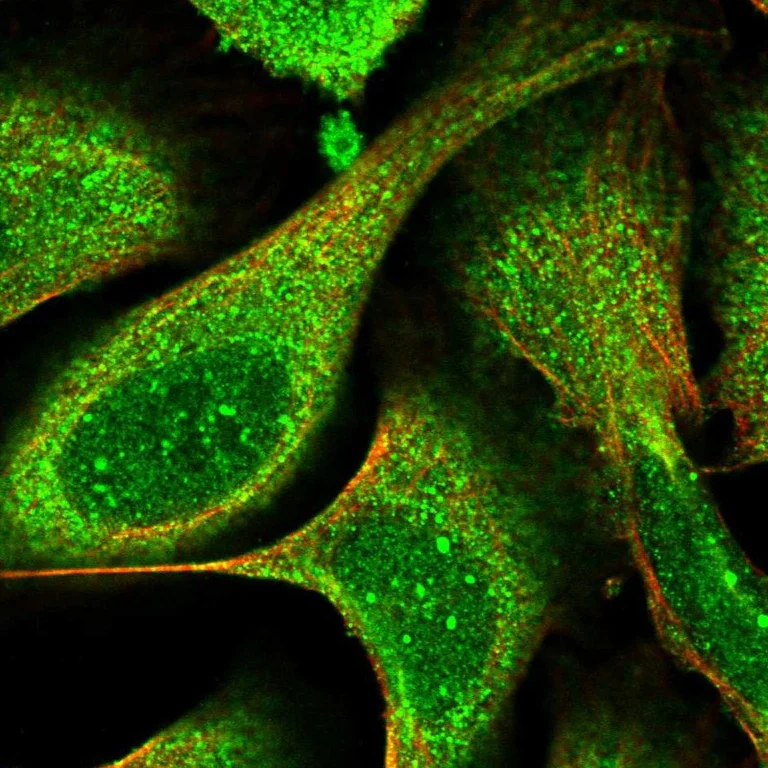
Immunocytochemistry/ Immunofluorescence - Anti-EIF2D antibody (AB251784)
  • ICC/IF

Unknown

Immunocytochemistry/ Immunofluorescence - Anti-EIF2D antibody (AB251784)

PFA-fixed, Triton X-100 permeabilized U-2 OS (human bone osteosarcoma epithelial cell line) cells stained for EIF2D (green) using ab251784 at 4 µg/ml in ICC/IF.
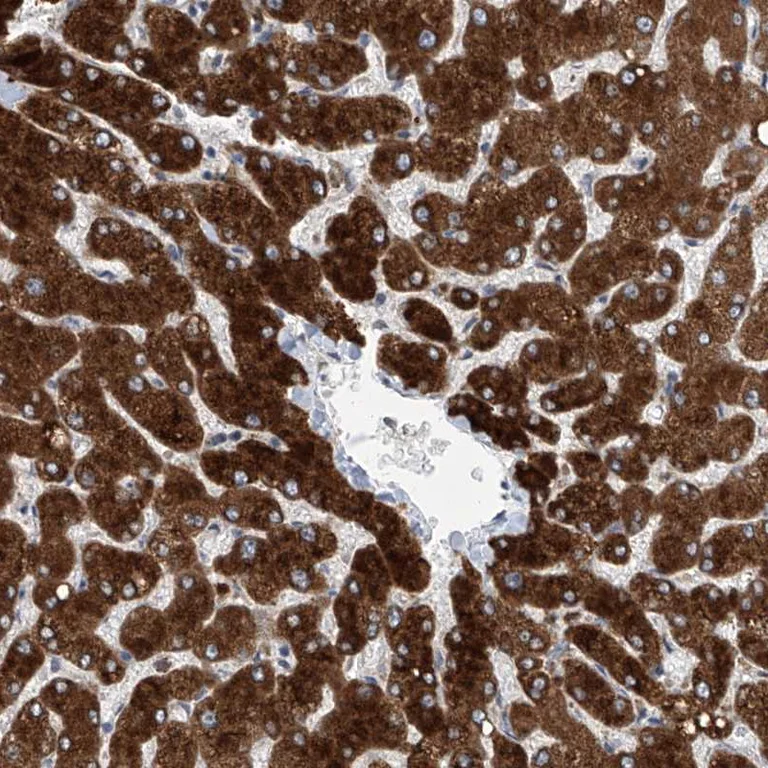
Immunohistochemistry (Formalin/PFA-fixed paraffin-embedded sections) - Anti-EIF2D antibody (AB251784)
  • IHC-P

Unknown

Immunohistochemistry (Formalin/PFA-fixed paraffin-embedded sections) - Anti-EIF2D antibody (AB251784)

Paraffin-embedded human liver tissue stained for EIF2D using ab251784 at 1/20 dilution in immunohistochemical analysis.
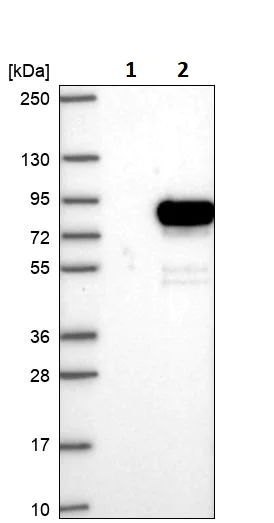
Western blot - Anti-EIF2D antibody (AB251784)
  • WB

Supplier Data

Western blot - Anti-EIF2D antibody (AB251784)

All lanes:

Western blot - Anti-EIF2D antibody (ab251784) at 0.4 µg/mL

Lane 1:

Vector only transfected HEK-293T (Human epithelial cell line from embryonic kidney transformed with large T antigen) lysate

Lane 2:

EIF2D overexpression HEK-293T cell lysate

Predicted band size: 65 kDa

false

Key facts

Host species

Rabbit

Clonality

Polyclonal

Isotype

IgG

Carrier free

No

Reacts with

Human

Applications

WB, ICC/IF, IHC-P

applications

Immunogen

Recombinant Fragment Protein within Human EIF2D aa 200-350. The exact immunogen used to generate this antibody is proprietary information.

P41214

Reactivity data

{ "title": "Reactivity Data", "filters": { "stats": ["", "Species", "Dilution Info", "Notes"], "tabs": { "all-applications": {"fullname" : "All Applications", "shortname": "All Applications"}, "IHCP" : {"fullname" : "Immunohistochemistry (Formalin/PFA-fixed paraffin-embedded sections)", "shortname":"IHC-P"}, "WB" : {"fullname" : "Western blot", "shortname":"WB"}, "ICCIF" : {"fullname" : "Immunocytochemistry/ Immunofluorescence", "shortname":"ICC/IF"} }, "product-promise": { "all": "all", "testedAndGuaranteed": "tested", "guaranteed": "expected", "predicted": "predicted", "notRecommended": "not-recommended" } }, "values": { "Human": { "IHCP-species-checked": "testedAndGuaranteed", "IHCP-species-dilution-info": "1/20 - 1/50", "IHCP-species-notes": "<p></p> Perform heat-mediated antigen retrieval with citrate buffer pH 6 before commencing with IHC staining protocol.", "WB-species-checked": "testedAndGuaranteed", "WB-species-dilution-info": "0.04-0.4 µg/mL", "WB-species-notes": "<p></p>", "ICCIF-species-checked": "testedAndGuaranteed", "ICCIF-species-dilution-info": "0.25-2 µg/mL", "ICCIF-species-notes": "<p>Fixation/Permeabilization: PFA/Triton X-100.</p>" }, "Orangutan": { "IHCP-species-checked": "predicted", "IHCP-species-dilution-info": "", "IHCP-species-notes": "", "WB-species-checked": "predicted", "WB-species-dilution-info": "", "WB-species-notes": "", "ICCIF-species-checked": "predicted", "ICCIF-species-dilution-info": "", "ICCIF-species-notes": "" } } }

Properties and storage information

Form
Liquid
Purification technique
Affinity purification Immunogen
Storage buffer
pH: 7.2 Preservative: 0.02% Sodium azide Constituents: PBS, 40% Glycerol (glycerin, glycerine)
Shipped at conditions
Blue Ice
Appropriate short-term storage duration
1-2 weeks
Appropriate short-term storage conditions
+4°C
Appropriate long-term storage conditions
-20°C
Aliquoting information
Upon delivery aliquot
Storage information
Avoid freeze / thaw cycle

Supplementary information

This supplementary information is collated from multiple sources and compiled automatically.

The eukaryotic translation initiation factor 2D (EIF2D) also known as DAP1 or MCTS1 is a human protein involved in initiating translation of mRNA into proteins. It has a molecular weight of approximately 54 kDa. EIF2D is expressed in various tissues showing its involvement in diverse cellular processes. Mechanically EIF2D facilitates the recycling of ribosomal subunits ensuring efficient protein synthesis. It performs its role by helping the ribosome subunits which have dissociated after termination to be reused for new rounds of translation.
Biological function summary

EIF2D influences protein synthesis through its role in translation initiation and ribosome recycling. It may operate as a part of a complex potentially interacting with other factors involved in translation setup. This role is fundamental to maintaining cellular homeostasis and responding to cellular stress by adjusting protein production rates. EIF2D's interaction with the ribosome and its factors points to its active involvement in the complex regulation of cellular protein levels.

Pathways

EIF2D takes part in the translation initiation pathway which involves other proteins such as eIF1 and eIF2. These factors work together to ensure proper recognition of start codons on mRNA strands. EIF2D also fits into the mRNA surveillance pathway which is responsible for ensuring the fidelity of mRNA translation. The accuracy of this process is critical for proper cellular function and response to stress or damage signals.

EIF2D has associations with cancer and metabolic disorders. Its role in protein synthesis regulation impacts how cells grow and proliferate pathways often found altered in cancerous cells. EIF2D may be linked to components like mTOR which is involved in cell growth and metabolism. Additionally EIF2D's function in responding to cellular stress links it to metabolic syndromes where the shifts in protein synthesis can lead to pathological effects.

Product protocols

For this product, it's our understanding that no specific protocols are required. You can visit:

Target data

Translation initiation factor that is able to deliver tRNA to the P-site of the eukaryotic ribosome in a GTP-independent manner. The binding of Met-tRNA(I) occurs after the AUG codon finds its position in the P-site of 40S ribosomes, the situation that takes place during initiation complex formation on some specific RNAs. Its activity in tRNA binding with 40S subunits does not require the presence of the aminoacyl moiety. Possesses the unique ability to deliver non-Met (elongator) tRNAs into the P-site of the 40S subunit. In addition to its role in initiation, can promote release of deacylated tRNA and mRNA from recycled 40S subunits following ABCE1-mediated dissociation of post-termination ribosomal complexes into subunits.
See full target information EIF2D

Publications (1)

Recent publications for all applications. Explore the full list and refine your search

OncoTargets and therapy 13:6027-6036 PubMed32606808

2020

Upregulated lncRNA CASC9 Contributes to Progression of Non-Small Cell Lung Cancer Through Inhibition of miR-335-3p and Activation S100A14 Expression.

Applications

Unspecified application

Species

Unspecified reactive species

Weigang Zhao,Tangbing Chen,Yonghong Zhao
View all publications

Product promise

We are committed to supporting your work with high-quality reagents, and we're here for you every step of the way. In the unlikely event that one of our products does not perform as expected, you're protected by our Product Promise.
For full details, please see our Terms & Conditions

Please note: All products are 'FOR RESEARCH USE ONLY. NOT FOR USE IN DIAGNOSTIC OR THERAPEUTIC PROCEDURES'.

For licensing inquiries, please contact partnerships@abcam.com