JavaScript is disabled in your browser. Please enable JavaScript to view this website.
AB137455

Anti-ERAB antibody

Be the first to review this product! Submit a review

|

(2 Publications )

Rabbit Polyclonal ERAB antibody. Suitable for WB, IHC-P, ICC/IF and reacts with Mouse, Rat, Human samples. Cited in 2 publications. Immunogen corresponding to Synthetic Peptide within Human HSD17B10 aa 200-250.
5 Images
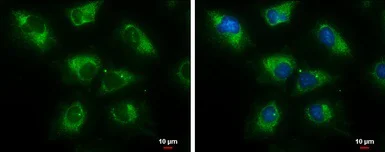
Immunocytochemistry/ Immunofluorescence - Anti-ERAB antibody (AB137455)
  • ICC/IF

Supplier Data

Immunocytochemistry/ Immunofluorescence - Anti-ERAB antibody (AB137455)

Immunofluorescence analysis of HeLa cells fixed in ice-cold MeOH for 5 min labelling ERAB protein at mitochondria using ab137455 at a 1/500 dilution (Green). Hoechst 33342 was used for nuclear staining (Blue). Scale bar= 10µm.
Western blot - Anti-ERAB antibody (AB137455)
  • WB

Unknown

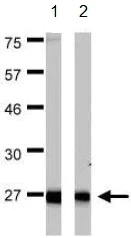
Western blot - Anti-ERAB antibody (AB137455)

15% SDS PAGE

All lanes:

Western blot - Anti-ERAB antibody (ab137455) at 1/1000 dilution

Lane 1:

HeLa S3 whole cell lysate at 30 µg

Lane 2:

MOLT4 whole cell lysate at 30 µg

Predicted band size: 27 kDa

false
Western blot - Anti-ERAB antibody (AB137455)
  • WB

Unknown

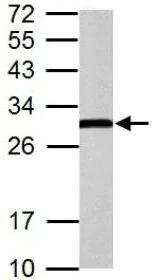
Western blot - Anti-ERAB antibody (AB137455)

12% SDS PAGE

All lanes:

Western blot - Anti-ERAB antibody (ab137455) at 1/5000 dilution

All lanes:

PC12 whole cell lysate at 30 µg

Predicted band size: 27 kDa

false
Western blot - Anti-ERAB antibody (AB137455)
  • WB

Unknown

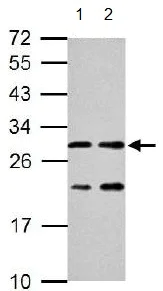
Western blot - Anti-ERAB antibody (AB137455)

12% SDS PAGE

All lanes:

Western blot - Anti-ERAB antibody (ab137455) at 1/1000 dilution

Lane 1:

Neuro 2A whole cell lysate at 30 µg

Lane 2:

GL261 whole cell lysate at 30 µg

Predicted band size: 27 kDa

false
Immunohistochemistry (Formalin/PFA-fixed paraffin-embedded sections) - Anti-ERAB antibody (AB137455)
  • IHC-P

Unknown

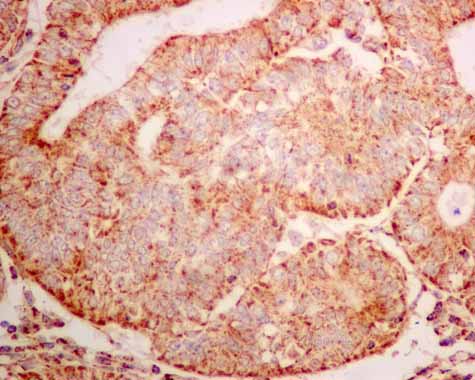
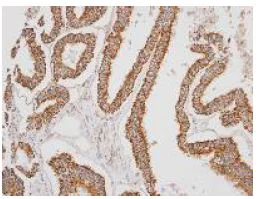
Immunohistochemistry (Formalin/PFA-fixed paraffin-embedded sections) - Anti-ERAB antibody (AB137455)

Immunohistochemical analysis of paraffin embedded OVCA xenograft tissue, labelling ERAB using ab137455 at 1/100 dilution.

Key facts

Host species

Rabbit

Clonality

Polyclonal

Isotype

IgG

Carrier free

No

Reacts with

Mouse, Rat, Human

Applications

ICC/IF, IHC-P, WB

applications

Immunogen

Synthetic Peptide within Human HSD17B10 aa 200-250. The exact immunogen used to generate this antibody is proprietary information.

Q99714

Reactivity data

{ "title": "Reactivity Data", "filters": { "stats": ["", "Species", "Dilution Info", "Notes"], "tabs": { "all-applications": {"fullname" : "All Applications", "shortname": "All Applications"}, "WB" : {"fullname" : "Western blot", "shortname":"WB"}, "IHCP" : {"fullname" : "Immunohistochemistry (Formalin/PFA-fixed paraffin-embedded sections)", "shortname":"IHC-P"}, "ICCIF" : {"fullname" : "Immunocytochemistry/ Immunofluorescence", "shortname":"ICC/IF"} }, "product-promise": { "all": "all", "testedAndGuaranteed": "tested", "guaranteed": "expected", "predicted": "predicted", "notRecommended": "not-recommended" } }, "values": { "Human": { "WB-species-checked": "testedAndGuaranteed", "WB-species-dilution-info": "1/1000 - 1/10000", "WB-species-notes": "<p></p>", "IHCP-species-checked": "testedAndGuaranteed", "IHCP-species-dilution-info": "1/100 - 1/1000", "IHCP-species-notes": "<p></p>", "ICCIF-species-checked": "testedAndGuaranteed", "ICCIF-species-dilution-info": "1/100 - 1/1000", "ICCIF-species-notes": "<p></p>" }, "Mouse": { "WB-species-checked": "testedAndGuaranteed", "WB-species-dilution-info": "1/1000 - 1/10000", "WB-species-notes": "<p></p>", "IHCP-species-checked": "guaranteed", "IHCP-species-dilution-info": "", "IHCP-species-notes": "", "ICCIF-species-checked": "guaranteed", "ICCIF-species-dilution-info": "", "ICCIF-species-notes": "" }, "Rat": { "WB-species-checked": "testedAndGuaranteed", "WB-species-dilution-info": "1/1000 - 1/10000", "WB-species-notes": "<p></p>", "IHCP-species-checked": "guaranteed", "IHCP-species-dilution-info": "", "IHCP-species-notes": "", "ICCIF-species-checked": "guaranteed", "ICCIF-species-dilution-info": "", "ICCIF-species-notes": "" } } }

Properties and storage information

Form
Liquid
Purification technique
Affinity purification Immunogen
Storage buffer
pH: 7 Preservative: 0.01% Thimerosal (merthiolate) Constituents: PBS, 20% Glycerol (glycerin, glycerine)
Shipped at conditions
Blue Ice
Appropriate short-term storage conditions
+4°C
Appropriate long-term storage conditions
-20°C
Aliquoting information
Upon delivery aliquot
Storage information
Avoid freeze / thaw cycle

Supplementary information

This supplementary information is collated from multiple sources and compiled automatically.

ERAB also known as 17-beta-hydroxysteroid dehydrogenase type 10 (HSD10) or 3-hydroxyacyl-CoA dehydrogenase type II is a multifunctional mitochondrial enzyme. It has a molecular mass of approximately 27 kDa. This enzyme is expressed in various tissues with high expression in the liver kidney heart and brain. ERAB plays a role in several metabolic processes thanks to its ability to catalyze reactions involving the oxidation of hydroxyacyl-CoA to ketoacyl-CoA derivatives alongside other substrates like steroids.
Biological function summary

The function of this enzyme extends beyond its metabolic activities. ERAB is part of the mitochondrial enzyme complex responsible for fatty acid oxidation and energy production. This places it centrally in cellular energy homeostasis. Additionally ERAB participates in the metabolism of neurosteroids which impacts brain function. Through its interactions ERAB influences signaling pathways by modulating local steroid concentrations in the nervous system affecting cellular communication and response.

Pathways

ERAB associates with key biochemical pathways including the beta-oxidation of fatty acids and the steroid hormone metabolism pathway. It interacts with acetyl-CoA acyltransferase 2 (ACAA2) within these metabolic pathways facilitating the conversion of substrates vital for energy production and steroid synthesis. This involvement underpins the enzyme’s significance in maintaining metabolic equilibrium through its catalytic activities on essential biological molecules.

ERAB has links to Alzheimer's disease and rare mitochondrial disorders. Studies show that ERAB binds amyloid-beta peptides which accumulate in the brains of Alzheimer's disease patients. This interaction suggests ERAB's potential contribution to the pathogenesis of the disease. Additionally mutations affecting ERAB lead to HSD10 mitochondrial disease a disorder characterized by metabolic and neurological defects. One of the proteins that interacts with ERAB in the context of disease is amyloid precursor protein (APP) which further implicates ERAB in Alzheimer's disease through pathological pathways.

Product protocols

For this product, it's our understanding that no specific protocols are required. You can visit:

Target data

Mitochondrial dehydrogenase involved in pathways of fatty acid, branched-chain amino acid and steroid metabolism (PubMed : 10600649, PubMed : 12917011, PubMed : 18996107, PubMed : 19706438, PubMed : 20077426, PubMed : 25925575, PubMed : 26950678, PubMed : 28888424, PubMed : 9553139). Acts as (S)-3-hydroxyacyl-CoA dehydrogenase in mitochondrial fatty acid beta-oxidation, a major degradation pathway of fatty acids. Catalyzes the third step in the beta-oxidation cycle, namely the reversible conversion of (S)-3-hydroxyacyl-CoA to 3-ketoacyl-CoA. Preferentially accepts straight medium- and short-chain acyl-CoA substrates with highest efficiency for (3S)-hydroxybutanoyl-CoA (PubMed : 10600649, PubMed : 12917011, PubMed : 25925575, PubMed : 26950678, PubMed : 9553139). Acts as 3-hydroxy-2-methylbutyryl-CoA dehydrogenase in branched-chain amino acid catabolic pathway. Catalyzes the oxidation of 3-hydroxy-2-methylbutanoyl-CoA into 2-methyl-3-oxobutanoyl-CoA, a step in isoleucine degradation pathway (PubMed : 18996107, PubMed : 19706438, PubMed : 20077426). Has hydroxysteroid dehydrogenase activity toward steroid hormones and bile acids. Catalyzes the oxidation of 3alpha-, 17beta-, 20beta- and 21-hydroxysteroids and 7alpha- and 7beta-hydroxy bile acids (PubMed : 10600649, PubMed : 12917011). Oxidizes allopregnanolone/brexanolone at the 3alpha-hydroxyl group, which is known to be critical for the activation of gamma-aminobutyric acid receptors (GABAARs) chloride channel (PubMed : 19706438, PubMed : 28888424). Has phospholipase C-like activity toward cardiolipin and its oxidized species. Likely oxidizes the 2'-hydroxyl in the head group of cardiolipin to form a ketone intermediate that undergoes nucleophilic attack by water and fragments into diacylglycerol, dihydroxyacetone and orthophosphate. Has higher affinity for cardiolipin with oxidized fatty acids and may degrade these species during the oxidative stress response to protect cells from apoptosis (PubMed : 26338420). By interacting with intracellular amyloid-beta, it may contribute to the neuronal dysfunction associated with Alzheimer disease (AD) (PubMed : 9338779). Essential for structural and functional integrity of mitochondria (PubMed : 20077426).. In addition to mitochondrial dehydrogenase activity, moonlights as a component of mitochondrial ribonuclease P, a complex that cleaves tRNA molecules in their 5'-ends (PubMed : 18984158, PubMed : 24549042, PubMed : 25925575, PubMed : 26950678, PubMed : 28888424). Together with TRMT10C/MRPP1, forms a subcomplex of the mitochondrial ribonuclease P, named MRPP1-MRPP2 subcomplex, which displays functions that are independent of the ribonuclease P activity (PubMed : 23042678, PubMed : 29040705). The MRPP1-MRPP2 subcomplex catalyzes the formation of N(1)-methylguanine and N(1)-methyladenine at position 9 (m1G9 and m1A9, respectively) in tRNAs; HSD17B10/MRPP2 acting as a non-catalytic subunit (PubMed : 23042678, PubMed : 25925575, PubMed : 28888424). The MRPP1-MRPP2 subcomplex also acts as a tRNA maturation platform : following 5'-end cleavage by the mitochondrial ribonuclease P complex, the MRPP1-MRPP2 subcomplex enhances the efficiency of 3'-processing catalyzed by ELAC2, retains the tRNA product after ELAC2 processing and presents the nascent tRNA to the mitochondrial CCA tRNA nucleotidyltransferase TRNT1 enzyme (PubMed : 29040705). Associates with mitochondrial DNA complexes at the nucleoids to initiate RNA processing and ribosome assembly.
See full target information HSD17B10

Alternative Names

ERAB, HADH2, MRPP2, SCHAD, SDR5C1, XH98G2, HSD17B10, 3-hydroxyacyl-CoA dehydrogenase type-2, 17-beta-estradiol 17-dehydrogenase, 2-methyl-3-hydroxybutyryl-CoA dehydrogenase, 3-alpha-(17-beta)-hydroxysteroid dehydrogenase (NAD(+)), 3-hydroxy-2-methylbutyryl-CoA dehydrogenase, 3-hydroxyacyl-CoA dehydrogenase type II, 3alpha(or 20beta)-hydroxysteroid dehydrogenase, 7-alpha-hydroxysteroid dehydrogenase, Endoplasmic reticulum-associated amyloid beta-peptide-binding protein, Mitochondrial ribonuclease P protein 2, Short chain dehydrogenase/reductase family 5C member 1, Short-chain type dehydrogenase/reductase XH98G2, Type II HADH, MHBD, Mitochondrial RNase P protein 2

Publications (2)

Recent publications for all applications. Explore the full listand refine your search

eNeuro 9: PubMed36096650

2022

The Mitochondrial Enzyme 17βHSD10 Modulates Ischemic and Amyloid-β-Induced Stress in Primary Mouse Astrocytes.

Applications

Unspecified application

Species

Unspecified reactive species

Vanya Metodieva,Terry Smith,Frank Gunn-Moore

Nature protocols 8:1916-39 PubMed24030441

2013

Targeting mammalian organelles with internalizing phage (iPhage) libraries.

Applications

Unspecified application

Species

Unspecified reactive species

Roberto Rangel,Andrey S Dobroff,Liliana Guzman-Rojas,Carolina C Salmeron,Juri G Gelovani,Richard L Sidman,Renata Pasqualini,Wadih Arap
View all publications

Product promise

We are committed to supporting your work with high-quality reagents, and we're here for you every step of the way. In the unlikely event that one of our products does not perform as expected, you're protected by our Product Promise.
For full details, please see our Terms & Conditions

Please note: All products are 'FOR RESEARCH USE ONLY. NOT FOR USE IN DIAGNOSTIC OR THERAPEUTIC PROCEDURES'.

For licensing inquiries, please contact partnerships@abcam.com