JavaScript is disabled in your browser. Please enable JavaScript to view this website.
AB284959

Anti-FAP antibody [EPR24291-17] - BSA and Azide free (Capture)

Be the first to review this product! Submit a review

|

(0 Publication)
Rabbit Recombinant Monoclonal Fibroblast activation protein, alpha antibody. Carrier free. Suitable for sELISA and reacts with Mouse samples.
1 Images
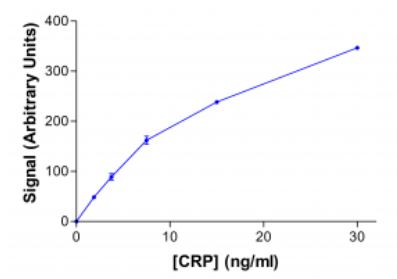
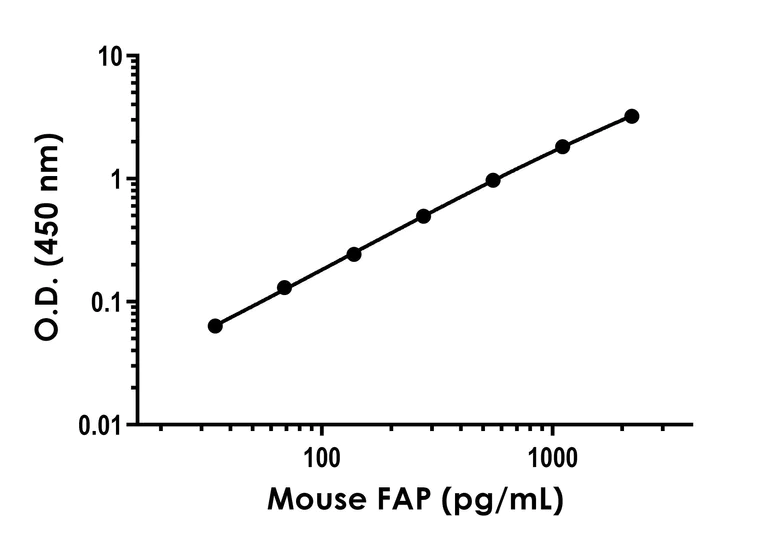
Sandwich ELISA - Anti-FAP antibody [EPR24291-17] - BSA and Azide free (Capture) (AB284959)
  • sELISA

Unknown

Sandwich ELISA - Anti-FAP antibody [EPR24291-17] - BSA and Azide free (Capture) (AB284959)

Example of Mouse FAP standard curve. Background-subtracted data values (mean +/- SD) are graphed.

Key facts

Host species

Rabbit

Clonality

Monoclonal

Clone number

EPR24291-17

Isotype

IgG

Carrier free

Yes

Reacts with

Mouse

Applications

sELISA

applications

Immunogen

The exact immunogen used to generate this antibody is proprietary information.

Reactivity data

{ "title": "Reactivity Data", "filters": { "stats": ["", "Species", "Dilution Info", "Notes"], "tabs": { "all-applications": {"fullname" : "All Applications", "shortname": "All Applications"}, "sELISA" : {"fullname" : "Sandwich ELISA", "shortname":"sELISA"} }, "product-promise": { "all": "all", "testedAndGuaranteed": "tested", "guaranteed": "expected", "predicted": "predicted", "notRecommended": "not-recommended" } }, "values": { "Mouse": { "sELISA-species-checked": "guaranteed", "sELISA-species-dilution-info": "", "sELISA-species-notes": "<p></p>" } } }

Product details

ab284959 is a BSA and Azide Free antibody supplied in an unconjugated format and it is suitable for sandwich ELISAs to quantify Mouse FAP. The recommended pair for sandwich ELISA is:
Capture: ab284959, Mouse FAP Capture Antibody (unconjugated)
Detector: ab285065, Mouse FAP Detector Antibody (unconjugated)
The reference range value is 31 - 2000 pg/mL.

Patented technology
Our RabMAb® technology is a patented hybridoma-based technology for making rabbit monoclonal antibodies. For details on our patents, please refer to RabMAb® patents.

What are the advantages of a recombinant monoclonal antibody?
This product is a recombinant monoclonal antibody, which offers several advantages including:

  • - High batch-to-batch consistency and reproducibility
  • - Improved sensitivity and specificity
  • - Long-term security of supply
  • - Animal-free batch production

For more information, read more on recombinant antibodies.

Conjugation ready
Our carrier-free antibodies are typically supplied in a PBS-only formulation, purified and free of BSA, sodium azide and glycerol. This conjugation-ready format is designed for use with fluorochromes, metal isotopes, oligonucleotides, and enzymes, which makes them ideal for antibody labelling, functional and cell-based assays, flow-based assays (e.g. mass cytometry) and Multiplex Imaging applications.

Use our conjugation kits for antibody conjugates that are ready-to-use in as little as 20 minutes with 1 minute hands-on-time and 100% antibody recovery: available for fluorescent dyes, HRP, biotin and gold.

Sandwich ELISA
The recommended antibody orientation is based on internal optimization for ELISA-based assays. Antibody orientation is assay dependent and needs to be optimized for each assay type. Please note that the range provided for this antibody is only an estimation based on the performance of the product using the recommended antibody pair. Performance of the antibody pair will depend on the specific characteristics of your assay. We guarantee the product works in sandwich ELISA, but we do not guarantee the sensitivity or dynamic range of the antibody in your assay.

Properties and storage information

Form
Liquid
Purification technique
Affinity purification Protein A
Storage buffer
Constituents: PBS
Shipped at conditions
Blue Ice
Appropriate short-term storage conditions
+4°C
Appropriate long-term storage conditions
+4°C

Supplementary information

This supplementary information is collated from multiple sources and compiled automatically.

FAP also known as fibroblast activation protein alpha or seprase is a serine protease with a mass of approximately 97 kDa. It is largely expressed in embryonic tissues certain carcinomas and tissue remodeling sites. FAP acts mechanistically by exhibiting dipeptidyl peptidase and endopeptidase activities breaking down peptide chains. Cellular membrane-bound FAP localizes mainly on reactive stromal fibroblasts not normal tissues making it an interesting target for research.
Biological function summary

FAP plays a role in tissue remodeling and wound healing influencing the microenvironment of tumors and fibrotic tissues. It contributes to extracellular matrix degradation participating in the complex network of proteases. FAP is not a standalone unit but part of a larger complex that interacts with other proteases helping in cell migration and invasion. As a result its activity impacts processes like inflammation and carcinogenesis.

Pathways

FAP participates in processes related to tissue repair and cancer progression. Significant pathways include the degradation of the extracellular matrix and the PI3K/AKT signaling. It functions alongside proteins like DPP4 another dipeptidyl peptidase in these pathways. The matrix breakdown is central to cancer metastasis and wound healing enhancing our understanding of FAP's role in larger biological contexts.

FAP has links with cancer and fibrosis. Its expression correlates with aggressive tumors and poor prognosis in cancers such as breast and ovarian. In fibrotic diseases like pulmonary and liver fibrosis it contributes to excessive matrix deposition and tissue stiffening. FAP's involvement alongside collagenases in these disorders makes it a target of potential therapeutic interest.

Product protocols

For this product, it's our understanding that no specific protocols are required. You can visit:

Target data

Cell surface glycoprotein serine protease that participates in extracellular matrix degradation and involved in many cellular processes including tissue remodeling, fibrosis, wound healing, inflammation and tumor growth. Both plasma membrane and soluble forms exhibit post-proline cleaving endopeptidase activity, with a marked preference for Ala/Ser-Gly-Pro-Ser/Asn/Ala consensus sequences, on substrate such as alpha-2-antiplasmin SERPINF2 and SPRY2 (PubMed : 14751930, PubMed : 16223769, PubMed : 16410248, PubMed : 16480718, PubMed : 17381073, PubMed : 18095711, PubMed : 21288888, PubMed : 24371721). Degrade also gelatin, heat-denatured type I collagen, but not native collagen type I and IV, vitronectin, tenascin, laminin, fibronectin, fibrin or casein (PubMed : 10347120, PubMed : 10455171, PubMed : 12376466, PubMed : 16223769, PubMed : 16651416, PubMed : 18095711, PubMed : 2172980, PubMed : 7923219, PubMed : 9065413). Also has dipeptidyl peptidase activity, exhibiting the ability to hydrolyze the prolyl bond two residues from the N-terminus of synthetic dipeptide substrates provided that the penultimate residue is proline, with a preference for Ala-Pro, Ile-Pro, Gly-Pro, Arg-Pro and Pro-Pro (PubMed : 10347120, PubMed : 10593948, PubMed : 16175601, PubMed : 16223769, PubMed : 16410248, PubMed : 16651416, PubMed : 17381073, PubMed : 21314817, PubMed : 24371721, PubMed : 24717288). Natural neuropeptide hormones for dipeptidyl peptidase are the neuropeptide Y (NPY), peptide YY (PYY), substance P (TAC1) and brain natriuretic peptide 32 (NPPB) (PubMed : 21314817). The plasma membrane form, in association with either DPP4, PLAUR or integrins, is involved in the pericellular proteolysis of the extracellular matrix (ECM), and hence promotes cell adhesion, migration and invasion through the ECM. Plays a role in tissue remodeling during development and wound healing. Participates in the cell invasiveness towards the ECM in malignant melanoma cancers. Enhances tumor growth progression by increasing angiogenesis, collagen fiber degradation and apoptosis and by reducing antitumor response of the immune system. Promotes glioma cell invasion through the brain parenchyma by degrading the proteoglycan brevican. Acts as a tumor suppressor in melanocytic cells through regulation of cell proliferation and survival in a serine protease activity-independent manner.
See full target information FAP

Alternative Names

Prolyl endopeptidase FAP, 170 kDa melanoma membrane-bound gelatinase, Dipeptidyl peptidase FAP, Fibroblast activation protein alpha, Gelatine degradation protease FAP, Integral membrane serine protease, Post-proline cleaving enzyme, Serine integral membrane protease, Surface-expressed protease, FAPalpha, SIMP, Seprase, FAP

Product promise

We are committed to supporting your work with high-quality reagents, and we're here for you every step of the way. In the unlikely event that one of our products does not perform as expected, you're protected by our Product Promise.
For full details, please see our Terms & Conditions

Please note: All products are 'FOR RESEARCH USE ONLY. NOT FOR USE IN DIAGNOSTIC OR THERAPEUTIC PROCEDURES'.

For licensing inquiries, please contact partnerships@abcam.com