JavaScript is disabled in your browser. Please enable JavaScript to view this website.
AB223712

Anti-FCN1/M-Ficolin antibody

Be the first to review this product! Submit a review

|

(3 Publications )

Rabbit Polyclonal FCN1/M-Ficolin antibody. Suitable for IHC-P, WB and reacts with Human samples. Cited in 3 publications. Immunogen corresponding to Recombinant Fragment Protein within Human FCN1 aa 1-150.

View Alternative Names

FCNM, FCN1, Ficolin-1, Collagen/fibrinogen domain-containing protein 1, Ficolin-A, Ficolin-alpha, M-ficolin
4 Images
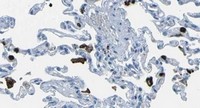
Immunohistochemistry (Formalin/PFA-fixed paraffin-embedded sections) - Anti-FCN1/M-Ficolin antibody (AB223712)
  • IHC-P

Unknown

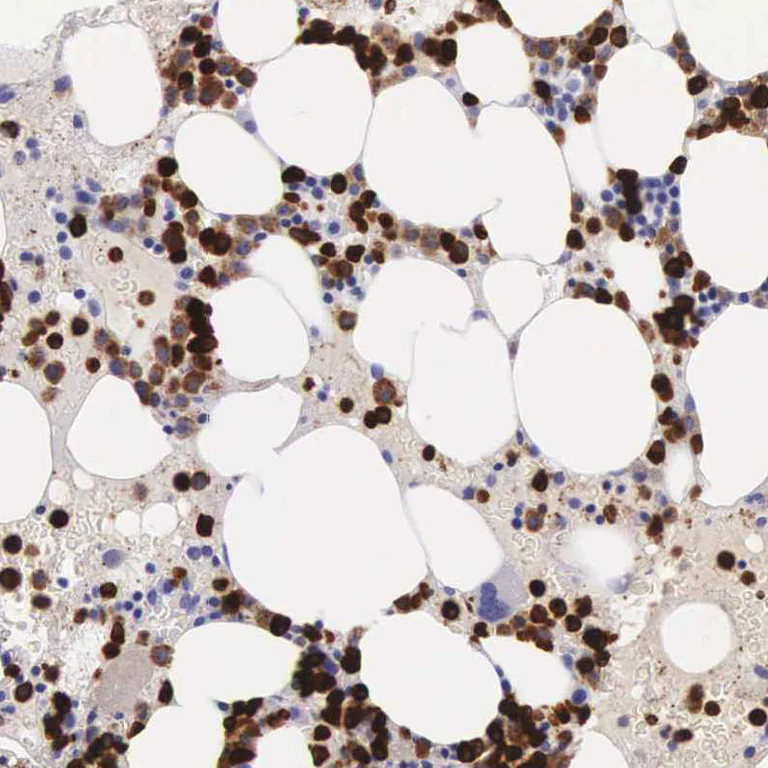
Immunohistochemistry (Formalin/PFA-fixed paraffin-embedded sections) - Anti-FCN1/M-Ficolin antibody (AB223712)

Paraffin embedded sections of human bone marrow tissue were stained for FCN1/M-Ficolin with ab223712 at 1/200 dilution in immunohistochemical analysis.
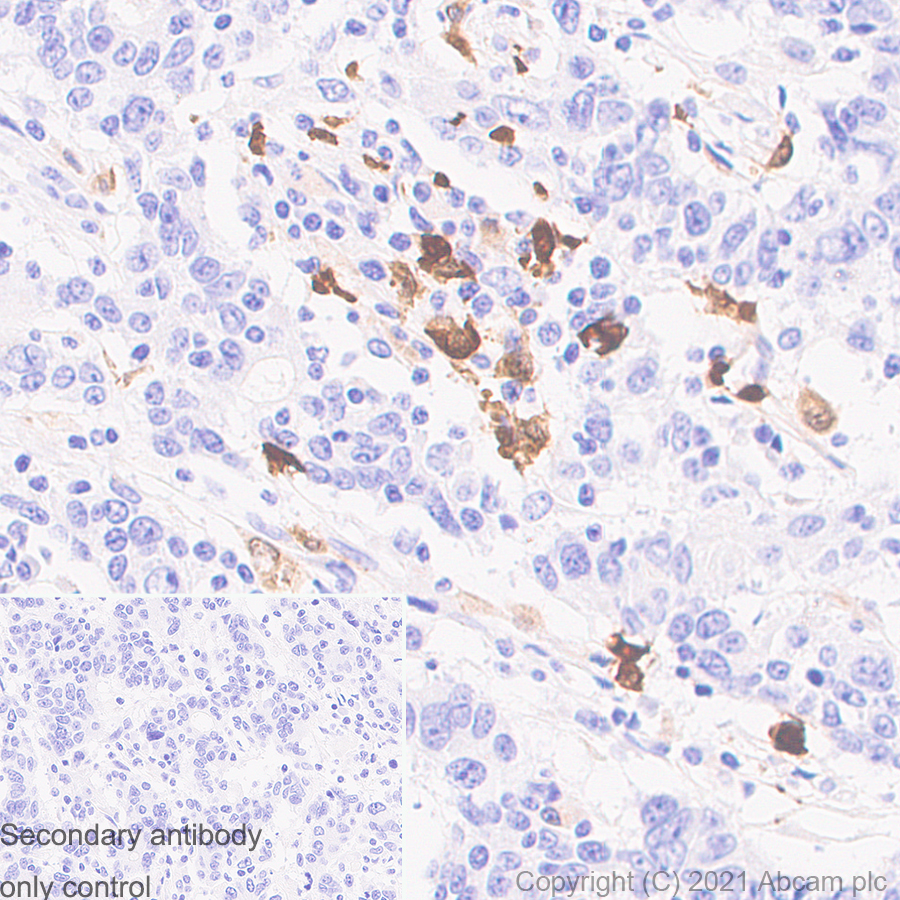
Immunohistochemistry (Formalin/PFA-fixed paraffin-embedded sections) - Anti-FCN1/M-Ficolin antibody (AB223712)
  • IHC-P

Unknown

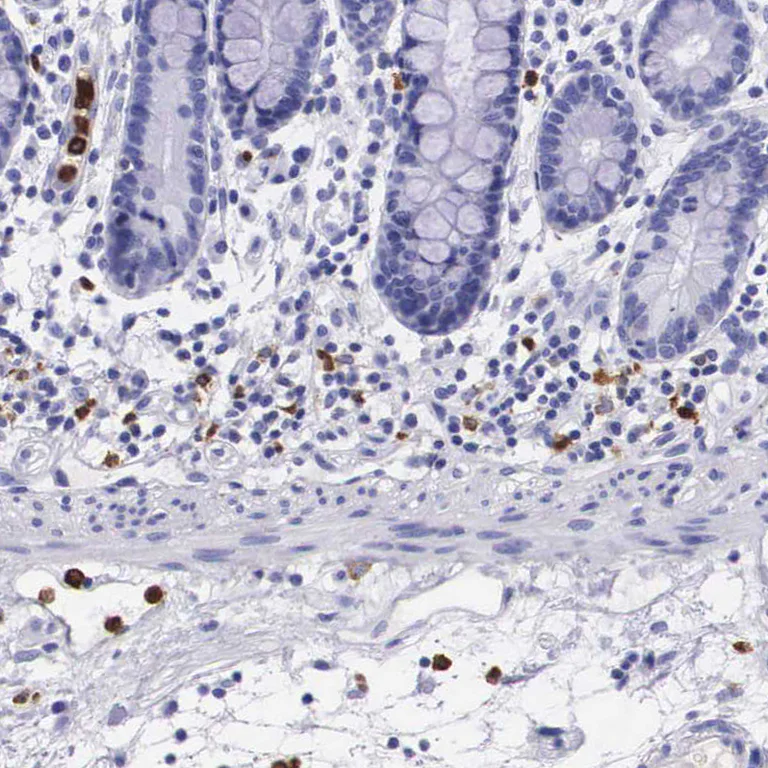
Immunohistochemistry (Formalin/PFA-fixed paraffin-embedded sections) - Anti-FCN1/M-Ficolin antibody (AB223712)

Paraffin embedded sections of human small intestine tissue were stained for FCN1/M-Ficolin with ab223712 at 1/200 dilution in immunohistochemical analysis.
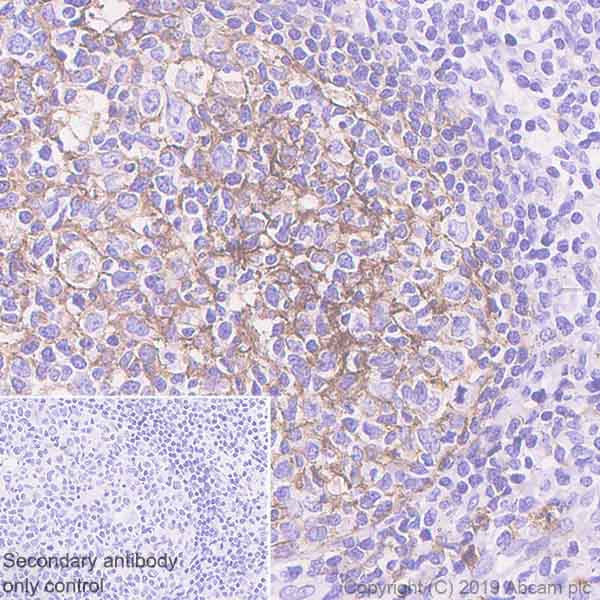
Immunohistochemistry (Formalin/PFA-fixed paraffin-embedded sections) - Anti-FCN1/M-Ficolin antibody (AB223712)
  • IHC-P

Unknown

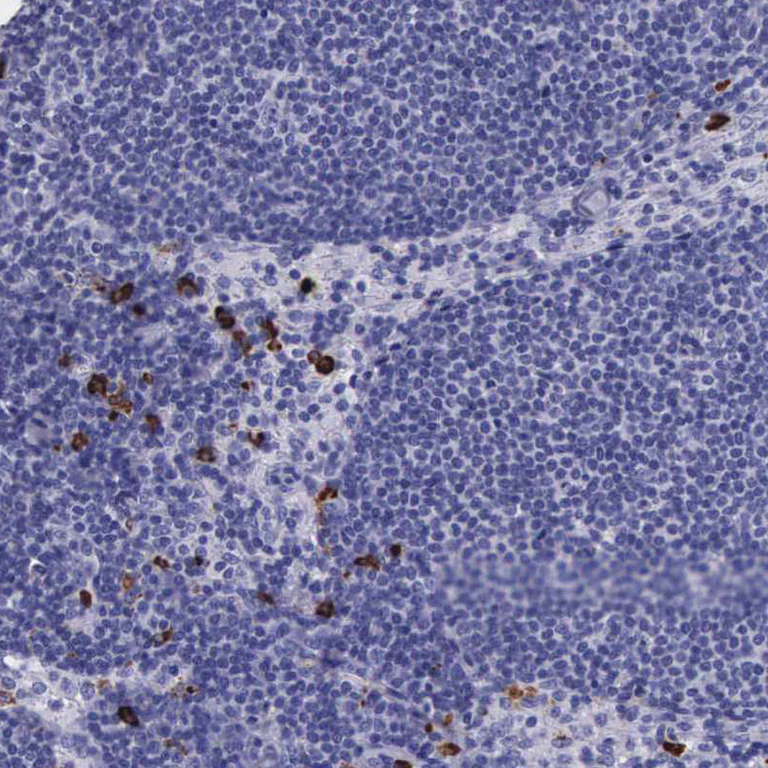
Immunohistochemistry (Formalin/PFA-fixed paraffin-embedded sections) - Anti-FCN1/M-Ficolin antibody (AB223712)

Paraffin embedded sections of human lymph node tissue were stained for FCN1/M-Ficolin with ab223712 at 1/200 dilution in immunohistochemical analysis.
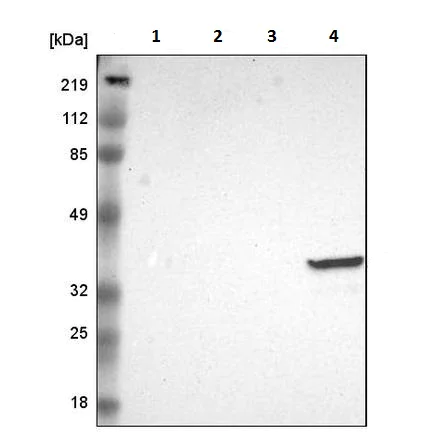
Western blot - Anti-FCN1/M-Ficolin antibody (AB223712)
  • WB

Supplier Data

Western blot - Anti-FCN1/M-Ficolin antibody (AB223712)

All lanes:

Western blot - Anti-FCN1/M-Ficolin antibody (ab223712) at 1/250 dilution

Lane 1:

RT4 (human urinary bladder cancer cell line) cell lysate

Lane 2:

U-251 MG (human brain glioma cell line) cell lysate

Lane 3:

A431 (human epidermoid carcinoma cell line) cell lysate

Lane 4:

Human liver lysate

Predicted band size: 35 kDa

false

Key facts

Host species

Rabbit

Clonality

Polyclonal

Isotype

IgG

Carrier free

No

Reacts with

Human

Applications

IHC-P, WB

applications

Immunogen

Recombinant Fragment Protein within Human FCN1 aa 1-150. The exact immunogen used to generate this antibody is proprietary information.

O00602

Reactivity data

{ "title": "Reactivity Data", "filters": { "stats": ["", "Species", "Dilution Info", "Notes"], "tabs": { "all-applications": {"fullname" : "All Applications", "shortname": "All Applications"}, "IHCP" : {"fullname" : "Immunohistochemistry (Formalin/PFA-fixed paraffin-embedded sections)", "shortname":"IHC-P"}, "WB" : {"fullname" : "Western blot", "shortname":"WB"} }, "product-promise": { "all": "all", "testedAndGuaranteed": "tested", "guaranteed": "expected", "predicted": "predicted", "notRecommended": "not-recommended" } }, "values": { "Human": { "IHCP-species-checked": "testedAndGuaranteed", "IHCP-species-dilution-info": "1/200 - 1/500", "IHCP-species-notes": "<p></p> Perform heat-mediated antigen retrieval with citrate buffer pH 6 before commencing with IHC staining protocol.", "WB-species-checked": "testedAndGuaranteed", "WB-species-dilution-info": "0.04-0.4 µg/mL", "WB-species-notes": "<p></p>" } } }

Properties and storage information

Form
Liquid
Purification technique
Affinity purification Immunogen
Storage buffer
pH: 7.2 Preservative: 0.02% Sodium azide Constituents: PBS, 40% Glycerol (glycerin, glycerine)
Shipped at conditions
Blue Ice
Appropriate short-term storage duration
1-2 weeks
Appropriate short-term storage conditions
+4°C
Appropriate long-term storage conditions
-20°C
Aliquoting information
Upon delivery aliquot
Storage information
Avoid freeze / thaw cycle

Supplementary information

This supplementary information is collated from multiple sources and compiled automatically.

FCN1 also known as M-Ficolin or ficolin-1 is a pattern recognition molecule part of the innate immune system. It plays a role in recognizing pathogen-associated molecular patterns (PAMPs) on the surface of microbes. FCN1 is a 35 kDa protein predominantly expressed in the liver and secreted into the bloodstream. It consists of a collagen-like domain and a fibrinogen-like recognition domain allowing it to effectively bind its targets. The protein occurs in plasma where it particularly acts in host defense mechanisms.
Biological function summary

FCN1 functions as part of the body’s first line of immune defense by binding to microbial surfaces facilitating the opsonization and activation of the lectin complement pathway. It is a member of a complex known as the lectin pathway of complement activation which includes MASP1 and MASP2 proteins. FCN1 triggers this pathway when it recognizes patterns such as N-acetylglucosamine on the surface of pathogens which is important for initiating the immune response and promoting pathogen clearance through complement activation in cooperation with other components of the pathway.

Pathways

FCN1 primarily participates in the lectin complement pathway distinctively different from the classical and alternative pathways. It interacts with MASP proteins to trigger the cleavage of complement proteins which leads to a cascade that results in inflammation opsonization and pathogen lysis. FCN1 connections also extend to other pattern recognition receptors such as those in the toll-like receptor pathway which harmonize to ensure a robust immune response by recognizing wide array of pathogen motifs.

FCN1 involvement has been observed in several conditions notably systemic lupus erythematosus (SLE) and bacterial infections. Alterations or deficiencies in FCN1 levels can influence susceptibility to infections due to compromised opsonization and pathogen clearance. In SLE FCN1 and its associated pathway proteins may contribute to the disease pathogenesis by affecting complement system activity leading to autoimmune and inflammatory responses. Understanding these associations aids in unraveling the complex network of immune response regulation and disease development.

Product protocols

For this product, it's our understanding that no specific protocols are required. You can visit:

Target data

Extracellular lectin, which acts as a pattern recognition receptor that initiates the lectin pathway of the complement system, a cascade of proteins that leads to phagocytosis and breakdown of pathogens and signaling that strengthens the adaptive immune system (PubMed : 16116205, PubMed : 17897951, PubMed : 20032467). Specifically recognizes and binds carbohydrates on the pathogen surface, activating the MASP1 serine protease and initiating the proteolytic cascade of the lectin complement pathway (PubMed : 16116205, PubMed : 20032467). Binds preferentially to 9-O-acetylated 2-6-linked sialic acid derivatives and to various glycans containing sialic acid engaged in a 2-3 linkage (PubMed : 20032467, PubMed : 20400674). May also activate monocytes through a G protein-coupled receptor, FFAR2, inducing the secretion of interleukin-8/IL-8 (PubMed : 21037097).
See full target information FCN1

Publications (3)

Recent publications for all applications. Explore the full list and refine your search

Molecular cancer 24:102 PubMed40165182

2025

C1Q TPP1 macrophages promote colon cancer progression through SETD8-driven p53 methylation.

Applications

Unspecified application

Species

Unspecified reactive species

Veronica Veschi,Francesco Verona,Sebastiano Di Bella,Alice Turdo,Miriam Gaggianesi,Simone Di Franco,Laura Rosa Mangiapane,Chiara Modica,Melania Lo Iacono,Paola Bianca,Ornella Roberta Brancato,Caterina D'Accardo,Gaetana Porcelli,Vincenzo Luca Lentini,Isabella Sperduti,Elisabetta Sciacca,Peter Fitzgerald,David Lopez-Perez,Pierre Martine,Kate Brown,Giuseppe Giannini,Ettore Appella,Giorgio Stassi,Matilde Todaro

The Journal of clinical investigation 133: PubMed36928117

2023

Keratinocytes sense and eliminate CRISPR DNA through STING/IFN-κ activation and APOBEC3G induction.

Applications

Unspecified application

Species

Unspecified reactive species

Mrinal K Sarkar,Ranjitha Uppala,Chang Zeng,Allison C Billi,Lam C Tsoi,Austin Kidder,Xianying Xing,Bethany E Perez White,Shuai Shao,Olesya Plazyo,Sirisha Sirobhushanam,Enze Xing,Yanyun Jiang,Katherine A Gallagher,John J Voorhees,J Michelle Kahlenberg,Johann E Gudjonsson

Signal transduction and targeted therapy 8:44 PubMed36710358

2023

Single-cell RNA-sequencing reveals radiochemotherapy-induced innate immune activation and MHC-II upregulation in cervical cancer.

Applications

Unspecified application

Species

Unspecified reactive species

Chao Liu,Xiaohui Li,Qingyu Huang,Min Zhang,Tianyu Lei,Fuhao Wang,Wenxue Zou,Rui Huang,Xiaoyu Hu,Cong Wang,Xiaoling Zhang,Bing Sun,Ligang Xing,Jinbo Yue,Jinming Yu
View all publications

Product promise

We are committed to supporting your work with high-quality reagents, and we're here for you every step of the way. In the unlikely event that one of our products does not perform as expected, you're protected by our Product Promise.
For full details, please see our Terms & Conditions

Please note: All products are 'FOR RESEARCH USE ONLY. NOT FOR USE IN DIAGNOSTIC OR THERAPEUTIC PROCEDURES'.

For licensing inquiries, please contact partnerships@abcam.com