Anti-FOXA2 antibody [EPR4466] - BSA and Azide free
- RabMAb
- Recombinant
- What is this?
Be the first to review this product! Submit a review
|
(1 Publication)
- IHC-P
Collaborator
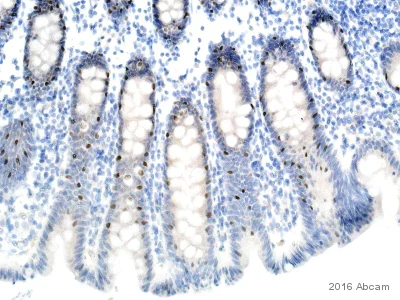
Immunohistochemistry (Formalin/PFA-fixed paraffin-embedded sections) - Anti-FOXA2 antibody [EPR4466] - BSA and Azide free (AB220810)
Immunohistochemical analysis of Formalin/PFA-fixed paraffin-embedded human colon sections labelling FOXA2 with ab108422 at dilution of 1/500. The secondary antibody used was a polyclonal goat anti-rabbit biotin conjugated antibody at a dilution of 1/300. The sample was counterstained with hematoxylin. Antigen retrieval was heat mediated using citric acid.
This data was developed using the same antibody clone in a different buffer formulation containing PBS, BSA, glycerol, and sodium azide (ab108422).
This image is courtesy of Carl Hobbs, King's College London, United Kingdom
- IHC-P
Lab
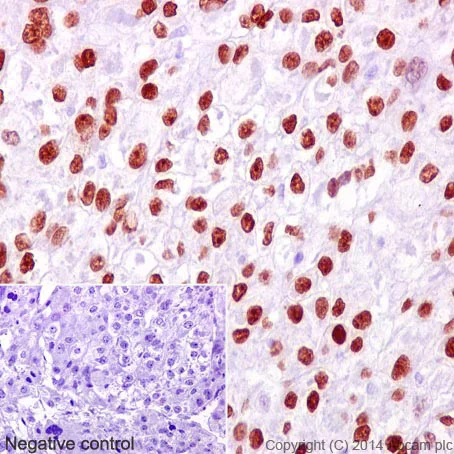
Immunohistochemistry (Formalin/PFA-fixed paraffin-embedded sections) - Anti-FOXA2 antibody [EPR4466] - BSA and Azide free (AB220810)
Immunohistochemistry (Formalin/PFA-fixed paraffin-embedded sections) analysis of human hepatocellular carcinoma tissue labelling FOXA2 with purified ab108422 at 1/500. Heat mediated antigen retrieval was performed using Tris/EDTA buffer pH 9. ab97051, a HRP-conjugated goat anti-rabbit IgG (H+L) was used as the secondary antibody (1/500). Negative control using PBS instead of primary antibody. Counterstained with hematoxylin.
This data was developed using the same antibody clone in a different buffer formulation containing PBS, BSA, glycerol, and sodium azide (ab108422).
- ICC/IF
Lab
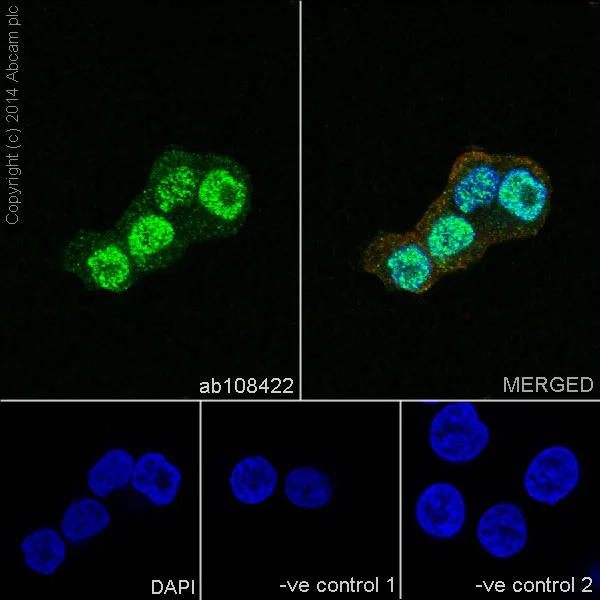
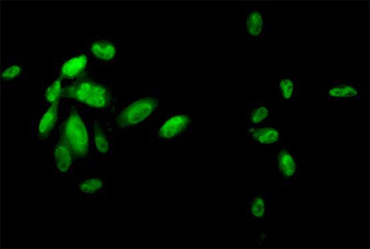
Immunocytochemistry/ Immunofluorescence - Anti-FOXA2 antibody [EPR4466] - BSA and Azide free (AB220810)
Immunocytochemistry/Immunofluorescence analysis of HT-29 cells labelling FOXA2 with purified ab108422 at 1/300. Cells were fixed with 4% paraformaldehyde and permeabilized with 0.1% Triton X-100. ab150077, an Alexa Fluor® 488-conjugated goat anti-rabbit IgG (1/500) was used as the secondary antibody. DAPI (blue) was used as the nuclear counterstain. ab7291, a mouse anti-tubulin (1/500) and ab150120, an Alexa Fluor® 594-conjugated goat anti-mouse IgG (1/500) were also used.
-ve control 1 : primary antibody (1/300) and secondary antibody, ab150120, an Alexa Fluor® 594-conjugated goat anti-mouse IgG (1/500).
-ve control 2 : ab7291 (1/1000) and secondary antibody, ab150077, an Alexa Fluor® 488-conjugated goat anti-rabbit IgG (1/500).
This data was developed using the same antibody clone in a different buffer formulation containing PBS, BSA, glycerol, and sodium azide (ab108422).
- IHC-P
Unknown
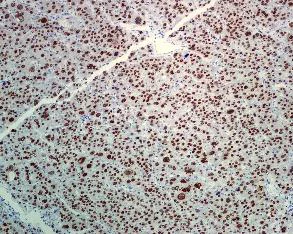
Immunohistochemistry (Formalin/PFA-fixed paraffin-embedded sections) - Anti-FOXA2 antibody [EPR4466] - BSA and Azide free (AB220810)
Immunohistochemistry (Formalin/PFA-fixed paraffin-embedded sections) analysis of human hepatocellular carcinoma tissue labelling FOXA2 with unpurified ab108422 at a 1/250 dilution.
This data was developed using the same antibody clone in a different buffer formulation containing PBS, BSA, glycerol, and sodium azide (ab108422).
- IHC-P
Unknown
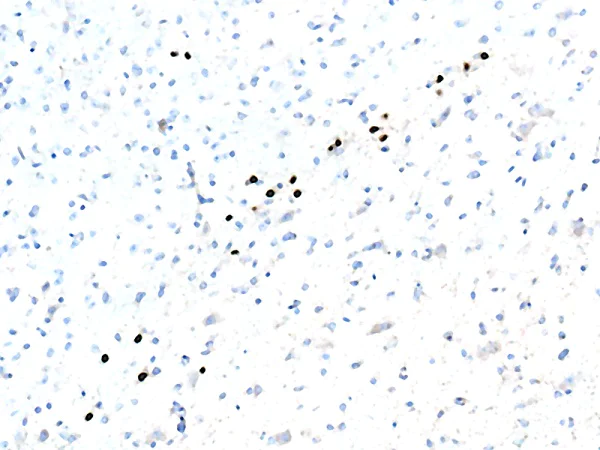
Immunohistochemistry (Formalin/PFA-fixed paraffin-embedded sections) - Anti-FOXA2 antibody [EPR4466] - BSA and Azide free (AB220810)
ab108422 staining of FOXA2 in mouse brain (substantia nigra) tissue sections by Immunohistochemistry (IHC-P - paraformaldehyde-fixed, paraffin-embedded sections). Heat-mediated antigen retrieval was carried out using citric acid. Samples were incubated with primary antibody (1/500) for two hours at room temperature. A Biotin-conjugated goat anti-rabbit IgG polyclonal was used as the secondary antibody.
This data was developed using the same antibody clone in a different buffer formulation containing PBS, BSA, glycerol, and sodium azide (ab108422).
This image is courtesy of Carl Hobbs, King's College London, United Kingdom
- IHC-P
Lab
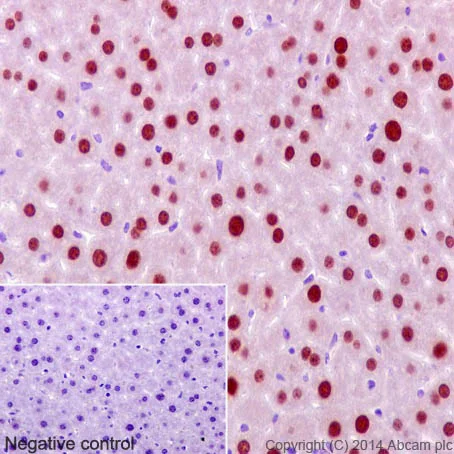
Immunohistochemistry (Formalin/PFA-fixed paraffin-embedded sections) - Anti-FOXA2 antibody [EPR4466] - BSA and Azide free (AB220810)
Immunohistochemistry (Formalin/PFA-fixed paraffin-embedded sections) analysis of mouse liver tissue labelling FOXA2 with purified ab108422 at 1/500. Heat mediated antigen retrieval was performed using Tris/EDTA buffer pH 9. ab97051, a HRP-conjugated goat anti-rabbit IgG (H+L) was used as the secondary antibody (1/500). Negative control using PBS instead of primary antibody. Counterstained with hematoxylin.
This data was developed using the same antibody clone in a different buffer formulation containing PBS, BSA, glycerol, and sodium azide (ab108422).
- WB
Lab
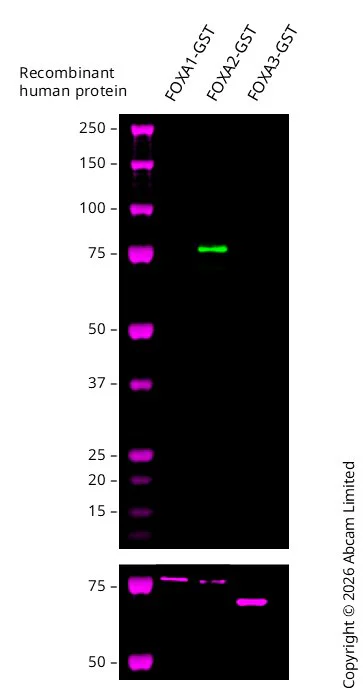
Western blot - Anti-FOXA2 antibody [EPR4466] - BSA and Azide free (AB220810)
This data was developed using ab108422, the same antibody clone in a different buffer formulation.
Western blot : Anti-FOXA2 antibody [EPR4466] ab108422 staining at 1/1000 dilution, shown in green; [LOADING CONTROL] loading control staining at 1/[DILUTION] dilution, shown in magenta. A band was observed at 78 kDa. To generate this image, samples were run on an SDS-PAGE gel then transferred onto a nitrocellulose membrane. Membranes were blocked in 3pc Milk in TBS-0.1 % Tween 20 (TBS-T) before incubation with primary antibodies overnight at 4 C. Blots were washed four times in TBS-T, incubated with secondary antibodies for 1 h at room temperature, washed again four times then imaged. Secondary antibodies used were Goat anti-Rabbit 800CW and Goat anti-Mouse 680RD at 1/20,000 dilution.
All lanes:
Western blot - Anti-FOXA2 antibody [EPR4466] (<a href='/en-us/products/primary-antibodies/foxa2-antibody-epr4466-ab108422'>ab108422</a>) at 1/1000 dilution
Lane 1:
FOXA1 Recombinant Protein (GST Tag) at 0.1 µg
Lane 2:
FOXA2 Recombinant Protein (GST Tag) at 0.1 µg
Lane 3:
FOXA3 Recombinant Protein (GST Tag) at 0.1 µg
Secondary
All lanes:
Goat anti-Rabbit 800CW & Goat anti-Mouse 680RD at 1/20000 dilution
Predicted band size: 78 kDa
Observed band size: 78 kDa
false
Related conjugates and formulations (8)
-
Anti-FOXA2 antibody [EPR4466]
-
519 Alexa Fluor® 488
Alexa Fluor® 488 Anti-FOXA2 antibody [EPR4466]
-
565 Alexa Fluor® 555
Alexa Fluor® 555 Anti-FOXA2 antibody [EPR4466]
-
603 Alexa Fluor® 568
Alexa Fluor® 568 Anti-FOXA2 antibody [EPR4466]
-
617 Alexa Fluor® 594
Alexa Fluor® 594 Anti-FOXA2 antibody [EPR4466]
-
665 Alexa Fluor® 647
Alexa Fluor® 647 Anti-FOXA2 antibody [EPR4466]
-
775 Alexa Fluor® 750
Alexa Fluor® 750 Anti-FOXA2 antibody [EPR4466]
-
HRP Anti-FOXA2 antibody [EPR4466]
Alternative Products
Primary Antibodies
AB108396
Anti-FOXA2 antibody [EPR4465] - ChIP Grade
RabMAb|Recombinant|Advanced Validation
- 0
- 0
Primary Antibodies
AB256493
Anti-FOXA2 antibody [EPR22919-71] - ChIP Grade
RabMAb|Recombinant|20ul selling size
- 0
- 0
Primary Antibodies
AB259272
Anti-FOXA2 antibody [EPR22919-71] - ChIP Grade - BSA and Azide free
RabMAb|Recombinant
- 0
- 0
Complementary Products
Primary Antibodies
AB201460
Anti-HNF-4-alpha antibody [EPR16885-99]
20ul selling size|RabMAb|Advanced Validation|Recombinant

- 4
- 2
Primary Antibodies
AB183322
BOND RX™ Validated|20ul selling size|RabMAb|Recombinant|Advanced Validation

- 5
- 5
Primary Antibodies
AB282458
BOND RX™ Validated|20ul selling size|RabMAb|Recombinant|KO Validated
- 0
- 0
Primary Antibodies
AB76013
Anti-TTF1/Nkx2-1 antibody [EP1584Y]
RabMAb|Recombinant|20ul selling size

- 5
- 18
Reactivity data
Product details
ab220810 is the carrier-free version of ab108422.
Patented technology
Our RabMAb® technology is a patented hybridoma-based technology for making rabbit monoclonal antibodies. For details on our patents, please refer to RabMAb® patents.
What are the advantages of a recombinant monoclonal antibody?
This product is a recombinant monoclonal antibody, which offers several advantages including:
- - High batch-to-batch consistency and reproducibility
- - Improved sensitivity and specificity
- - Long-term security of supply
- - Animal-free batch production
For more information, read more on recombinant antibodies.
Conjugation ready
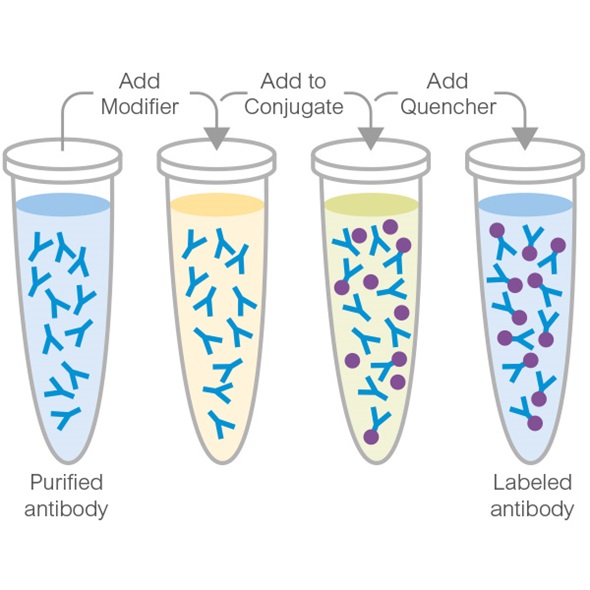
Our carrier-free antibodies are typically supplied in a PBS-only formulation, purified and free of BSA, sodium azide and glycerol. This conjugation-ready format is designed for use with fluorochromes, metal isotopes, oligonucleotides, and enzymes, which makes them ideal for antibody labelling, functional and cell-based assays, flow-based assays (e.g. mass cytometry) and Multiplex Imaging applications.
Use our conjugation kits for antibody conjugates that are ready-to-use in as little as 20 minutes with 1 minute hands-on-time and 100% antibody recovery: available for fluorescent dyes, HRP, biotin and gold.
Compatibility
This product is compatible with the Maxpar® Antibody Labeling Kit from Fluidigm, without the need for antibody preparation. Maxpar® is a trademark of Fluidigm Canada Inc.
Properties and storage information
Form
Purification technique
Storage buffer
Shipped at conditions
Appropriate short-term storage conditions
Appropriate long-term storage conditions
Storage information
Supplementary information
This supplementary information is collated from multiple sources and compiled automatically.
Biological function summary
FOXA2 influences important processes in embryonic development and organogenesis. It does not typically act as part of a larger complex but independently binds to DNA enabling the transcription of target genes. FOXA2 affects liver function by regulating genes involved in glucose and lipid metabolism and it also plays a part in the differentiation of cells in development stages.
Pathways
FOXA2 operates within pathways like the insulin signaling pathway and the Wnt signaling pathway. It collaborates with other transcription factors like FOXA1 and FOXA3 to maintain metabolic homeostasis. In the Wnt pathway FOXA2 impacts cell fate decisions essential for embryonic patterning and development.
Product protocols
- Visit the General protocols
- Visit the Troubleshooting
Target data
Alternative Names
Publications (1)
Recent publications for all applications. Explore the full list and refine your search
Molecular human reproduction 20:776-86 PubMed24770950
2014
Applications
Unspecified application
Species
Unspecified reactive species
Product promise
Please note: All products are 'FOR RESEARCH USE ONLY. NOT FOR USE IN DIAGNOSTIC OR THERAPEUTIC PROCEDURES'.
For licensing inquiries, please contact partnerships@abcam.com