Anti-GFAP antibody [EPR1034Y] - Astrocyte marker - Mouse IgG1 (Chimeric)
- 20ul selling size
- BOND RX™ Validated
- Recombinant
- What is this?
Be the first to review this product! Submit a review
|
(20 Publications )
This antibody is the chimeric Mouse IgG1 version of clone EPR1034Y, available in rabbit as ab68428 with over 150 publications. Same clone, same staining pattern, different species antibody backbone.
Learn more about chimeric antibodies
- IHC-P
Lab
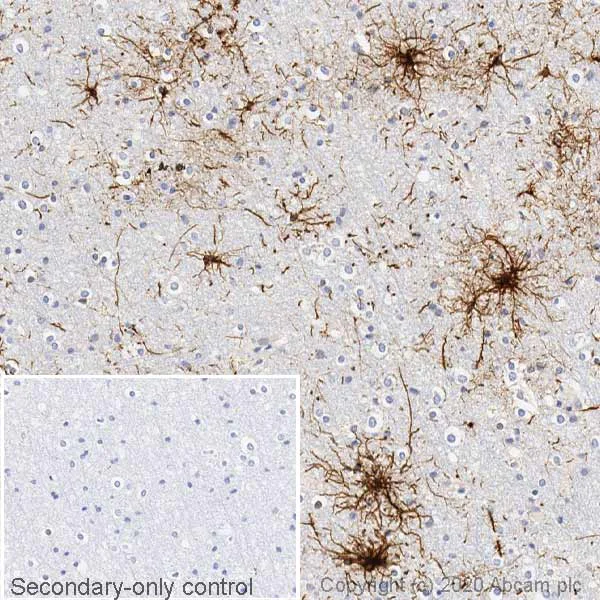
Immunohistochemistry (Formalin/PFA-fixed paraffin-embedded sections) - Anti-GFAP antibody [EPR1034Y] - Astrocyte marker - Mouse IgG1 (Chimeric) (AB279289)
IHC image of GFAP staining in a section of formalin-fixed paraffin-embedded normal human cerebral cortex performed on a Leica BONDTM system using the standard protocol F.
The section was pre-treated using heat mediated antigen retrieval with sodium citrate buffer (pH6, epitope retrieval solution 1) for 20mins. The section was then incubated with ab279289, 1μg/ml, for 15 mins at room temperature. A rabbit anti-mouse IgG1, ab125913, was added for 8 mins at room temperature and detected using an HRP conjugated goat anti-rabbit compact polymer system. DAB was used as the chromogen. The section was then counterstained with haematoxylin and mounted with DPX.
The inset secondary-only control image is taken from an identical assay without primary antibody.
For other IHC staining systems (automated and non-automated) customers should optimize variable parameters such as antigen retrieval conditions, primary antibody concentration and antibody incubation times.
- Flow Cyt (Intra)
Supplier Data
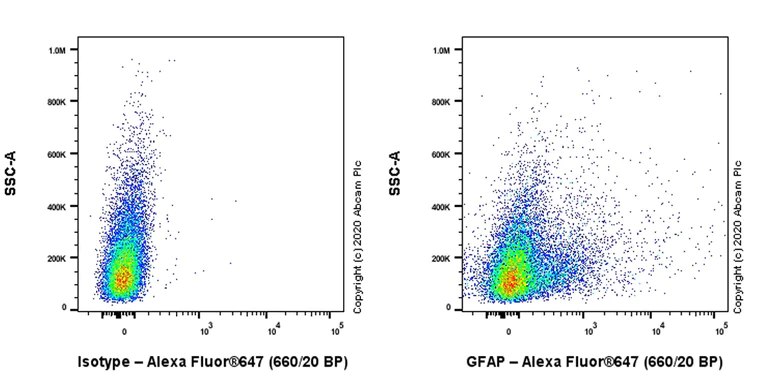
Flow Cytometry (Intracellular) - Anti-GFAP antibody [EPR1034Y] - Astrocyte marker - Mouse IgG1 (Chimeric) (AB279289)
Flow cytometric analysis of 4% paraformaldehyde-fixed, 90% methanol-permeabilized rat primary neural/glia cells labelling GFAP with ab279289 at 1/1000 dilution (0.1μg)/ Right compared with a Mouse monoclonal IgG isotype control/ Left.
Goat Anti-Mouse IgG (Alexa Fluor® 647, ab150119) at 1/2000 dilution was used as the secondary antibody.
- IHC-Fr
Supplier Data
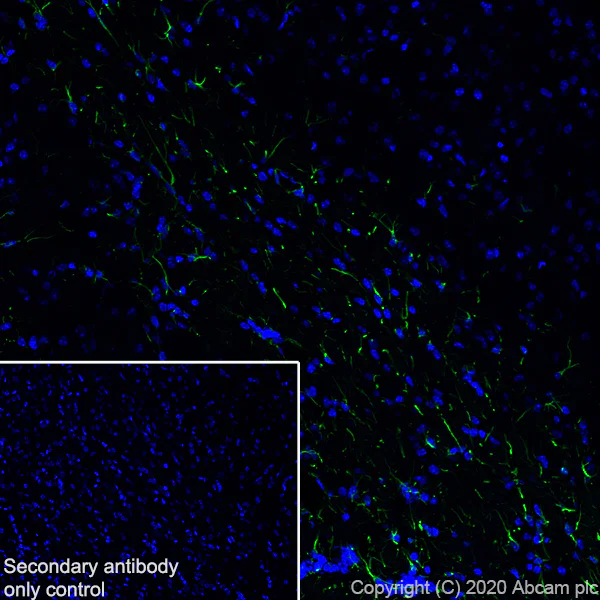
Immunohistochemistry (Frozen sections) - Anti-GFAP antibody [EPR1034Y] - Astrocyte marker - Mouse IgG1 (Chimeric) (AB279289)
Immunohistochemical analysis of 4% PFA-fixed, 0.2% Triton X-100 permeabilized frozen mouse cerebrum tissue labeling GFAP with ab279289 at /500 (1.968 μg/ml) dilution followed by ab150113 Goat Anti-Mouse IgG H&L (Alexa Fluor® 488) at 1/1000 dilution (Green). Positive staining on mouse cerebrum is observed. The nuclear counterstain was DAPI (Blue).
Secondary antibody control : Secondary antibody is ab150113 Goat Anti-Mouse IgG H&L (Alexa Fluor® 488)at 1000 dilution.
Heat mediated antigen retrieval using sodium citrate buffer (10mM citrate pH 6.0 + 0.05% Tween-20).
- ICC
Lab
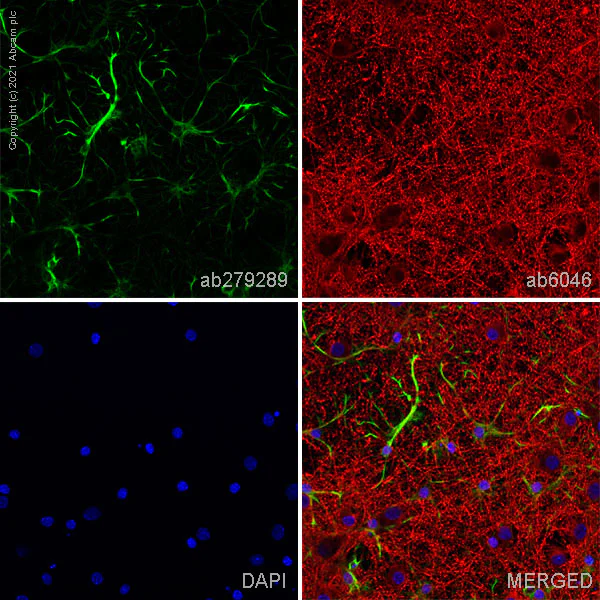
Immunocytochemistry - Anti-GFAP antibody [EPR1034Y] - Astrocyte marker - Mouse IgG1 (Chimeric) (AB279289)
ab279289 staining GFAP in primary hippocampal rat neurons/glia (obtained from Neuromics, cat. no. PC35101), DIV14. The cells were fixed with 4% paraformaldehyde (10 min), permeabilized with 0.1% PBS-Tween for 5 minutes and then blocked with 1% BSA/10% normal goat serum/0.3M glycine in 0.1%PBS-Tween for 1h. The cells were then incubated overnight at 4°C with ab279289 at 1μg/ml and ab6046, Rabbit polyclonal to beta Tubulin. Cells were then incubated with ab150117, Goat Anti-Mouse IgG H&L (Alexa Fluor® 488) preadsorbed at 1/1000 dilution (shown in green) and ab150084, Goat Anti-Rabbit IgG H&L (Alexa Fluor® 594) preadsorbed at 1/1000 dilution (shown in pseudocolour red). Nuclear DNA was labelled with DAPI (shown in blue). Image was taken with a confocal microscope (Leica-Microsystems, TCS SP8).
The antibody ab279289 gave comparable results using MeOH fixation (100%, 5 min).
- IP
Supplier Data
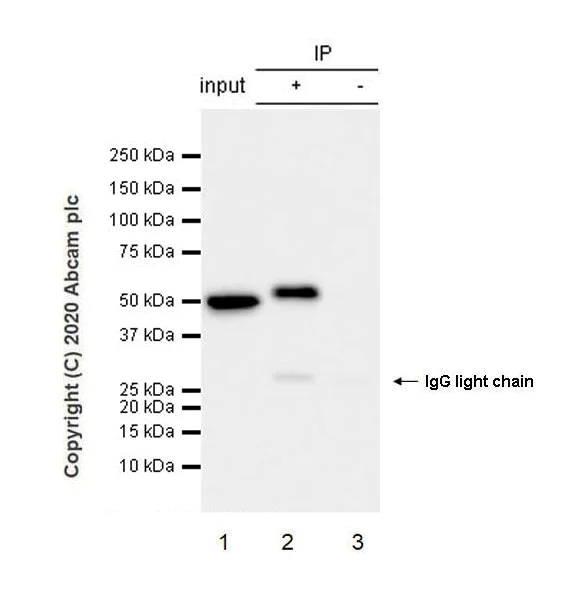
Immunoprecipitation - Anti-GFAP antibody [EPR1034Y] - Astrocyte marker - Mouse IgG1 (Chimeric) (AB279289)
GFAP was immunoprecipitated from 0.35 mg rat brain tissue lysate 10 μg with ab279289 at 1/30 dilution (2μg in 0.35mg lysates). Western blot was performed on the immunoprecipitate using ab279289 at 1/1000 dilution. mouse IgG for IP (HRP) (ab131368) was used at 1/5000 dilution.
Lane 1 : Rat brain tissue lysate 10μg.
Lane 2 : ab279289 IP in rat brain tissue lysate.
Lane 3 : Mouse monoclonal IgG1 (ab18443) instead of ab279289 in rat brain tissue lysate.
Blocking and dilution buffer and concentration : 5% NFDM/TBST.
Exposure time : 23 seconds.
All lanes:
Immunoprecipitation - Anti-GFAP antibody [EPR1034Y] - Astrocyte marker - Mouse IgG1 (Chimeric) (ab279289)
Predicted band size: 49 kDa
false
- WB
Supplier Data
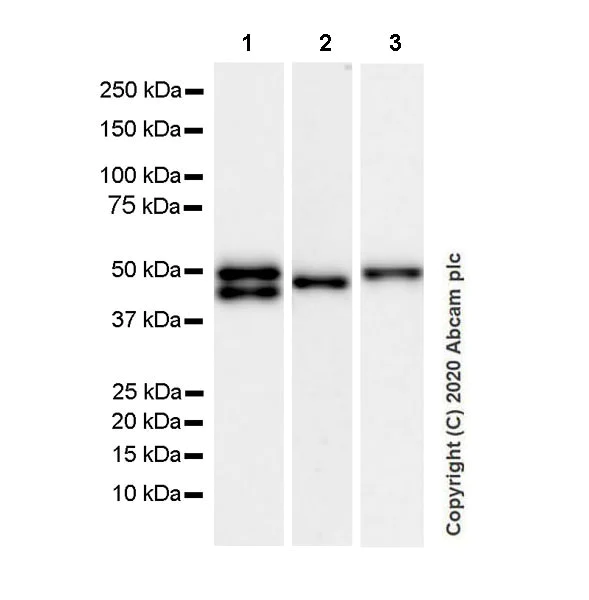
Western blot - Anti-GFAP antibody [EPR1034Y] - Astrocyte marker - Mouse IgG1 (Chimeric) (AB279289)
Blocking/Dilution buffer : 5% NFDM/TBST.
The molecular weight observed is consistent with the literature (PMID : 824020, 2294, 6340792).
Exposure times : Lane 1 : 3.25 seconds; Lane 2 : 48 seconds; Lane 3 : 10 seconds.
All lanes:
Western blot - Anti-GFAP antibody [EPR1034Y] - Astrocyte marker - Mouse IgG1 (Chimeric) (ab279289) at 1/1000 dilution
Lane 1:
Human brain tissue lysate at 20 µg
Lane 2:
Mouse brain tissue lysate at 20 µg
Lane 3:
Rat brain tissue lysate at 20 µg
Secondary
All lanes:
Peroxidase-Conjugated Goat anti-Mouse IgG (H+L) at 1/5000 dilution
Predicted band size: 49 kDa
Observed band size: 40-50 kDa
false
Related conjugates and formulations (13)
-
Anti-GFAP antibody [EPR1034Y] - Mouse IgG1 (Chimeric) - BSA and Azide free
-
Anti-GFAP antibody [EPR1034Y] - Mouse IgG2a (Chimeric) - BSA and Azide free
-
Anti-GFAP antibody [EPR1034Y] - Rat IgG2a (Chimeric) - BSA and Azide free
-
Anti-GFAP antibody [EPR1034Y] - Astrocyte marker - Mouse IgG2a (Chimeric)
-
Anti-GFAP antibody [EPR1034Y] - Astrocyte marker - Rat IgG2a (Chimeric)
-
Anti-GFAP antibody [EPR1034Y] - Astrocyte marker - Chicken IgY (Chimeric)
-
Anti-GFAP antibody [EPR1034Y] – Chicken IgY (Chimeric) – BSA and Azide Free
-
519 Rat version
Alexa Fluor® 488 Anti-GFAP antibody [EPR1034Y] - Rat IgG2a (Chimeric)
-
519 Mouse version
Alexa Fluor® 488 Anti-GFAP antibody [EPR1034Y] - Mouse IgG2a (Chimeric)
-
519 Mouse version
Alexa Fluor® 488 Anti-GFAP antibody [EPR1034Y] - Mouse IgG1 (Chimeric)
-
665 Mouse version
Alexa Fluor® 647 Anti-GFAP antibody [EPR1034Y] - Mouse IgG2a (Chimeric)
-
665 Rat version
Alexa Fluor® 647 Anti-GFAP antibody [EPR1034Y] - Rat IgG2a (Chimeric)
-
665 Mouse version
Alexa Fluor® 647 Anti-GFAP antibody [EPR1034Y] - Mouse IgG1 Chimeric
Complementary Products
Primary Antibodies
AB178846
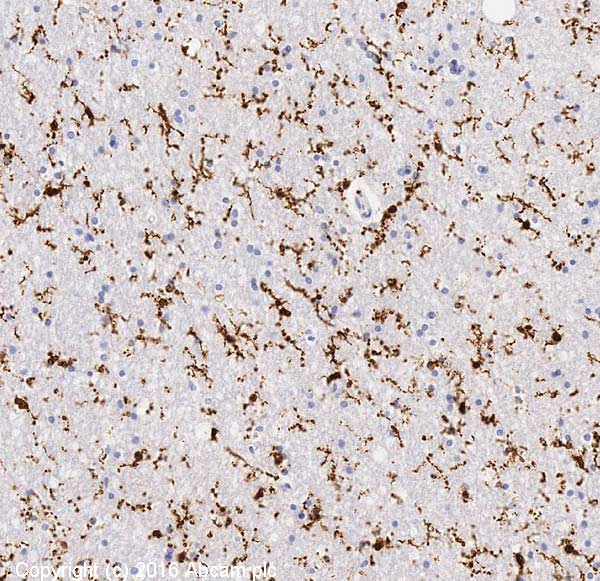
Anti-Iba1 antibody [EPR16588] - Microglia marker
20ul selling size|BOND RX™ Validated|RabMAb|Recombinant|Lab Essentials
- 5
- 50
Primary Antibodies
AB177487
Anti-NeuN antibody [EPR12763] - Neuronal Marker
BOND RX™ Validated|RabMAb|Recombinant|Lab Essentials|20ul selling size|Advanced Validation
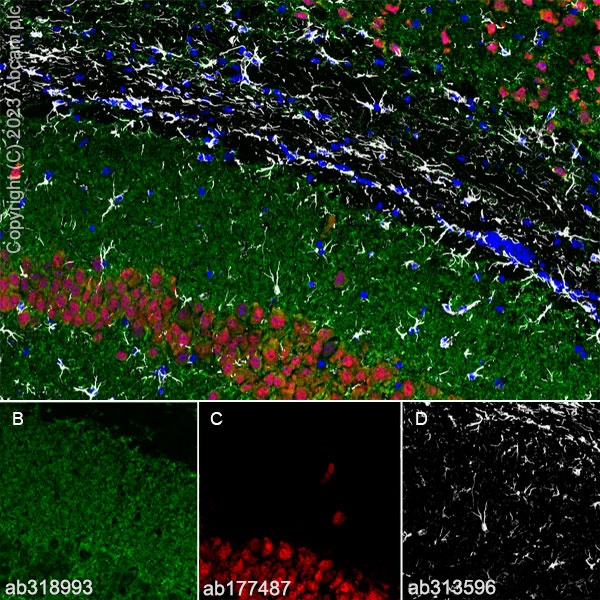
- 5
- 76
Primary Antibodies
AB109186
Anti-Olig2 antibody [EPR2673] - Oligodendrocyte Marker
BOND RX™ Validated|20ul selling size|Recombinant|RabMAb
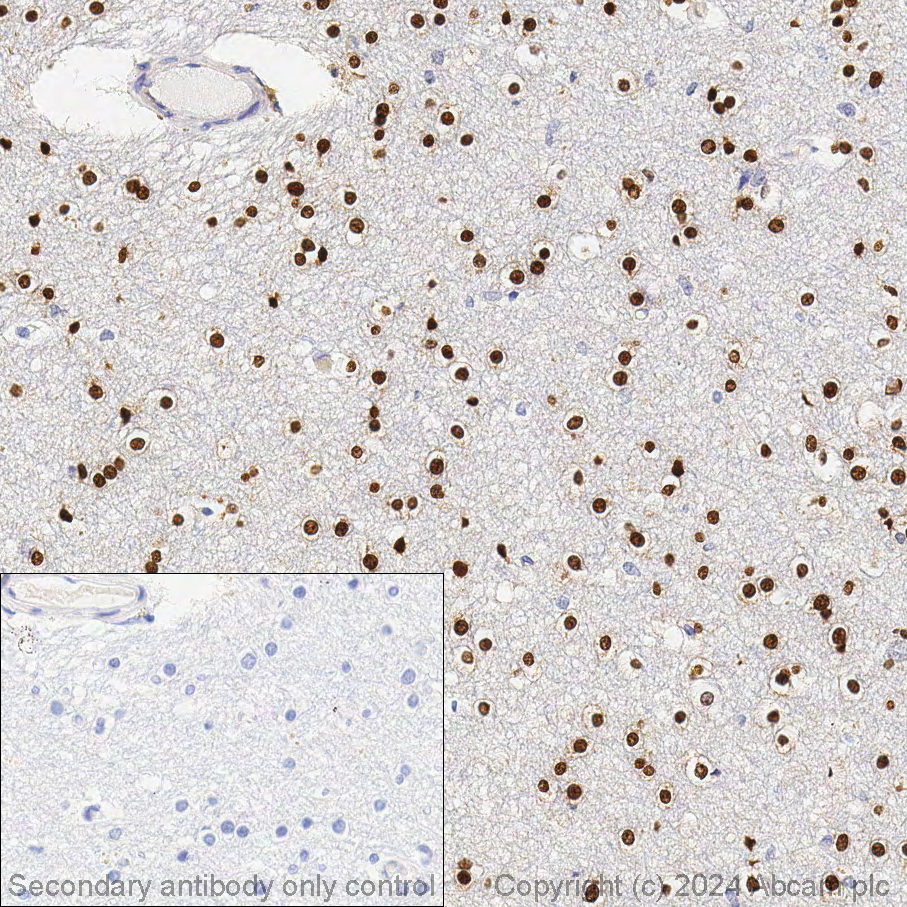
- 5
- 22
Primary Antibodies
AB78078
Anti-beta III Tubulin antibody [2G10] - Neuronal Marker
BOND RX™ Validated|KO Validated|Lab Essentials
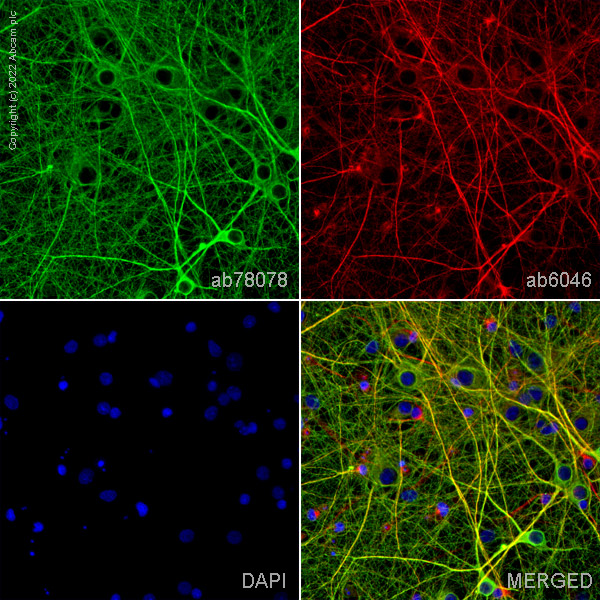
- 5
- 41
Reactivity data
Product details
Find all reagents to label astrocytes in our "Astrocytes markers guide".
This mouse monoclonal chimeric antibody has been engineered from a RabMAb parent antibody (ab68428). By necessity, some rabbit sequence is retained as part of the variable domain. When multiplexing with other rabbit-derived antibodies, using cross absorbed Fc-reactive secondary antibodies are recommended.
Properties and storage information
Form
Purification technique
Storage buffer
Shipped at conditions
Appropriate short-term storage duration
Appropriate short-term storage conditions
Appropriate long-term storage conditions
Aliquoting information
Storage information
Product protocols
- Visit the General protocols
- Visit the Troubleshooting
Target data
Alternative Names
Publications (20)
Recent publications for all applications. Explore the full listand refine your search
Cell reports. Medicine 6:102319 PubMed40882623
2025
Applications
Unspecified application
Species
Unspecified reactive species
Journal of nanobiotechnology 23:406 PubMed40457432
2025
Applications
Unspecified application
Species
Unspecified reactive species
Aging and disease : PubMed40423637
2025
Applications
Unspecified application
Species
Unspecified reactive species
BMC neuroscience 26:30 PubMed40295901
2025
Applications
Unspecified application
Species
Unspecified reactive species
Scientific reports 15:13678 PubMed40258918
2025
Applications
Unspecified application
Species
Unspecified reactive species
Gut microbes 17:2471015 PubMed40008452
2025
Applications
Unspecified application
Species
Unspecified reactive species
Advanced science (Weinheim, Baden-Wurttemberg, Germany) 12:e2412556 PubMed39888279
2025
Applications
Unspecified application
Species
Unspecified reactive species
Frontiers in pharmacology 15:1426121 PubMed39188955
2024
Applications
Unspecified application
Species
Unspecified reactive species
Journal of neuroinflammation 21:178 PubMed39034417
2024
Applications
Unspecified application
Species
Unspecified reactive species
International journal of medical sciences 21:1738-1755 PubMed39006851
2024
Applications
Unspecified application
Species
Unspecified reactive species
Product promise
Please note: All products are 'FOR RESEARCH USE ONLY. NOT FOR USE IN DIAGNOSTIC OR THERAPEUTIC PROCEDURES'.
For licensing inquiries, please contact partnerships@abcam.com