Anti-GIPC1 antibody
3
(3 Reviews)
|
(5 Publications )

- IHC-P
Unknown
Immunohistochemistry (Formalin/PFA-fixed paraffin-embedded sections) - Anti-GIPC1 antibody (AB5951)
ab5951 (10ug/ml) staining human GIPC1 in human kidney by immunohistochemistry using paraffin embedded tissue. Microwaved antigen retrieval with Tris/EDTA buffer pH9, HRP-staining.
- IHC-P
AbReview16058****
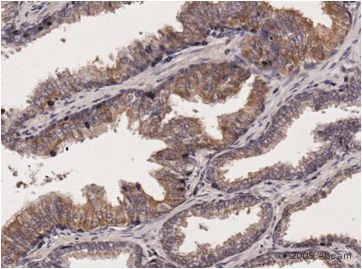
Immunohistochemistry (Formalin/PFA-fixed paraffin-embedded sections) - Anti-GIPC1 antibody (AB5951)
ab5951 staining GIPC1 in human prostate tissue section by immunohistochemistry (formalin/PFA-fixed paraffin-embedded sections). Cells were formalin fixed prior to blocking in 10% serum for 20 minutes at RT. The primary antibody was diluted 1/250 and incubated with the sample for 24 hour at 4°C. A biotin conjugated rabbit anti-goat antibody, diluted 1/250, was used as the secondary.
This image is courtesy of an anonymous Abreview
- WB
Unknown
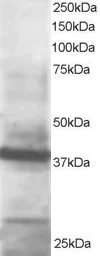
Western blot - Anti-GIPC1 antibody (AB5951)
ab5951 at 1μg/ml staining GIPC1 at approximately 40kDa in HeLa Lysate by Western blot (ECL). ab5951 at 1µg/ml staining GIPC1 at approximately 40kDa in HeLa Lysate by Western blot (ECL).
All lanes:
Western blot - Anti-GIPC1 antibody (ab5951)
Predicted band size: 36 kDa
false
- WB
Unknown
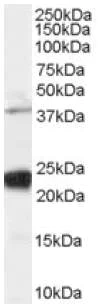
Western blot - Anti-GIPC1 antibody (AB5951)
Primary incubated for 1 hour. Detected by western blot using chemiluminescence.
All lanes:
Western blot - Anti-GIPC1 antibody (ab5951) at 0.03 µg/mL
All lanes:
Human HeLa cell lysate (RIPA buffer, 35µg total protein per lane)
Predicted band size: 36 kDa
Observed band size: 24 kDa,38 kDa
false
Complementary Products
Primary Antibodies
AB81283
Anti-AKT1 (phospho S473) antibody [EP2109Y]
RabMAb|Recombinant|Lab Essentials|20ul selling size

- 4
- 10

Primary Antibodies
AB283264
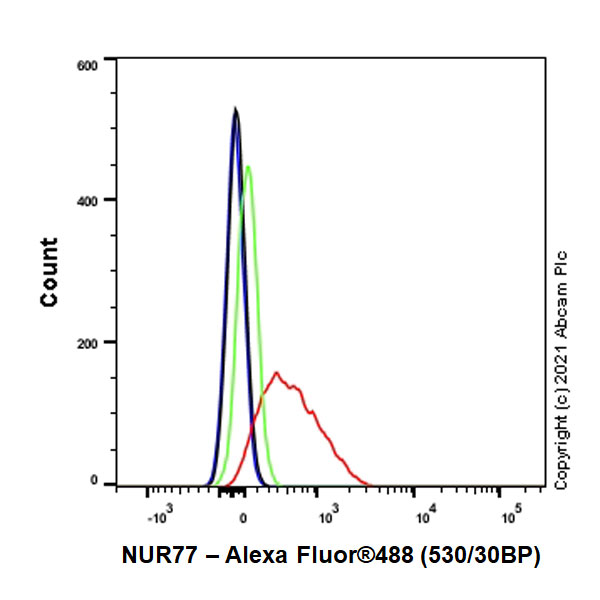
Anti-NUR77 antibody [EPR23982-85]
20ul selling size|RabMAb|Recombinant|KO Validated|Trial Size
- 0
- 0
Primary Antibodies
AB179463
Anti-AKT1 + AKT2 + AKT3 antibody [EPR16798]
RabMAb|Recombinant|Lab Essentials|20ul selling size

- 0
- 0
Reactivity data
Properties and storage information
Form
Purification technique
Purification notes
Storage buffer
Shipped at conditions
Appropriate short-term storage conditions
Appropriate long-term storage conditions
Aliquoting information
Storage information
Supplementary information
This supplementary information is collated from multiple sources and compiled automatically.
Biological function summary
The function of GIPC1 extends to endocytosis and cell signaling. It often forms part of protein complexes that facilitate intracellular trafficking. By interacting with membrane receptors like integrins and receptor tyrosine kinases GIPC1 aids in cell communication and adhesion processes. Its presence impacts the development and maintenance of cellular structures due to these complex formations.
Pathways
GIPC1 participates significantly in both the Wnt signaling and Ras signaling pathways. It associates with Dishevelled proteins in the Wnt pathway contributing to modulation of cell fate and proliferation. Additionally it connects to Ras-related signaling where it interacts with receptors such as the insulin-like growth factor receptor (IGF1R) thereby mediating downstream signaling effects important for cell growth and differentiation.
Product protocols
- Visit the General protocols
- Visit the Troubleshooting
Target data
Alternative Names
Publications (5)
Recent publications for all applications. Explore the full list and refine your search
Molecular cell 81:1337-1354.e8 PubMed33545068
2021
Applications
Unspecified application
Species
Unspecified reactive species
Chemical senses 42:25-35 PubMed27655939
2016
Applications
Unspecified application
Species
Unspecified reactive species
The Journal of biological chemistry 285:28643-50 PubMed20634288
2010
Applications
ICC/IF
Species
Human
PLoS biology 7:e25 PubMed19175293
2009
Applications
WB
Species
Human
Molecular neurodegeneration 3:5 PubMed18348724
2008
Applications
WB
Species
Human
Product promise
Please note: All products are 'FOR RESEARCH USE ONLY. NOT FOR USE IN DIAGNOSTIC OR THERAPEUTIC PROCEDURES'.
For licensing inquiries, please contact partnerships@abcam.com