Anti-Glycophorin A antibody [EPR8199]
- 20ul selling size
- RabMAb
- Recombinant
- What is this?
0
(1 Review)
|
(4 Publications )
- IHC-P
Unknown
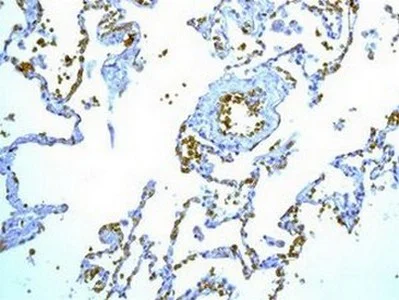
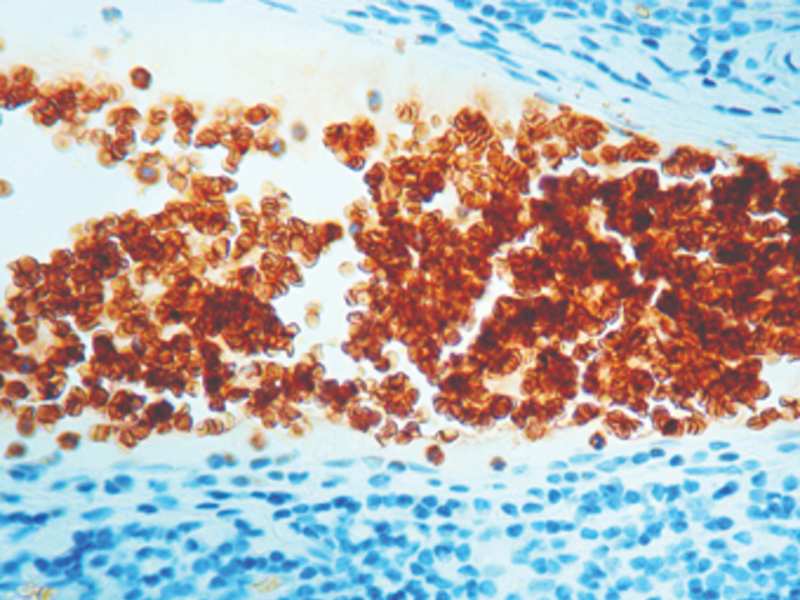
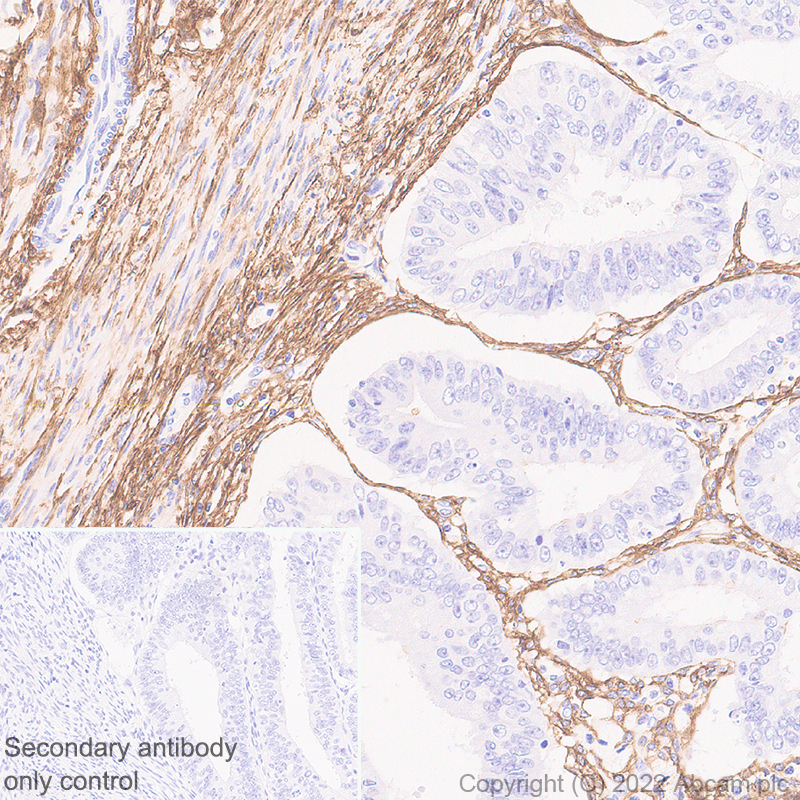
Immunohistochemistry (Formalin/PFA-fixed paraffin-embedded sections) - Anti-Glycophorin A antibody [EPR8199] (AB134111)
Immunohistochemical analysis of paraffin embedded Human lung tissue labelling Glycophorin A with ab134111 at 1/100.
Perform heat mediated antigen retrieval with citrate buffer pH 6 before commencing with IHC staining protocol.
- IHC-P
Unknown
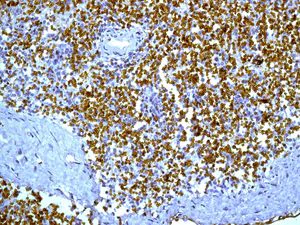
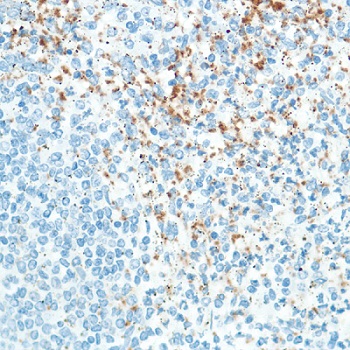
Immunohistochemistry (Formalin/PFA-fixed paraffin-embedded sections) - Anti-Glycophorin A antibody [EPR8199] (AB134111)
Immunohistochemical analysis of paraffin embedded Human spleen tissue labelling Glycophorin A with ab134111 at 1/100.
Perform heat mediated antigen retrieval with citrate buffer pH 6 before commencing with IHC staining protocol.
- WB
Unknown
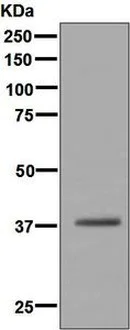
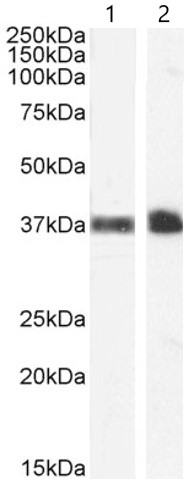
Western blot - Anti-Glycophorin A antibody [EPR8199] (AB134111)
All lanes:
Western blot - Anti-Glycophorin A antibody [EPR8199] (ab134111) at 1/1000 dilution
All lanes:
Human fetal liver tissue lysate at 10 µg
Secondary
All lanes:
Goat anti-rabbit HRP conjugated antibody at 1/2000 dilution
Predicted band size: 16 kDa
Observed band size: 38 kDa
false
- OI-RD Scanning
Unknown
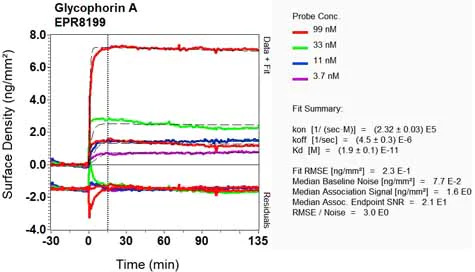
OI-RD Scanning - Anti-Glycophorin A antibody [EPR8199] (AB134111)
We have systematically measured KD (the equilibrium dissociation constant between the antibody and its antigen), of more than 840 recombinant antibodies to assess not only their individual KD values but also to see the average affinity of antibody. Based on the comparison with published literature values for mouse monoclonal antibodies, Recombinant antibodies appear to be on average 1-2 order of magnitude higher affinity.
Related conjugates and formulations (1)
-
Anti-Glycophorin A antibody [EPR8199] - BSA and Azide free
Alternative Products

Primary Antibodies
AB218372
Anti-Glycophorin A antibody [EPR8200] - BSA and Azide free
RabMAb|Recombinant
- 0
- 0
Primary Antibodies
AB129024
Anti-Glycophorin A antibody [EPR8200]
20ul selling size|RabMAb|Recombinant
- 5
- 1
Complementary Products
Primary Antibodies
AB306583
Anti-TMEM119 antibody [EPR25865-89] - Microglial marker
BOND RX™ Validated|20ul selling size|Recombinant|Advanced Validation|RabMAb|Trial Size
- 0
- 0
Reactivity data
Product details
Species reactivity
Mouse, Rat: We have preliminary internal testing data to indicate this antibody may not react with these species.
Please contact us for more information.
Patented technology
Our RabMAb® technology is a patented hybridoma-based technology for making rabbit monoclonal antibodies. For details on our patents, please refer to RabMAb® patents.
What are the advantages of a recombinant monoclonal antibody?
This product is a recombinant monoclonal antibody, which offers several advantages including:
- - High batch-to-batch consistency and reproducibility
- - Improved sensitivity and specificity
- - Long-term security of supply
- - Animal-free batch production
For more information, read more on recombinant antibodies.
Properties and storage information
Form
Purification technique
Storage buffer
Shipped at conditions
Appropriate short-term storage conditions
Appropriate long-term storage conditions
Storage information
Supplementary information
This supplementary information is collated from multiple sources and compiled automatically.
Biological function summary
Glycophorin A interacts with other membrane proteins to form part of the membrane's skeletal protein network. This network stabilizes the erythrocyte structure and contributes to its flexibility essential for passing through narrow capillaries. Glycophorin A does not form part of any large multiprotein complex but does interact with other glycophorins such as Glycophorin B. These interactions help to form the MN and Ss blood group antigens.
Pathways
Glycophorin A is involved in several pathways including the erythrocyte development and lipid raft pathways. These pathways are important for cell signaling and membrane transport processes. Glycophorin A's role in erythrocyte development is connected to protein 4.1R which links the membrane to the underlying cytoskeleton influencing red blood cell shape and stability. Additionally its role in lipid raft-mediated signaling intersects with proteins involved in immune response regulation.
Product protocols
- Visit the General protocols
- Visit the Troubleshooting
Target data
Alternative Names
Publications (4)
Recent publications for all applications. Explore the full listand refine your search
Advanced healthcare materials 13:e2303430 PubMed37942845
2023
Applications
Unspecified application
Species
Unspecified reactive species
Transfusion 63:586-600 PubMed36752125
2023
Applications
Unspecified application
Species
Unspecified reactive species
Pediatric research 89:776-784 PubMed32454519
2020
Applications
Unspecified application
Species
Unspecified reactive species
Experimental and therapeutic medicine 16:1216-1224 PubMed30116372
2018
Applications
Unspecified application
Species
Unspecified reactive species
Product promise
Please note: All products are 'FOR RESEARCH USE ONLY. NOT FOR USE IN DIAGNOSTIC OR THERAPEUTIC PROCEDURES'.
For licensing inquiries, please contact partnerships@abcam.com