JavaScript is disabled in your browser. Please enable JavaScript to view this website.
AB225949

Anti-GNA15 antibody

Be the first to review this product! Submit a review

|

(1 Publication)

Rabbit Polyclonal GNA15 antibody. Suitable for WB, IHC-P and reacts with Mouse, Human samples. Cited in 1 publication. Immunogen corresponding to Recombinant Full Length Protein corresponding to Human GNA15.
2 Images
Immunohistochemistry (Formalin/PFA-fixed paraffin-embedded sections) - Anti-GNA15 antibody (AB225949)
  • IHC-P

Supplier Data

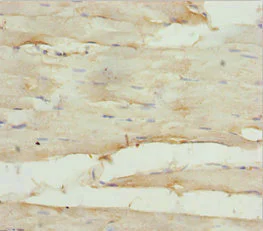
Immunohistochemistry (Formalin/PFA-fixed paraffin-embedded sections) - Anti-GNA15 antibody (AB225949)

Paraffin embedded human skeletal muscle tissue stained for GNA15 with ab225949 (1/100 dilution) in immunohistochemical analysis.
Immunohistochemistry (Formalin/PFA-fixed paraffin-embedded sections) - Anti-GNA15 antibody (AB225949)
  • IHC-P

Supplier Data

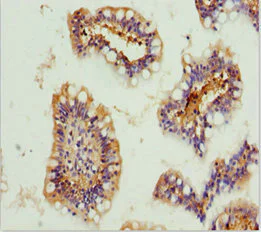
Immunohistochemistry (Formalin/PFA-fixed paraffin-embedded sections) - Anti-GNA15 antibody (AB225949)

Paraffin embedded human small intestine tissue stained for GNA15 with ab225949 (1/100 dilution) in immunohistochemical analysis.

Key facts

Host species

Rabbit

Clonality

Polyclonal

Isotype

IgG

Carrier free

No

Reacts with

Mouse, Human

Applications

WB, IHC-P

applications

Immunogen

Recombinant Full Length Protein corresponding to Human GNA15.

P30679

Reactivity data

{ "title": "Reactivity Data", "filters": { "stats": ["", "Species", "Dilution Info", "Notes"], "tabs": { "all-applications": {"fullname" : "All Applications", "shortname": "All Applications"}, "WB" : {"fullname" : "Western blot", "shortname":"WB"}, "IHCP" : {"fullname" : "Immunohistochemistry (Formalin/PFA-fixed paraffin-embedded sections)", "shortname":"IHC-P"} }, "product-promise": { "all": "all", "testedAndGuaranteed": "tested", "guaranteed": "expected", "predicted": "predicted", "notRecommended": "not-recommended" } }, "values": { "Human": { "WB-species-checked": "guaranteed", "WB-species-dilution-info": "", "WB-species-notes": "", "IHCP-species-checked": "testedAndGuaranteed", "IHCP-species-dilution-info": "1/20 - 1/200", "IHCP-species-notes": "<p></p>" }, "Mouse": { "WB-species-checked": "testedAndGuaranteed", "WB-species-dilution-info": "1/1000 - 1/5000", "WB-species-notes": "<p></p>", "IHCP-species-checked": "guaranteed", "IHCP-species-dilution-info": "", "IHCP-species-notes": "" } } }

Properties and storage information

Form
Liquid
Purification technique
Affinity purification Immunogen
Storage buffer
pH: 7.3 Preservative: 0.02% Sodium azide Constituents: PBS, 50% Glycerol (glycerin, glycerine)
Shipped at conditions
Blue Ice
Appropriate short-term storage duration
1-2 weeks
Appropriate short-term storage conditions
+4°C
Appropriate long-term storage conditions
-20°C
Aliquoting information
Upon delivery aliquot
Storage information
Avoid freeze / thaw cycle

Supplementary information

This supplementary information is collated from multiple sources and compiled automatically.

The protein GNA15 also known as G-protein subunit alpha-15 functions as part of the G protein complex which transduces signals from G protein-coupled receptors (GPCRs) to intracellular effectors. This protein weighs approximately 43 kDa. GNA15 gets expressed in various cell types with a notably higher expression in immune cells like lymphocytes and monocytes. Its role is to facilitate the transduction of external signals into a cellular response contributing to the regulation of numerous physiological processes.
Biological function summary

GNA15 participates in signal transduction by interacting with a range of signaling molecules. This protein serves as a mediator that couples activated GPCRs to downstream effectors influencing cellular responses. GNA15 does not operate alone; it forms a part of a heterotrimeric complex composed of alpha beta and gamma subunits enabling the integration of signals that modulate cellular activities like proliferation differentiation and immune response.

Pathways

GNA15 actively participates in intracellular signaling pathways that are critical for immune responses and cellular communication. The protein gets involved in the phospholipase C (PLC) pathway linking it with inositol trisphosphate (IP3) and diacylglycerol (DAG) production. Within this pathway it interacts with other proteins such as PLC-beta which play key roles in signal transduction. Furthermore GNA15 associates with the mitogen-activated protein kinase (MAPK) pathway impacting cell growth and survival.

GNA15 has connections to conditions involving immune function and inflammation. Aberrations in its signaling pathway have been implicated in immune disorders and inflammatory diseases such as rheumatoid arthritis. Additionally GNA15 links with other proteins like PLC-beta in the context of inflammatory signal transduction highlighting its importance in disease etiology and potential as a therapeutic target.

Product protocols

For this product, it's our understanding that no specific protocols are required. You can visit:

Target data

Member of the G-protein alpha subunit family that plays a crucial role in intracellular signaling. Functions as a molecular switch, transducing signals from G protein-coupled receptors (GPCRs) to downstream effectors. In collaboration with the adapter protein TTC1, promotes HRAS activation and ERK1/2 phosphorylation independently of phospholipase Cbeta signaling (PubMed : 12748287, PubMed : 20639119). Also initiates EMR2-mediated signaling, leading to activation of Akt, MAPK, and NF-kappa-B, which in turn drives macrophage differentiation and inflammatory responses (PubMed : 28421075).
See full target information GNA15

Alternative Names

GNA16, GNA15, Guanine nucleotide-binding protein subunit alpha-15, G alpha-15, G-protein subunit alpha-15, Epididymis tissue protein Li 17E, Guanine nucleotide-binding protein subunit alpha-16, G alpha-16, G-protein subunit alpha-16

Publications (1)

Recent publications for all applications. Explore the full listand refine your search

The EMBO journal 43:1257-1272 PubMed38454149

2024

Structure and tethering mechanism of dynein-2 intermediate chains in intraflagellar transport.

Applications

Unspecified application

Species

Unspecified reactive species

Aakash G Mukhopadhyay,Katerina Toropova,Lydia Daly,Jennifer N Wells,Laura Vuolo,Miroslav Mladenov,Marian Seda,Dagan Jenkins,David J Stephens,Anthony J Roberts
View all publications

Product promise

We are committed to supporting your work with high-quality reagents, and we're here for you every step of the way. In the unlikely event that one of our products does not perform as expected, you're protected by our Product Promise.
For full details, please see our Terms & Conditions

Please note: All products are 'FOR RESEARCH USE ONLY. NOT FOR USE IN DIAGNOSTIC OR THERAPEUTIC PROCEDURES'.

For licensing inquiries, please contact partnerships@abcam.com