JavaScript is disabled in your browser. Please enable JavaScript to view this website.
AB134811

Anti-GPCR GPR34 antibody

Be the first to review this product! Submit a review

|

(2 Publications )

Rabbit Polyclonal GPCR GPR34 antibody. Suitable for WB, IHC-P, ICC/IF and reacts with African green monkey, Human samples. Cited in 2 publications. Immunogen corresponding to Synthetic Peptide within Human Probable G-protein coupled receptor 34.
3 Images
Immunocytochemistry/ Immunofluorescence - Anti-GPCR GPR34 antibody (AB134811)
  • ICC/IF

Unknown

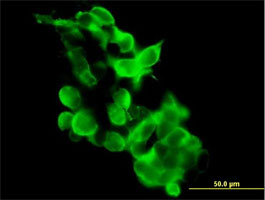
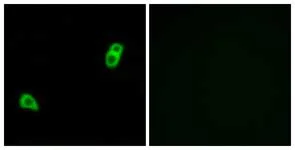
Immunocytochemistry/ Immunofluorescence - Anti-GPCR GPR34 antibody (AB134811)

Immunofluorescence analysis of LOVO cells labelling GPCR GPR34 with ab134811 at 1/100. Right panel represents cells treated with the synthesized peptide.
Immunohistochemistry (Formalin/PFA-fixed paraffin-embedded sections) - Anti-GPCR GPR34 antibody (AB134811)
  • IHC-P

Unknown

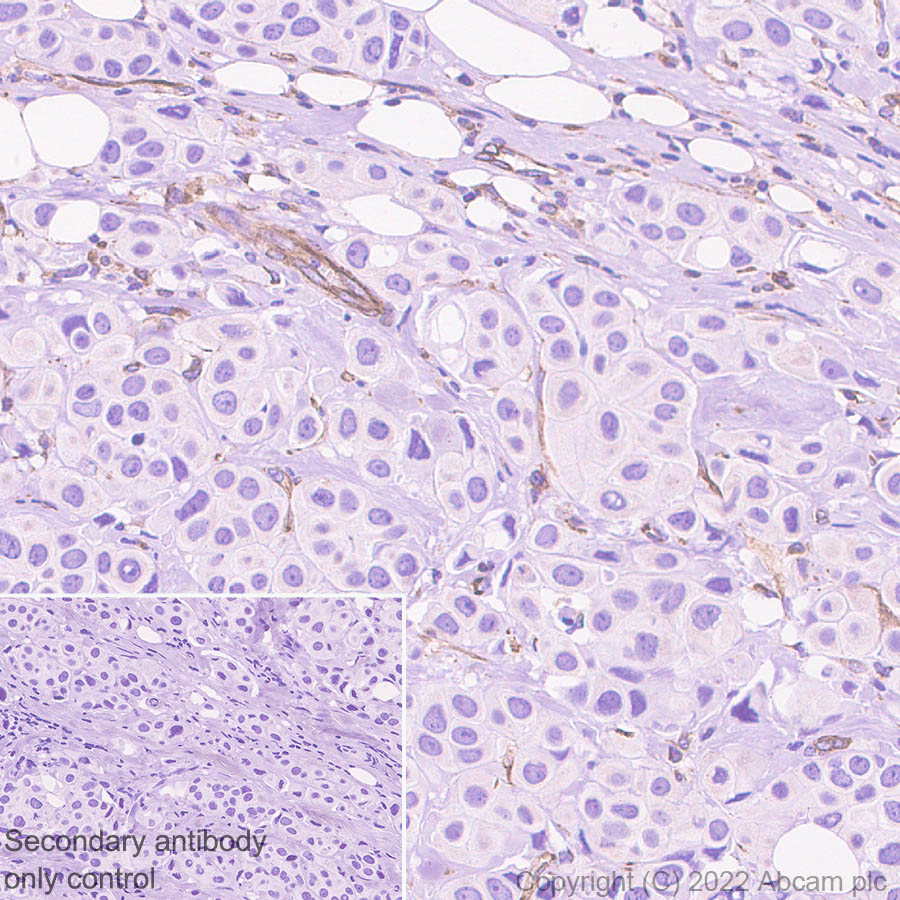
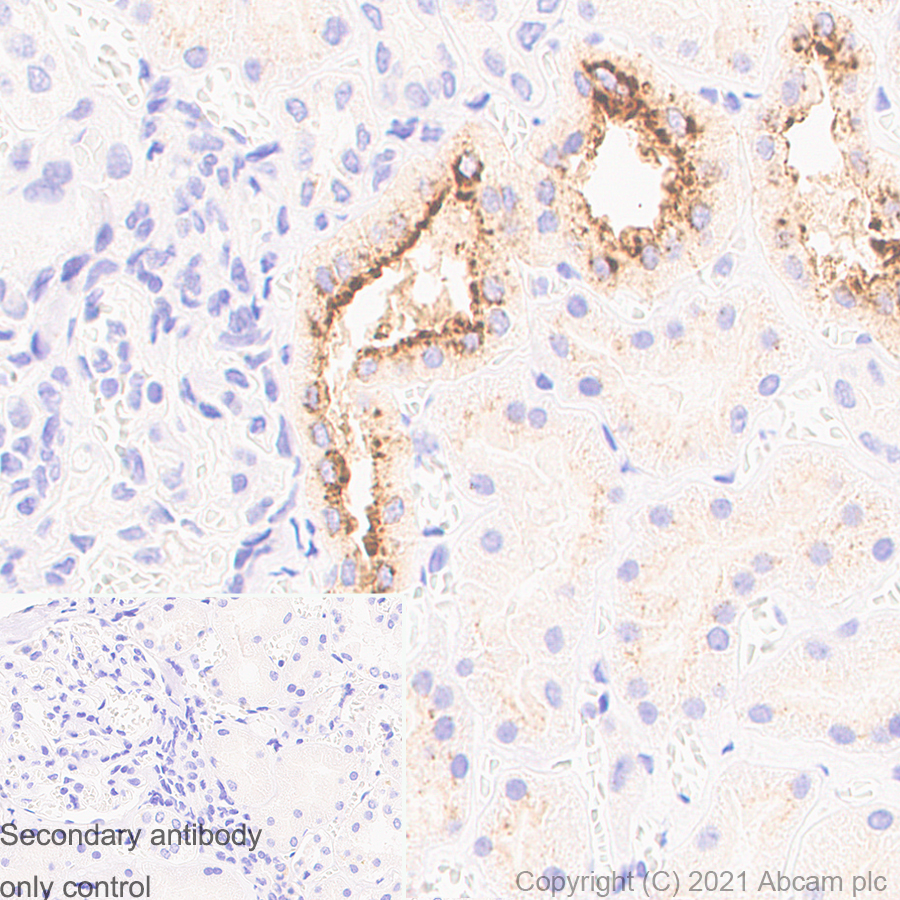
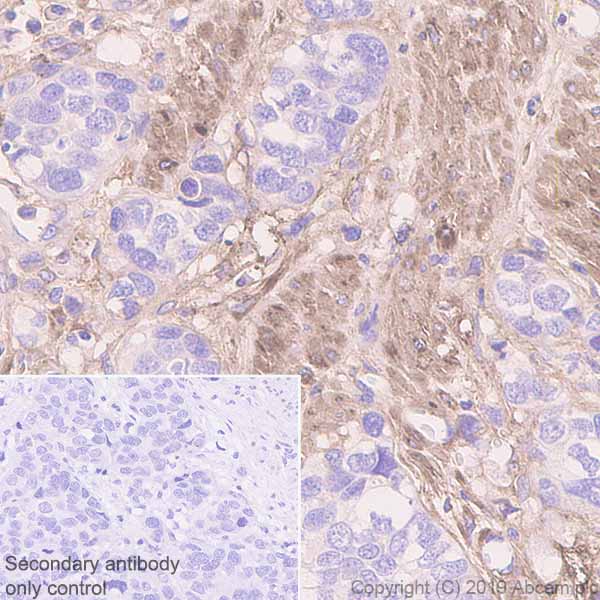
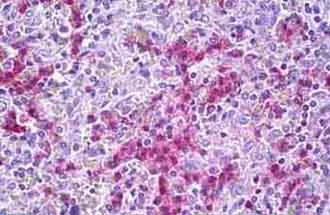
Immunohistochemistry (Formalin/PFA-fixed paraffin-embedded sections) - Anti-GPCR GPR34 antibody (AB134811)

Immunohistochemistry analysis of Formalin fixed and Paraffin Embedded (IHC-P) Human Spleen tissue labelling GPCR GPR34 with ab134811 at 3.75 µg/ml.
Western blot - Anti-GPCR GPR34 antibody (AB134811)
  • WB

Unknown

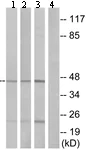
Western blot - Anti-GPCR GPR34 antibody (AB134811)

All lanes:

Western blot - Anti-GPCR GPR34 antibody (ab134811) at 1/500 dilution

Lane 1:

HT-29 cell extract

Lane 2:

K562 cell extract

Lane 3:

COS7 cell extract

Lane 4:

HT-29 cell extract treated with the synthesized peptide

Predicted band size: 44 kDa

false

Key facts

Host species

Rabbit

Clonality

Polyclonal

Isotype

IgG

Carrier free

No

Reacts with

Human, African green monkey

Applications

WB, IHC-P, ICC/IF

applications

Immunogen

Synthetic Peptide within Human Probable G-protein coupled receptor 34. The exact immunogen used to generate this antibody is proprietary information.

Q9UPC5

Reactivity data

{ "title": "Reactivity Data", "filters": { "stats": ["", "Species", "Dilution Info", "Notes"], "tabs": { "all-applications": {"fullname" : "All Applications", "shortname": "All Applications"}, "WB" : {"fullname" : "Western blot", "shortname":"WB"}, "IHCP" : {"fullname" : "Immunohistochemistry (Formalin/PFA-fixed paraffin-embedded sections)", "shortname":"IHC-P"}, "ICCIF" : {"fullname" : "Immunocytochemistry/ Immunofluorescence", "shortname":"ICC/IF"} }, "product-promise": { "all": "all", "testedAndGuaranteed": "tested", "guaranteed": "expected", "predicted": "predicted", "notRecommended": "not-recommended" } }, "values": { "Human": { "WB-species-checked": "testedAndGuaranteed", "WB-species-dilution-info": "1/500 - 1/1000", "WB-species-notes": "<p></p>", "IHCP-species-checked": "testedAndGuaranteed", "IHCP-species-dilution-info": "5 µg/mL", "IHCP-species-notes": "<p></p> Perform heat-mediated antigen retrieval with citrate buffer pH 6 before commencing with IHC staining protocol.", "ICCIF-species-checked": "testedAndGuaranteed", "ICCIF-species-dilution-info": "1/100 - 1/500", "ICCIF-species-notes": "<p></p>" }, "Mouse": { "WB-species-checked": "predicted", "WB-species-dilution-info": "", "WB-species-notes": "", "IHCP-species-checked": "predicted", "IHCP-species-dilution-info": "", "IHCP-species-notes": "", "ICCIF-species-checked": "predicted", "ICCIF-species-dilution-info": "", "ICCIF-species-notes": "" }, "Rat": { "WB-species-checked": "predicted", "WB-species-dilution-info": "", "WB-species-notes": "", "IHCP-species-checked": "predicted", "IHCP-species-dilution-info": "", "IHCP-species-notes": "", "ICCIF-species-checked": "predicted", "ICCIF-species-dilution-info": "", "ICCIF-species-notes": "" }, "African green monkey": { "WB-species-checked": "testedAndGuaranteed", "WB-species-dilution-info": "1/500 - 1/1000", "WB-species-notes": "<p></p>", "IHCP-species-checked": "guaranteed", "IHCP-species-dilution-info": "", "IHCP-species-notes": "", "ICCIF-species-checked": "guaranteed", "ICCIF-species-dilution-info": "", "ICCIF-species-notes": "" } } }

Properties and storage information

Form
Liquid
Purification technique
Affinity purification Immunogen
Storage buffer
pH: 7.4 Preservative: 0.02% Sodium azide Constituents: PBS, 50% Glycerol (glycerin, glycerine), 0.88% Sodium chloride
Shipped at conditions
Blue Ice
Appropriate short-term storage duration
1-2 weeks
Appropriate short-term storage conditions
+4°C
Appropriate long-term storage conditions
-20°C
Aliquoting information
Upon delivery aliquot

Supplementary information

This supplementary information is collated from multiple sources and compiled automatically.

GPR34 also known as G-protein coupled receptor 34 is a member of the GPCR family. This receptor has a mass of approximately 44-48 kDa. It localizes mainly to cell membranes due to its seven transmembrane domains characteristic of GPCRs. GPR34 expression has been widely observed in the immune system particularly in immune cells such as macrophages and dendritic cells but it also appears in tissues like the spleen and brain. This suggests its involvement in key physiological processes.
Biological function summary

GPR34 plays a role in the regulation of immune responses and potential modulation of inflammation. It does not explicitly belong to any known receptor complex but works individually to transduce signals from extracellular to intracellular environments. This receptor can influence the behavior of cells by affecting cytokine production and trafficking of immune cells bringing about changes in immune system activity.

Pathways

GPR34 is involved in signaling cascades that impact the phosphatidylinositol signaling system. This pathway is important for several cellular processes including growth metabolism and cell survival. GPR34 shares functional similarities with other GPCRs involved in similar pathways such as GPR18 which also plays roles in immune function modulation. These pathways highlight the importance of GPR34 in maintaining immune homeostasis and offering a platform for potential therapeutic targeting.

GPR34 has been linked to inflammatory diseases and is suspected to contribute to conditions like asthma and rheumatoid arthritis. Its expression pattern and signaling pathways suggest a role in the development and progression of these disorders. GPR34 modulation can impact inflammatory cytokines and chemokine production. Scientists have studied GPR34 in relation to diseases to explore its potential as a therapeutic target. Additionally its interactions with proteins like other GPCRs or inflammatory mediators could provide further insight into disease mechanisms and possible intervention points.

Product protocols

For this product, it's our understanding that no specific protocols are required. You can visit:

Target data

G-protein-coupled receptor of lysophosphatidylserine (LysoPS) that plays different roles in immune response (PubMed : 16460680). Acts a damage-sensing receptor that triggers tissue repair upon recognition of dying neutrophils (By similarity). Mechanistically, apoptotic neutrophils release lysophosphatydilserine that are recognized by type 3 innate lymphoid cells (ILC3s) via GPR34, which activates downstream PI3K-AKT and RAS-ERK signaling pathways leading to STAT3 activation and IL-22 production (By similarity). Plays an important role in microglial function, controlling morphology and phagocytosis (By similarity).
See full target information Probable G-protein coupled receptor 34

Alternative Names

Probable G-protein coupled receptor 34, GPR34

Publications (2)

Recent publications for all applications. Explore the full listand refine your search

Cell death and differentiation 28:2708-2727 PubMed33875796

2021

Mirtronic miR-4646-5p promotes gastric cancer metastasis by regulating ABHD16A and metabolite lysophosphatidylserines.

Applications

Unspecified application

Species

Unspecified reactive species

Liping Yang,Yixuan Hou,Yan-E Du,Qiao Li,Fanlin Zhou,Yu Li,Huan Zeng,Ting Jin,Xueying Wan,Shengdong Guan,Rui Wang,Manran Liu

International journal of cancer 135:541-50 PubMed24382668

2014

MicroRNA-224 inhibits progression of human prostate cancer by downregulating TRIB1.

Applications

Unspecified application

Species

Unspecified reactive species

Zhuo-Yuan Lin,Ya-Qiang Huang,Yan-Qiong Zhang,Zhao-Dong Han,Hui-Chan He,Xiao-Hui Ling,Xin Fu,Qi-Shan Dai,Chao Cai,Jia-Hong Chen,Yu-Xiang Liang,Fu-Neng Jiang,Wei-De Zhong,Fen Wang,Chin-Lee Wu
View all publications

Product promise

We are committed to supporting your work with high-quality reagents, and we're here for you every step of the way. In the unlikely event that one of our products does not perform as expected, you're protected by our Product Promise.
For full details, please see our Terms & Conditions

Please note: All products are 'FOR RESEARCH USE ONLY. NOT FOR USE IN DIAGNOSTIC OR THERAPEUTIC PROCEDURES'.

For licensing inquiries, please contact partnerships@abcam.com