Anti-GPR 139 antibody [EPR28373-9]
- BOND RX™ Validated
- 20ul selling size
- RabMAb
- Recombinant
- What is this?
Be the first to review this product! Submit a review
|
(0 Publication)
- IHC-P
Supplier Data
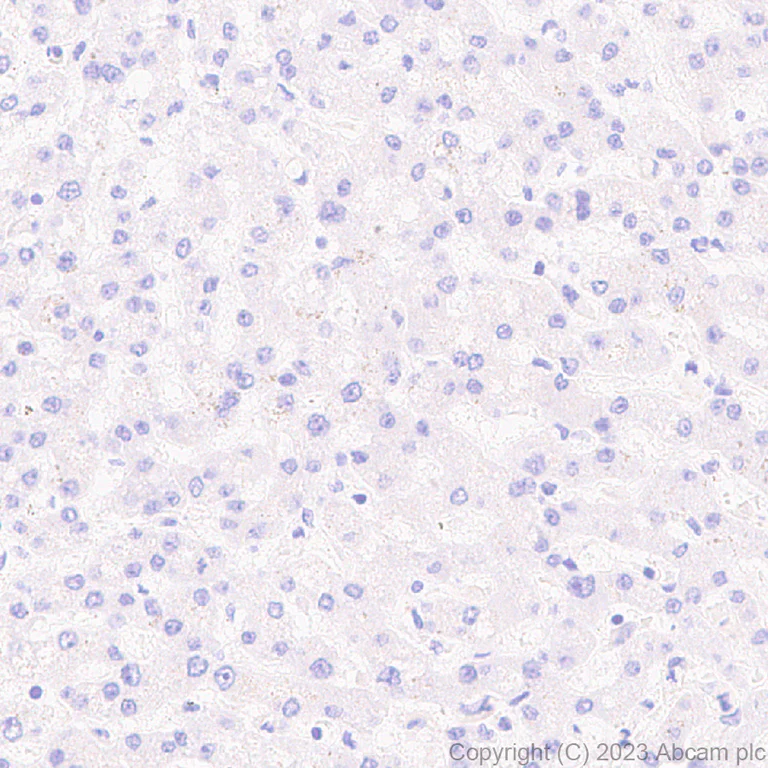
Immunohistochemistry (Formalin/PFA-fixed paraffin-embedded sections) - Anti-GPR 139 antibody [EPR28373-9] (AB315468)
Immunohistochemical analysis of paraffin-embedded Human liver tissue labeling GPR 139 with ab315468 at 1/2000 (0.254 ug/ml) dilution, followed by a ready to use LeicaDS9800 (Bond™ Polymer Refine Detection).
Negative control : no staining on human liver. The section was incubated with ab315468 for 30 mins at room temperature.
The immunostaining was performed on a Leica Biosystems BOND® RX instrument
Counterstained with Hematoxylin.
Secondary antibody only control : Secondary antibody is a ready to use LeicaDS9800 (Bond™ Polymer Refine Detection).
Heat mediated antigen retrieval was performed with Tris-EDTA buffer (pH 9.0, Epitope Retrieval Solution2) for 20 mins
- IHC-P
Supplier Data
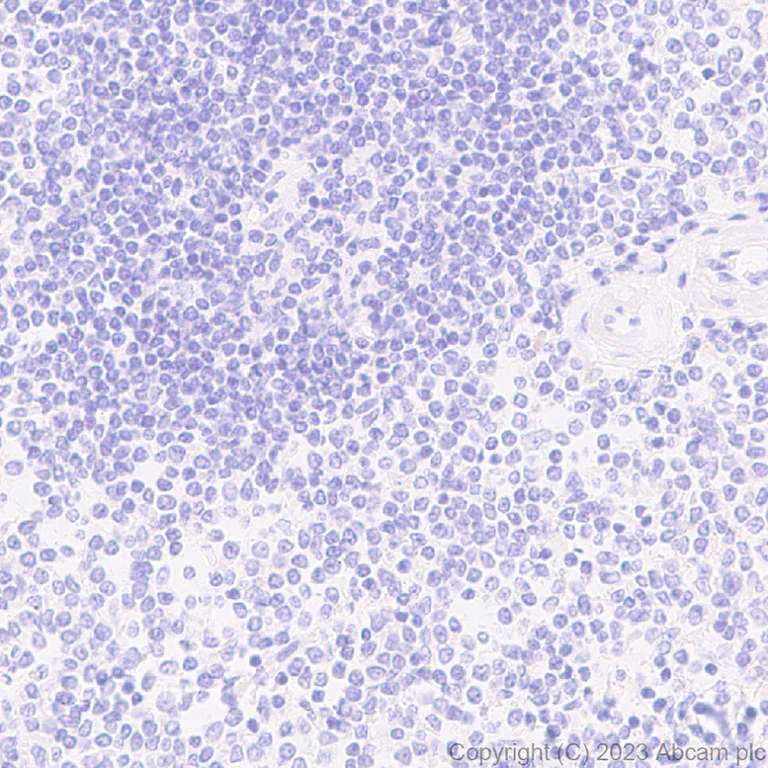
Immunohistochemistry (Formalin/PFA-fixed paraffin-embedded sections) - Anti-GPR 139 antibody [EPR28373-9] (AB315468)
Immunohistochemical analysis of paraffin-embedded Human spleen tissue labeling GPR 139 with ab315468 at 1/2000 (0.254 ug/ml) dilution, followed by a ready to use LeicaDS9800 (Bond™ Polymer Refine Detection).
Negative control : no staining on human spleen. The section was incubated with ab315468 for 30 mins at room temperature.
The immunostaining was performed on a Leica Biosystems BOND® RX instrument
Counterstained with Hematoxylin.
Secondary antibody only control : Secondary antibody is a ready to use LeicaDS9800 (Bond™ Polymer Refine Detection).
Heat mediated antigen retrieval was performed with Tris-EDTA buffer (pH 9.0, Epitope Retrieval Solution2) for 20 mins
- IHC-P
Supplier Data
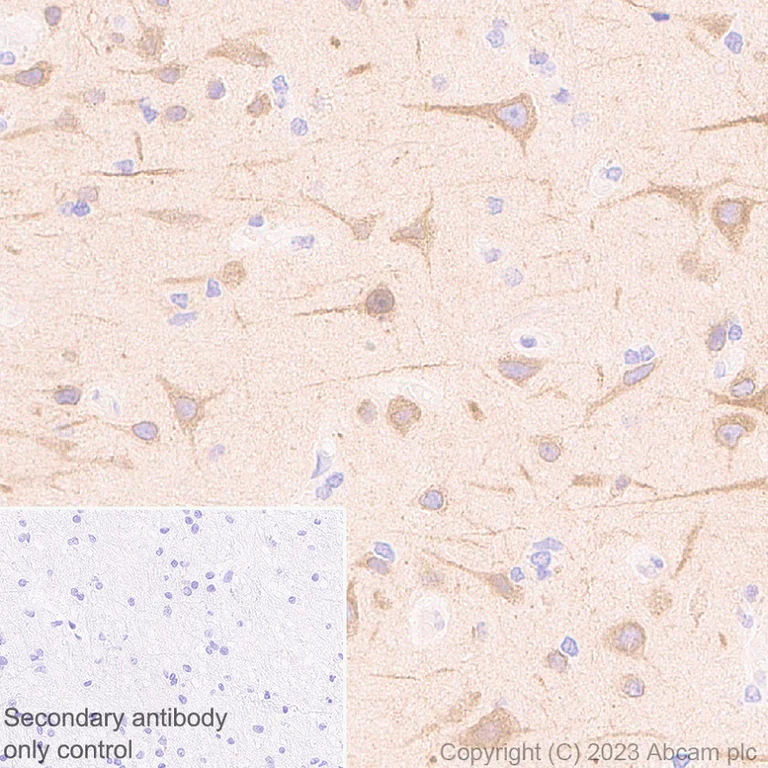
Immunohistochemistry (Formalin/PFA-fixed paraffin-embedded sections) - Anti-GPR 139 antibody [EPR28373-9] (AB315468)
Immunohistochemical analysis of paraffin-embedded Human cerebrum tissue labeling GPR 139 with ab315468 at 1/2000 (0.254 ug/ml) dilution, followed by a ready to use LeicaDS9800 (Bond™ Polymer Refine Detection).
Positive staining on human cerebrum. The section was incubated with ab315468 for 30 mins at room temperature.
The immunostaining was performed on a Leica Biosystems BOND® RX instrument
Counterstained with Hematoxylin.
Secondary antibody only control : Secondary antibody is a ready to use LeicaDS9800 (Bond™ Polymer Refine Detection).
Heat mediated antigen retrieval was performed with Tris-EDTA buffer (pH 9.0, Epitope Retrieval Solution2) for 20 mins
- IHC-P
Supplier Data
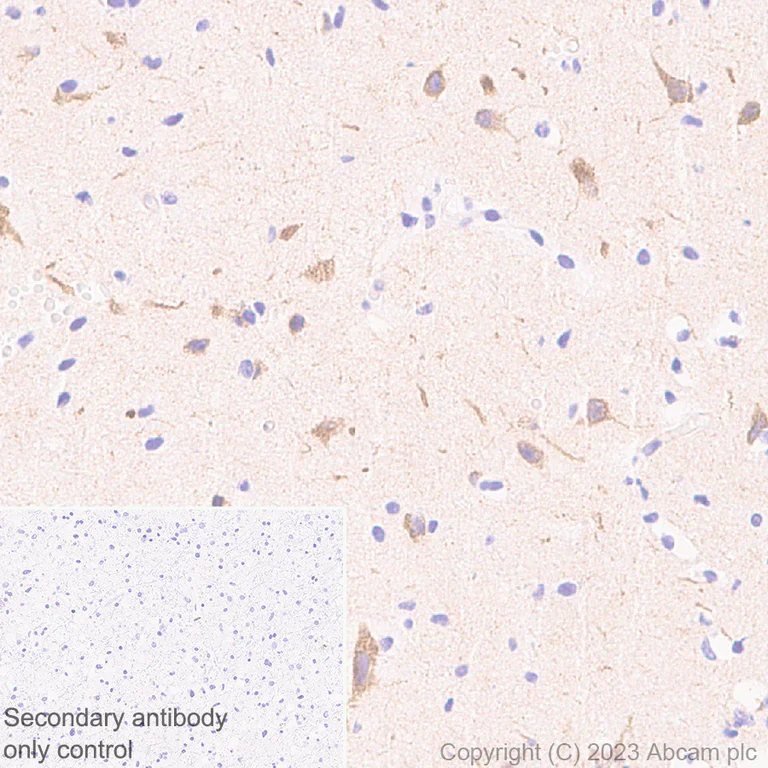
Immunohistochemistry (Formalin/PFA-fixed paraffin-embedded sections) - Anti-GPR 139 antibody [EPR28373-9] (AB315468)
Immunohistochemical analysis of paraffin-embedded Human astrocytoma tissue labeling GPR 139 with ab315468 at 1/2000 (0.254 ug/ml) dilution, followed by a ready to use LeicaDS9800 (Bond™ Polymer Refine Detection).
Positive staining on human astrocytoma. The section was incubated with ab315468 for 30 mins at room temperature.
The immunostaining was performed on a Leica Biosystems BOND® RX instrument
Counterstained with Hematoxylin.
Secondary antibody only control : Secondary antibody is a ready to use LeicaDS9800 (Bond™ Polymer Refine Detection).
Heat mediated antigen retrieval was performed with Tris-EDTA buffer (pH 9.0, Epitope Retrieval Solution2) for 20 mins
Related conjugates and formulations (1)
-
Anti-GPR 139 antibody [EPR28373-9] - BSA and Azide free
Complementary Products

Primary Antibodies
AB93279
Anti-Cytokeratin 6 antibody [EPR1602Y]
20ul selling size|BOND RX™ Validated|RabMAb|Recombinant

- 0
- 0

Reactivity data
Product details
Patented technology
Our RabMAb® technology is a patented hybridoma-based technology for making rabbit monoclonal antibodies. For details on our patents, please refer to RabMAb® patents.
What are the advantages of a recombinant monoclonal antibody?
This product is a recombinant monoclonal antibody, which offers several advantages including:
- - High batch-to-batch consistency and reproducibility
- - Improved sensitivity and specificity
- - Long-term security of supply
- - Animal-free batch production
For more information, read more on recombinant antibodies.
Properties and storage information
Form
Purification technique
Storage buffer
Shipped at conditions
Appropriate short-term storage duration
Appropriate short-term storage conditions
Appropriate long-term storage conditions
Aliquoting information
Storage information
Supplementary information
This supplementary information is collated from multiple sources and compiled automatically.
Biological function summary
GPR139 acts as a modulator within the brain's neurochemical network. Although not part of a larger complex it influences neurotransmitter systems by transducing extracellular signals through intramembrane effects affecting physiological processes like mood circadian rhythms and pain perception. Researchers continue to explore its ligands such as L-tryptophan and L-phenylalanine which may provide further insight into its specific regulatory roles.
Pathways
The functionality of GPR139 intersects with neuronal signaling pathways like the cAMP signaling pathway. This pathway impacts cellular processes by modulating enzymes and transcription factors relevant to intracellular signaling. GPR139's activity also relates to that of other GPCRs such as GPR88 which influences similar neurological functions and developmental pathways in neurons.
Product protocols
- Visit the General protocols
- Visit the Troubleshooting
Target data
Alternative Names
Product promise
Please note: All products are 'FOR RESEARCH USE ONLY. NOT FOR USE IN DIAGNOSTIC OR THERAPEUTIC PROCEDURES'.
For licensing inquiries, please contact partnerships@abcam.com