JavaScript is disabled in your browser. Please enable JavaScript to view this website.
AB196770

Anti-GTF2A1 antibody

Be the first to review this product! Submit a review

|

(1 Publication)

Rabbit Polyclonal GTF2A1 antibody. Suitable for WB, IHC-P and reacts with Mouse, Human samples. Cited in 1 publication. Immunogen corresponding to Recombinant Fragment Protein within Human GTF2A1.
2 Images
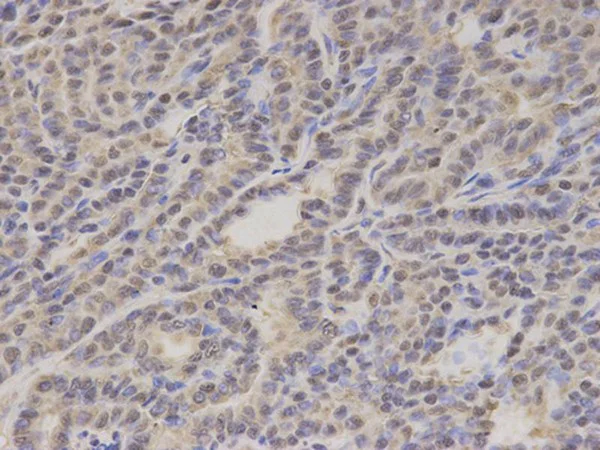
Immunohistochemistry (Formalin/PFA-fixed paraffin-embedded sections) - Anti-GTF2A1 antibody (AB196770)
  • IHC-P

Supplier Data

Immunohistochemistry (Formalin/PFA-fixed paraffin-embedded sections) - Anti-GTF2A1 antibody (AB196770)

Immunohistochemical analysis of Human thyroid cancer tissue labeling GTF2A1 with ab196770 at 1/50.
Western blot - Anti-GTF2A1 antibody (AB196770)
  • WB

Supplier Data

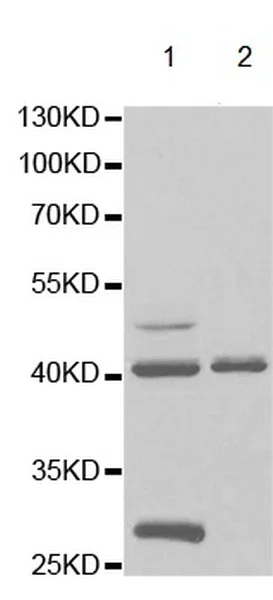
Western blot - Anti-GTF2A1 antibody (AB196770)

All lanes:

Western blot - Anti-GTF2A1 antibody (ab196770) at 1/500 dilution

Lane 1:

Mouse liver extract

Lane 2:

Mouse heart extract

Predicted band size: 42 kDa

false

Key facts

Host species

Rabbit

Clonality

Polyclonal

Isotype

IgG

Carrier free

No

Reacts with

Mouse, Human

Applications

WB, IHC-P

applications

Immunogen

Recombinant Fragment Protein within Human GTF2A1. The exact immunogen used to generate this antibody is proprietary information.

P52655

Reactivity data

{ "title": "Reactivity Data", "filters": { "stats": ["", "Species", "Dilution Info", "Notes"], "tabs": { "all-applications": {"fullname" : "All Applications", "shortname": "All Applications"}, "WB" : {"fullname" : "Western blot", "shortname":"WB"}, "IHCP" : {"fullname" : "Immunohistochemistry (Formalin/PFA-fixed paraffin-embedded sections)", "shortname":"IHC-P"} }, "product-promise": { "all": "all", "testedAndGuaranteed": "tested", "guaranteed": "expected", "predicted": "predicted", "notRecommended": "not-recommended" } }, "values": { "Human": { "WB-species-checked": "guaranteed", "WB-species-dilution-info": "", "WB-species-notes": "", "IHCP-species-checked": "testedAndGuaranteed", "IHCP-species-dilution-info": "1/50 - 1/200", "IHCP-species-notes": "<p></p>" }, "Mouse": { "WB-species-checked": "testedAndGuaranteed", "WB-species-dilution-info": "1/500 - 1/2000", "WB-species-notes": "<p></p>", "IHCP-species-checked": "guaranteed", "IHCP-species-dilution-info": "", "IHCP-species-notes": "" }, "Rat": { "WB-species-checked": "predicted", "WB-species-dilution-info": "", "WB-species-notes": "", "IHCP-species-checked": "predicted", "IHCP-species-dilution-info": "", "IHCP-species-notes": "" } } }

Properties and storage information

Form
Liquid
Purification technique
Affinity purification Immunogen
Storage buffer
pH: 7.4 Preservative: 0.02% Sodium azide Constituents: PBS, 50% Glycerol (glycerin, glycerine), 0.87% Sodium chloride
Shipped at conditions
Blue Ice
Appropriate short-term storage duration
1-2 weeks
Appropriate short-term storage conditions
+4°C
Appropriate long-term storage conditions
-20°C
Aliquoting information
Upon delivery aliquot
Storage information
Avoid freeze / thaw cycle

Supplementary information

This supplementary information is collated from multiple sources and compiled automatically.

GTF2A1 also known as general transcription factor IIA is a protein involved in the initiation of transcription by RNA polymerase II. It interacts directly with the TATA-binding protein (TBP) and stabilizes the formation of the transcription preinitiation complex. GTF2A1 has a molecular mass of approximately 35 kDa. Researchers identify its expression in various tissues meaning it likely plays a broad role in gene regulation in different cell types.
Biological function summary

GTF2A1 assists in the accurate transcription start site selection and transcription regulation. This protein often associates with TBP and other transcription factors such as TFIIE and TFIIF forming part of the transcription preinitiation complex. It helps enhance the affinity of TBP for the TATA box a critical component in transcription initiation.

Pathways

Transcription factor GTF2A1 participates in the transcriptional regulation process. It interacts significantly within the general RNA polymerase II transcription machinery and influences pathways like the Wnt signaling pathway. GTF2A1 works closely with TFIIE and other general transcription factors in these pathways to regulate gene expression.

Researchers have implicated abnormal GTF2A1 activity in certain types of cancer and developmental disorders. Its interaction with TBP and related transcription factors means that disruptions in its function could lead to aberrant gene expression contributing to the progression of these diseases. Monitoring GTF2A1 and associated proteins may provide insight into therapeutic targets for these conditions.

Product protocols

For this product, it's our understanding that no specific protocols are required. You can visit:

Target data

TFIIA is a component of the transcription machinery of RNA polymerase II and plays an important role in transcriptional activation. TFIIA in a complex with TBP mediates transcriptional activity.
See full target information GTF2A1

Alternative Names

TF2A1, GTF2A1, Transcription initiation factor IIA subunit 1, General transcription factor IIA subunit 1, TFIIAL, Transcription initiation factor TFIIA 42 kDa subunit, TFIIA-42

Publications (1)

Recent publications for all applications. Explore the full listand refine your search

Journal of breast cancer 22:172-184 PubMed31281721

2019

Overexpression of Tumor Protein p53-regulated Apoptosis-inducing Protein 1 Regulates Proliferation and Apoptosis of Breast Cancer Cells through the PI3K/Akt Pathway.

Applications

Unspecified application

Species

Unspecified reactive species

Yueyang Liang,Shushu Wang,Jia Liu
View all publications

Product promise

We are committed to supporting your work with high-quality reagents, and we're here for you every step of the way. In the unlikely event that one of our products does not perform as expected, you're protected by our Product Promise.
For full details, please see our Terms & Conditions

Please note: All products are 'FOR RESEARCH USE ONLY. NOT FOR USE IN DIAGNOSTIC OR THERAPEUTIC PROCEDURES'.

For licensing inquiries, please contact partnerships@abcam.com