Mouse Polyclonal Haspin antibody. Suitable for WB and reacts with Human samples. Cited in 1 publication. Immunogen corresponding to Native Full Length Protein corresponding to Human HASPIN.
View Alternative Names
GSG2, HASPIN, Serine/threonine-protein kinase haspin, Germ cell-specific gene 2 protein, H-haspin, Haploid germ cell-specific nuclear protein kinase
Alternative Products

Complementary Products
Primary Antibodies
AB1791
Anti-Histone H3 antibody - Nuclear Marker and ChIP Grade
Lab Essentials

- 5
- 233
Primary Antibodies
AB16667
BOND RX™ Validated|KO Validated|RabMAb|Advanced Validation|Recombinant|20ul selling size

- 5
- 133
Primary Antibodies
AB108629
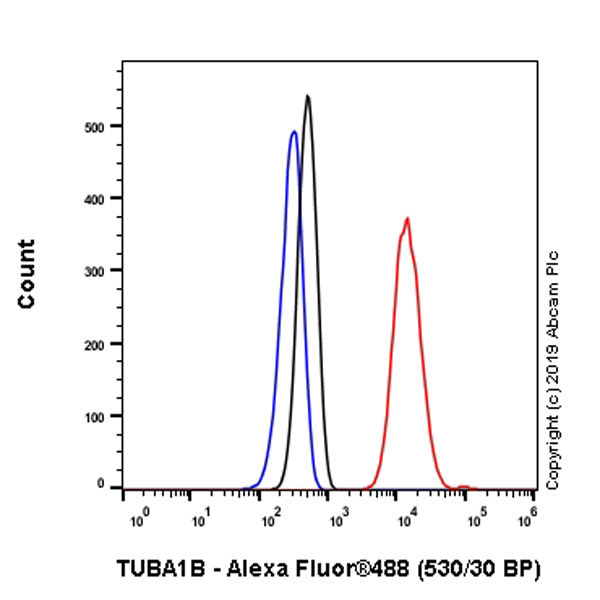
Anti-TUBA1B antibody [EPR1333] - Loading Control
20ul selling size|BOND RX™ Validated|RabMAb|Recombinant|Lab Essentials
- 0
- 0
Primary Antibodies
AB14955
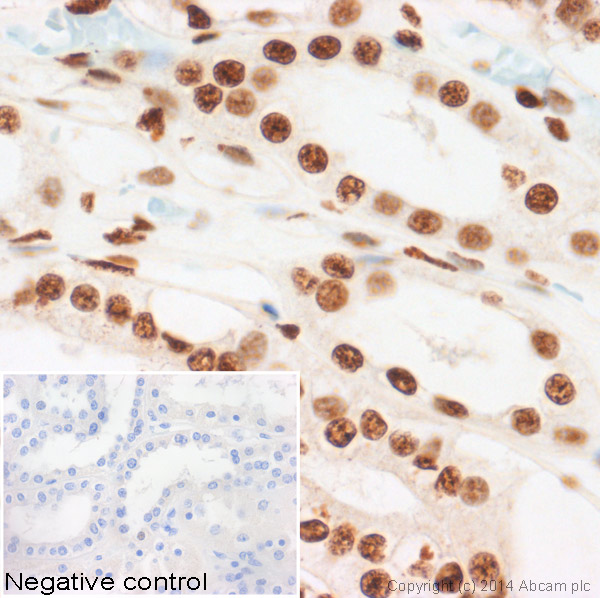
Anti-Histone H3 (phospho S10) antibody [mAbcam 14955]
BOND RX™ Validated
- 4
- 26
Reactivity data
Properties and storage information
Form
Purification technique
Storage buffer
Shipped at conditions
Appropriate short-term storage duration
Appropriate short-term storage conditions
Appropriate long-term storage conditions
Aliquoting information
Supplementary information
This supplementary information is collated from multiple sources and compiled automatically.
Biological function summary
Haspin kinase plays a significant role in mitosis and meiosis. It orchestrates the proper attachment of microtubules to kinetochores by modifying chromosomal components. Haspin is part of a larger protein complex during cell division working closely with the chromosomal passenger complex to ensure accurate segregation of chromosomes. Its activity ensures the integrity and stability of cellular division processes.
Pathways
Haspin kinase functions centrally in cell cycle regulation and mitotic spindle assembly pathways. It interacts with key proteins in these pathways such as Aurora B kinase. The phosphorylation of histone H3 by haspin establishes a critical docking site for proteins in the chromosomal passenger complex facilitating proper chromosome alignment and spindle checkpoint activation.
Product protocols
- Visit the General protocols
- Visit the Troubleshooting
Target data
Publications (1)
Recent publications for all applications. Explore the full list and refine your search
Oncology reports 41:1113-1121 PubMed30431104
2018
Applications
Unspecified application
Species
Unspecified reactive species
Product promise
Please note: All products are 'FOR RESEARCH USE ONLY. NOT FOR USE IN DIAGNOSTIC OR THERAPEUTIC PROCEDURES'.
For licensing inquiries, please contact partnerships@abcam.com