Anti-Hemopexin antibody [EPR5609]
- RabMAb
- Recombinant
- What is this?
Be the first to review this product! Submit a review
|
(1 Publication)
- WB
Unknown
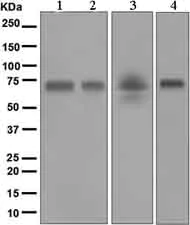
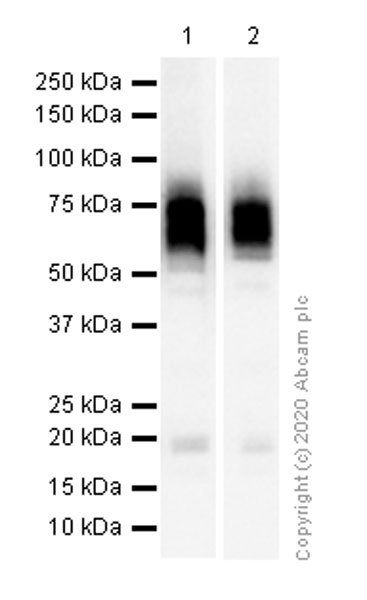
Western blot - Anti-Hemopexin antibody [EPR5609] (AB133523)
All lanes:
Western blot - Anti-Hemopexin antibody [EPR5609] (ab133523) at 1/50000 dilution
Lane 1:
Human plasma lysate at 10 µg
Lane 2:
Human placenta lysate at 10 µg
Lane 3:
Human fetal liver lysate at 10 µg
Lane 4:
Human thyroid lysate at 10 µg
Secondary
All lanes:
HRP labelled Goat anti Rabbit IgG at 1/2000 dilution
Predicted band size: 51 kDa
Observed band size: 70-75 kDa
false
- OI-RD Scanning
Unknown
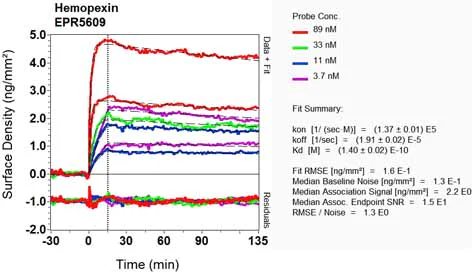
OI-RD Scanning - Anti-Hemopexin antibody [EPR5609] (AB133523)
We have systematically measured KD (the equilibrium dissociation constant between the antibody and its antigen), of more than 840 recombinant antibodies to assess not only their individual KD values but also to see the average affinity of antibody. Based on the comparison with published literature values for mouse monoclonal antibodies, Recombinant antibodies appear to be on average 1-2 order of magnitude higher affinity.
Related conjugates and formulations (1)
-
Anti-Hemopexin antibody [EPR5609] - BSA and Azide free
Alternative Products
Primary Antibodies
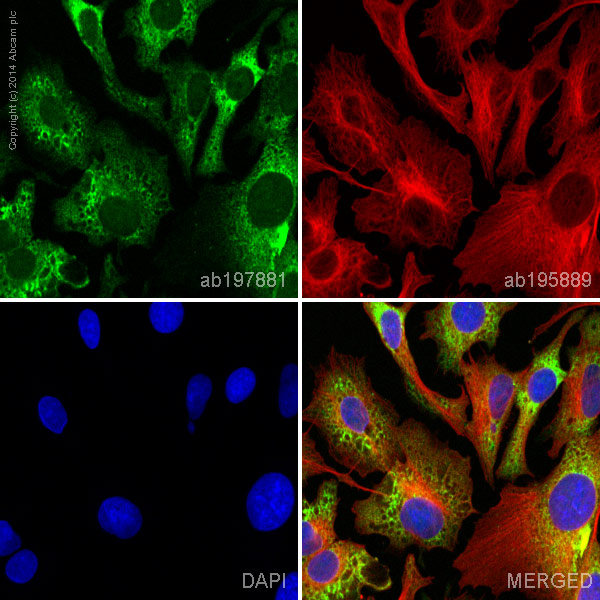
AB197881
Alexa Fluor® 488 Anti-Hemopexin antibody [EPR5610]
RabMAb|Recombinant
- 0
- 0
Primary Antibodies
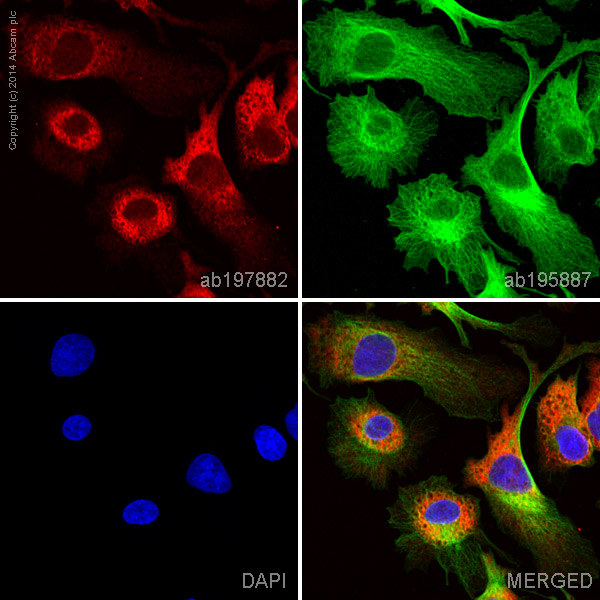
AB197882
Alexa Fluor® 647 Anti-Hemopexin antibody [EPR5610]
RabMAb|Recombinant
- 0
- 0
Primary Antibodies
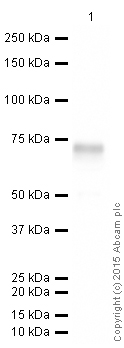
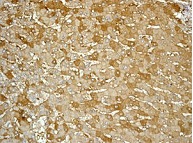
AB226099
Anti-Hemopexin antibody [EPR5610] - BSA and Azide free
RabMAb|Recombinant
- 0
- 0
Complementary Products


Primary Antibodies
AB92544
BOND RX™ Validated|20ul selling size|KO Validated|RabMAb|Recombinant

- 5
- 9
Reactivity data
Product details
Species reactivity
Mouse, Rat: We have preliminary internal testing data to indicate this antibody may not react with these species.
Please contact us for more information.
Patented technology
Our RabMAb® technology is a patented hybridoma-based technology for making rabbit monoclonal antibodies. For details on our patents, please refer to RabMAb® patents.
What are the advantages of a recombinant monoclonal antibody?
This product is a recombinant monoclonal antibody, which offers several advantages including:
- - High batch-to-batch consistency and reproducibility
- - Improved sensitivity and specificity
- - Long-term security of supply
- - Animal-free batch production
For more information, read more on recombinant antibodies.
Properties and storage information
Form
Purification technique
Storage buffer
Shipped at conditions
Appropriate short-term storage conditions
Appropriate long-term storage conditions
Storage information
Supplementary information
This supplementary information is collated from multiple sources and compiled automatically.
Biological function summary
The hemopexin function relates to protecting tissues from the harmful effects of free heme. Hemopexin does not work as part of a complex in this process but mainly acts independently. Its high binding affinity plays an important role in maintaining heme homeostasis in the plasma and tissues. By controlling heme levels hemopexin supports overall cellular health and function.
Pathways
The hemopexin molecular weight allows it to fit effectively within the heme metabolism and iron recycling pathways. This protein plays a significant role by delivering heme to the liver and facilitating its degradation by heme oxygenase. Hemopexin interacts closely with heme oxygenase and albumin two proteins important for the management of heme and iron levels in the body.
Product protocols
- Visit the General protocols
- Visit the Troubleshooting
Target data
Alternative Names
Publications (1)
Recent publications for all applications. Explore the full listand refine your search
F1000Research 13:77 PubMed39429638
2024
Applications
Unspecified application
Species
Unspecified reactive species
Product promise
Please note: All products are 'FOR RESEARCH USE ONLY. NOT FOR USE IN DIAGNOSTIC OR THERAPEUTIC PROCEDURES'.
For licensing inquiries, please contact partnerships@abcam.com