Anti-HEPACAM antibody [EPR25296-150]
- BOND RX™ Validated
- 20ul selling size
- RabMAb
- Recombinant
- What is this?
Be the first to review this product! Submit a review
|
(1 Publication)
- IHC-P
Supplier Data
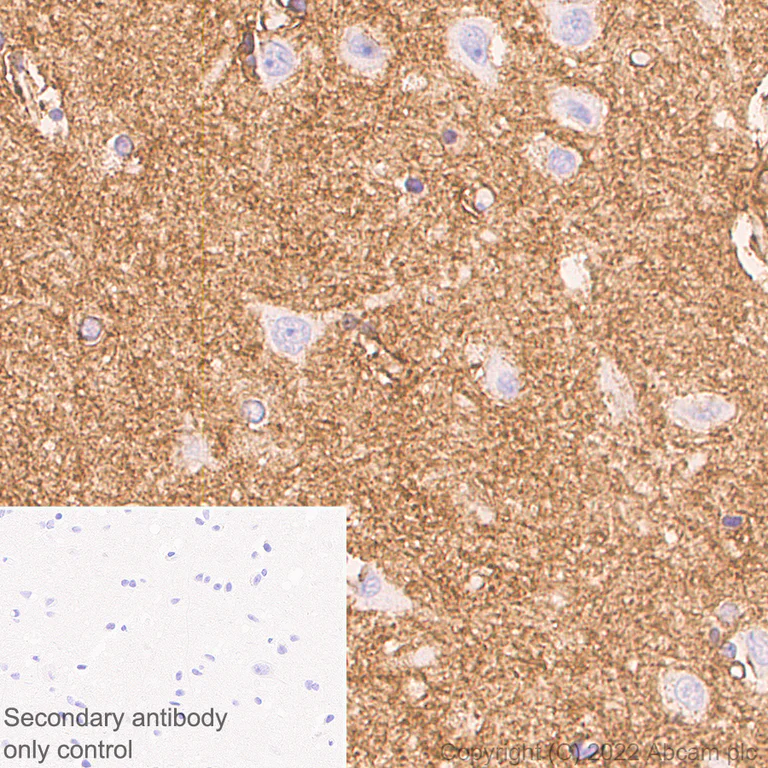
Immunohistochemistry (Formalin/PFA-fixed paraffin-embedded sections) - Anti-HEPACAM antibody [EPR25296-150] (AB300571)
Immunohistochemical analysis of paraffin-embedded Human cerebrum tissue labeling HEPACAM with ab300571 at 1/500 (0.994 ug/ml) followed by a ready to use LeicaDS9800 (Bond Polymer Refine Detection) was used. Cytoplasmic staining on human cerebrum. The section was incubated with ab300571 for 30 mins at room temperature.The immunostaining was performed on a Leica Biosystems BOND® RX instrument Counterstained with Hematoxylin. Secondary antibody only control : Secondary antibody is a ready to use LeicaDS9800 (Bond Polymer Refine Detection) was used. Heat mediated antigen retrieval with Tris-EDTA buffer (pH 9.0, epitope retrieval solution2) for 20 mins
- IHC-P
Supplier Data
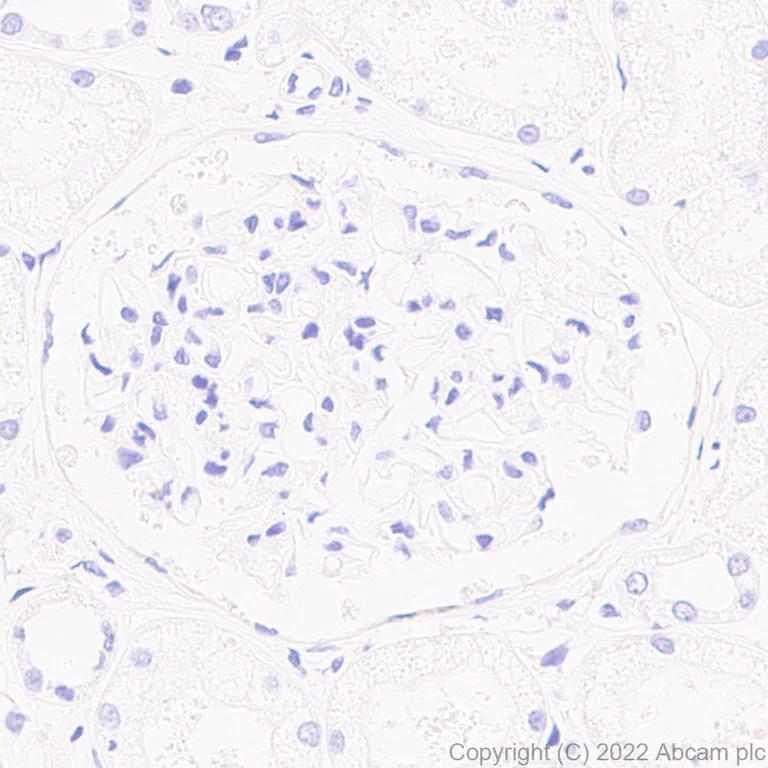
Immunohistochemistry (Formalin/PFA-fixed paraffin-embedded sections) - Anti-HEPACAM antibody [EPR25296-150] (AB300571)
Immunohistochemical analysis of paraffin-embedded Human kidney tissue labeling HEPACAM with ab300571 at 1/500 (0.994 ug/ml) followed by a ready to use LeicaDS9800 (Bond Polymer Refine Detection) was used. Negative control : No staining on human kidney. The section was incubated with ab300571 for 30 mins at room temperature.The immunostaining was performed on a Leica Biosystems BOND® RX instrument Counterstained with Hematoxylin. Secondary antibody only control : Secondary antibody is a ready to use LeicaDS9800 (Bond Polymer Refine Detection) was used. Heat mediated antigen retrieval with Tris-EDTA buffer (pH 9.0, epitope retrieval solution2) for 20 mins
- IHC-P
Supplier Data
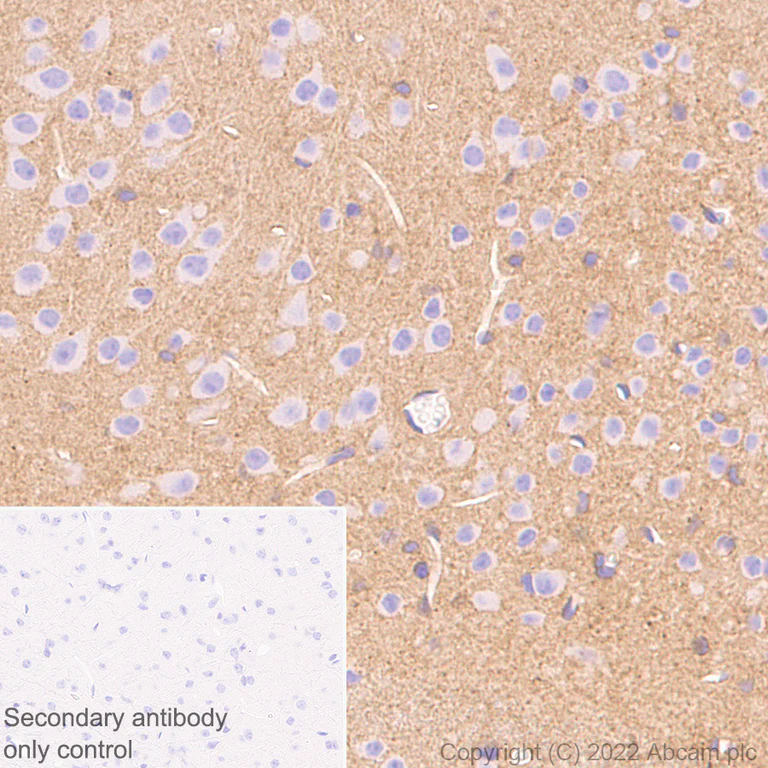
Immunohistochemistry (Formalin/PFA-fixed paraffin-embedded sections) - Anti-HEPACAM antibody [EPR25296-150] (AB300571)
Immunohistochemical analysis of paraffin-embedded Mouse cerebrum tissue labeling HEPACAM with ab300571 at 1/500 (0.994 ug/ml) followed by a ready to use LeicaDS9800 (Bond Polymer Refine Detection) was used. Cytoplasmic staining on mouse cerebrum. The section was incubated with ab300571 for 30 mins at room temperature.The immunostaining was performed on a Leica Biosystems BOND® RX instrument Counterstained with Hematoxylin. Secondary antibody only control : Secondary antibody is a ready to use LeicaDS9800 (Bond Polymer Refine Detection) was used. Heat mediated antigen retrieval with Tris-EDTA buffer (pH 9.0, epitope retrieval solution2) for 20 mins
- IHC-P
Supplier Data
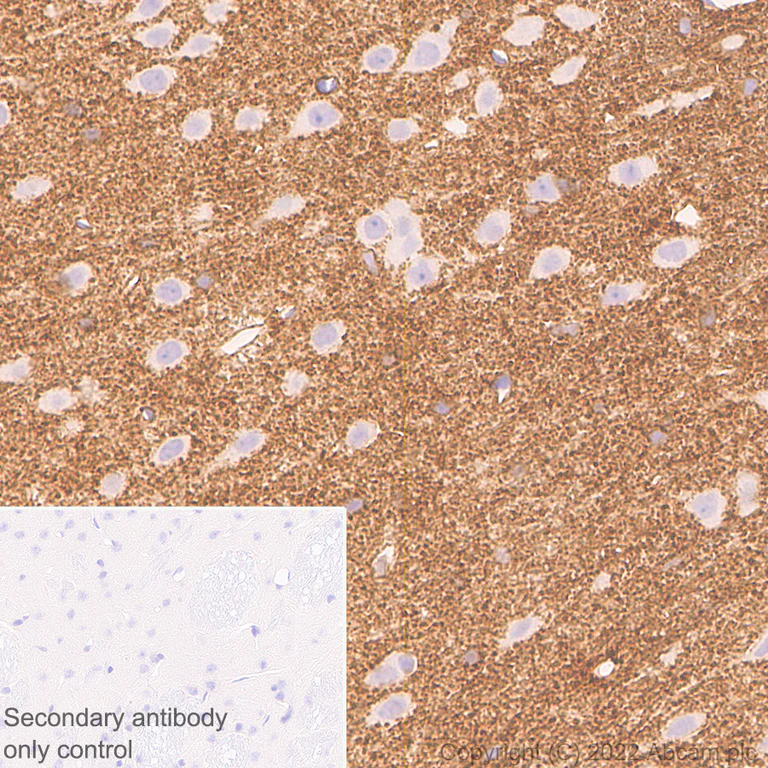
Immunohistochemistry (Formalin/PFA-fixed paraffin-embedded sections) - Anti-HEPACAM antibody [EPR25296-150] (AB300571)
Immunohistochemical analysis of paraffin-embedded Rat cerebrum tissue labeling HEPACAM with ab300571 at 1/500 (0.994 ug/ml) followed by a ready to use LeicaDS9800 (Bond Polymer Refine Detection) was used. Cytoplasmic staining on rat cerebrum. The section was incubated with ab300571 for 30 mins at room temperature.The immunostaining was performed on a Leica Biosystems BOND® RX instrument Counterstained with Hematoxylin. Secondary antibody only control : Secondary antibody is a ready to use LeicaDS9800 (Bond Polymer Refine Detection) was used. Heat mediated antigen retrieval with Tris-EDTA buffer (pH 9.0, epitope retrieval solution2) for 20 mins
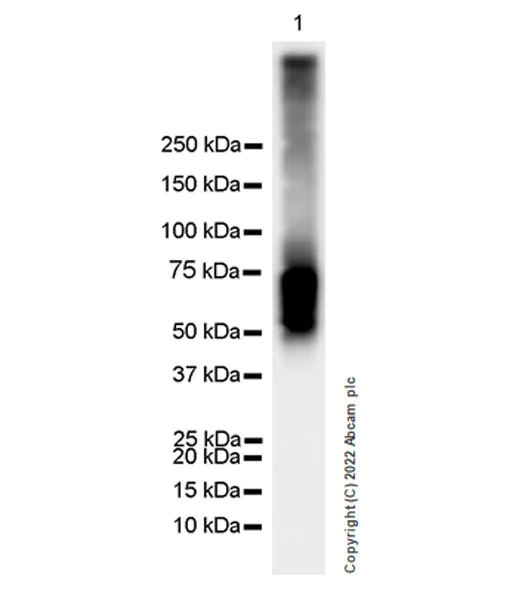
- WB
Supplier Data
Western blot - Anti-HEPACAM antibody [EPR25296-150] (AB300571)
Blocking and diluting buffer and concentration : 5% NFDM/TBST
All lanes:
Western blot - Anti-HEPACAM antibody [EPR25296-150] (ab300571) at 1/2000 dilution
All lanes:
Human brain tissue lysate
Secondary
All lanes:
Goat Anti-Rabbit IgG (HRP) with minimal cross-reactivity with human IgG at 1/2000 dilution
Observed band size: 46 kDa
false
Exposure time: 15s
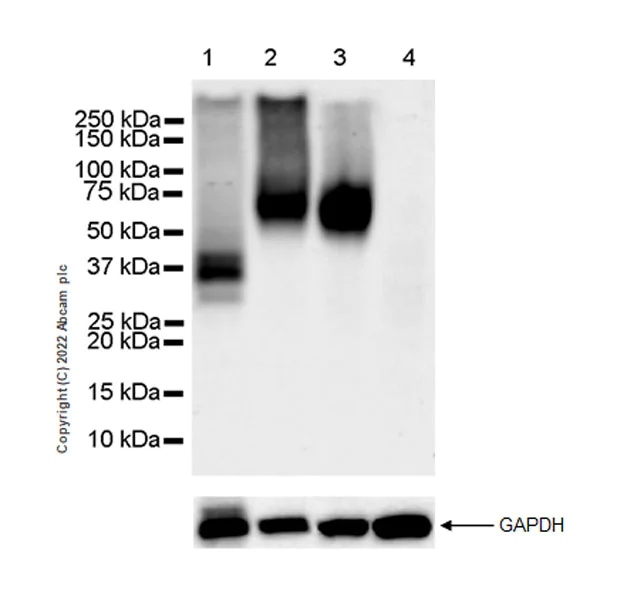
- WB
Supplier Data
Western blot - Anti-HEPACAM antibody [EPR25296-150] (AB300571)
Blocking and diluting buffer and concentration : 5% NFDM/TBST Negative control : LNCaP(PMID : 29658567). HEPACAM is a glycoprotein(PMID : 15885354) of approximately 46-72 kDa and detected as a 46 kDa band after treated with Protein Deglycosylation MIX II. The samples are unboiled.
All lanes:
Western blot - Anti-HEPACAM antibody [EPR25296-150] (ab300571) at 1/2000 dilution
Lane 1:
HepG2 whole cell lysate treated with Protein Deglycosylation Mix II,
Lane 2:
Untreated HepG2 (human hepatocellar carcinoma epithelial cell) whole cell lysate, 20
Lane 3:
HepG2 (human hepatocellar carcinoma epithelial cell) whole cell lysate 20
Lane 4:
LNCaP (human prostate carcinoma epithelial cell) whole cell lysate
Secondary
All lanes:
Western blot - Goat Anti-Rabbit IgG H&L (HRP) (<a href='/en-us/products/secondary-antibodies/goat-rabbit-igg-h-l-hrp-ab97051'>ab97051</a>) at 1/100000 dilution
Observed band size: 46 kDa
false
Exposure time: 103s
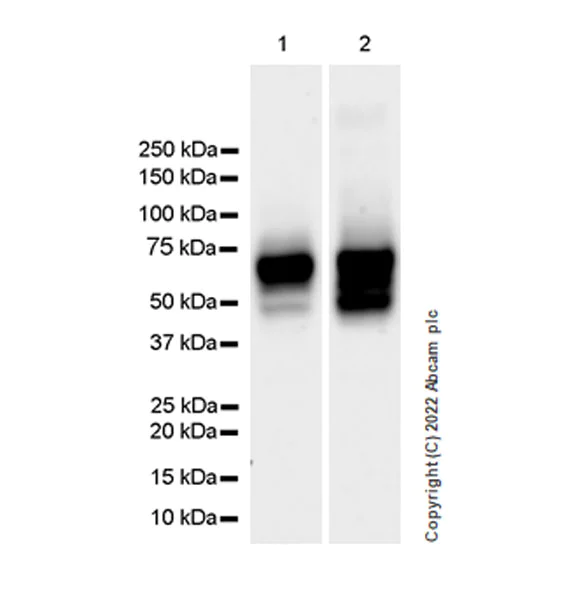
- WB
Supplier Data
Western blot - Anti-HEPACAM antibody [EPR25296-150] (AB300571)
Blocking and diluting buffer and concentration : 5% NFDM/TBST The samples are unboiled.
All lanes:
Western blot - Anti-HEPACAM antibody [EPR25296-150] (ab300571) at 1/2000 dilution
Lane 1:
Mouse brain tissue lysate
Lane 2:
Rat brain tissue lysate
Secondary
All lanes:
Western blot - Goat Anti-Rabbit IgG H&L (HRP) (<a href='/en-us/products/secondary-antibodies/goat-rabbit-igg-h-l-hrp-ab97051'>ab97051</a>) at 1/100000 dilution
Observed band size: 46 kDa
false
Exposure time: 81s
Related conjugates and formulations (1)
-
Anti-HEPACAM antibody [EPR25296-150] (BSA and Azide free)
Complementary Products
Primary Antibodies
AB124964
Anti-alpha smooth muscle Actin antibody [EPR5368]
BOND RX™ Validated|RabMAb|Recombinant|KO Validated|20ul selling size

- 5
- 19

Primary Antibodies
AB185966
Anti-SOX9 antibody [EPR14335-78]
RabMAb|Recombinant|20ul selling size

- 5
- 30
Primary Antibodies
AB218624
Anti-Rab5 antibody [EPR21801] - Early Endosome Marker
20ul selling size|KO Validated|RabMAb|Recombinant|Lab Essentials

- 4
- 3
Reactivity data
Product details
Patented technology
Our RabMAb® technology is a patented hybridoma-based technology for making rabbit monoclonal antibodies. For details on our patents, please refer to RabMAb® patents.
What are the advantages of a recombinant monoclonal antibody?
This product is a recombinant monoclonal antibody, which offers several advantages including:
- - High batch-to-batch consistency and reproducibility
- - Improved sensitivity and specificity
- - Long-term security of supply
- - Animal-free batch production
For more information, read more on recombinant antibodies.
Properties and storage information
Form
Purification technique
Storage buffer
Shipped at conditions
Appropriate short-term storage duration
Appropriate short-term storage conditions
Appropriate long-term storage conditions
Aliquoting information
Storage information
Supplementary information
This supplementary information is collated from multiple sources and compiled automatically.
Biological function summary
HEPACAM functions in the context of cell-cell adhesion and signal transduction mechanisms. This protein does not operate in isolation but rather forms part of larger protein complexes enhancing its role in cellular scaffolding and molecular signaling networks. The interaction with other cellular machinery supports processes like cell migration proliferation and differentiation which are critical for maintaining the homeostasis of neural tissues. Studies also highlight its role in modulating immune response and inflammatory processes within the nervous system.
Pathways
HEPACAM integrates into specific pathways involving cellular adhesion and signal transduction such as the PI3K/AKT signaling pathway. This pathway plays an important role in controlling cell growth and survival. HEPACAM's interaction with molecules like integrins and other cell adhesion proteins strengthens its function within this pathway. For instance integrins contribute to the regulation of the extracellular matrix composition affecting cellular movements and interactions vital for immune surveillance and responses in the nervous system.
Product protocols
- Visit the General protocols
- Visit the Troubleshooting
Target data
Alternative Names
Publications (1)
Recent publications for all applications. Explore the full listand refine your search
The Journal of neuroscience : the official journal of the Society for Neuroscience 43:8043-8057 PubMed37722850
2023
Applications
Unspecified application
Species
Unspecified reactive species
Product promise
Please note: All products are 'FOR RESEARCH USE ONLY. NOT FOR USE IN DIAGNOSTIC OR THERAPEUTIC PROCEDURES'.
For licensing inquiries, please contact partnerships@abcam.com