Anti-HNF-4-alpha antibody [K9218]
4
(8 Reviews)
|
(144 Publications )
- Over 110 publications
- Trusted since 2006
- WB
Lab
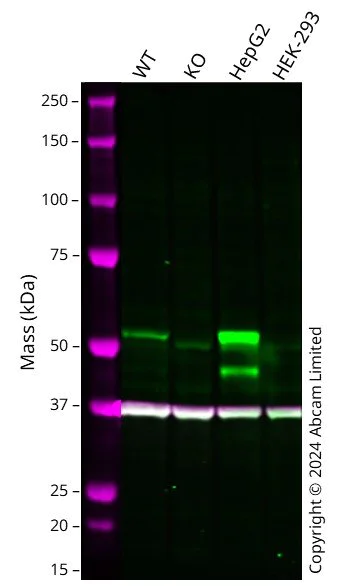
Western blot - Anti-HNF-4-alpha antibody [K9218] (AB41898)
Western blot : Anti-HNF4A antibody [K9218] (ab41898) staining at 1/1000 dilution, shown in green; Rabbit Anti-GAPDH antibody [EPR16891] (ab181602) loading control staining at 1/20000 dilution, shown in magenta. In Western blot, ab41898 was shown to bind specifically to HNF4A. A band was observed at 50-55 kDa in wild-type A549 cell lysates with no signal observed at this size in HNF4A knockout cell line. To generate this image, wild-type and HNF4A knockout A549 cell lysates were analysed. First, samples were run on an SDS-PAGE gel then transferred onto a nitrocellulose membrane. Membranes were blocked in 3 % milk in TBS-0.1 % Tween® 20 (TBS-T) before incubation with primary antibodies overnight at 4 °C. Blots were washed four times in TBS-T, incubated with secondary antibodies for 1 h at room temperature, washed again four times then imaged. Secondary antibodies used were Goat anti-Mouse IgG H&L 800CW and Goat anti-Rabbit IgG H&L 680RD at 1/20000 dilution.
All lanes:
Western blot - Anti-HNF-4-alpha antibody [K9218] (ab41898) at 1/1000 dilution
Lane 1:
Wild-type A549 cell lysate at 20 µg
Lane 2:
HNF4A knockout A549 cell lysate at 20 µg
Lane 3:
HepG2 cell lysate at 20 µg
Lane 4:
HEK-293 cell lysate at 20 µg
Secondary
All lanes:
Goat anti-Mouse IgG H&L 800CW and Goat anti-Rabbit IgG H&L 680RD at 1/20000 dilution
Observed band size: 50 kDa,55 kDa
false
- ICC/IF
Unknown
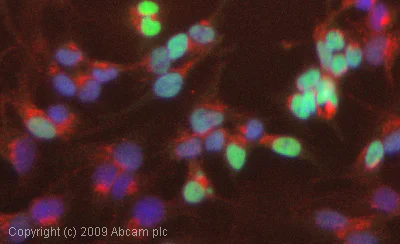
Immunocytochemistry/ Immunofluorescence - Anti-HNF-4-alpha antibody [K9218] (AB41898)
ICC/IF image of ab41898 stained HepG2 cells. The cells were 4% PFA fixed (10 min) and then incubated in 1%BSA / 10% normal goat serum / 0.3M glycine in 0.1% PBS-Tween for 1h to permeabilise the cells and block non-specific protein-protein interactions. The cells were then incubated with the antibody (ab41898, 1μg/ml) overnight at +4°C. The secondary antibody (green) was Alexa Fluor® 488 goat anti-mouse IgG (H+L) (ab150113) used at a 1/1000 dilution for 1h. Alexa Fluor® 594 WGA was used to label plasma membranes (red) at a 1/200 dilution for 1h. DAPI was used to stain the cell nuclei (blue) at a concentration of 1.43μM.
This image was generated using the ascites version of the product.
- Flow Cyt
Unknown
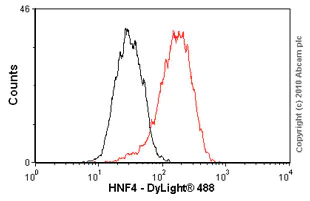
Flow Cytometry - Anti-HNF-4-alpha antibody [K9218] (AB41898)
Overlay histogram showing HepG2 cells stained with ab41898 (red line). The cells were fixed with methanol (5 min) and then permeabilized with 0.1% PBS-Tween for 20 min. The cells were then incubated in 1x PBS / 10% normal goat serum (ab7481) / 0.3M glycine to block non-specific protein-protein interactions followed by the antibody (ab41898, 2μg/1x106 cells) for 30 min at 22°C. The secondary antibody used was DyLight® 488 goat anti-mouse IgG (H+L) (ab96879) at 1/500 dilution for 30 min at 22°C. Isotype control antibody (black line) was mouse IgG2a [ICIGG2A] (ab91361, 2μg/1x106 cells) used under the same conditions. Acquisition of >5,000 events was performed. This antibody gave a significantly decreased signal in HepG2 cells fixed with 4% paraformaldehyde/permeabilized in 0.1% PBS-Tween used under the same conditions.
This image was generated using the ascites version of the product.
- IHC-P
Unknown
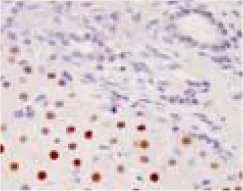
Immunohistochemistry (Formalin/PFA-fixed paraffin-embedded sections) - Anti-HNF-4-alpha antibody [K9218] (AB41898)
ab41898 staining HNF-4-alpha in human liver hepatocytes (10-20 ug/mL) by Immunohistochemistry, formalin-fixed paraffin embedded sections.
This image was generated using the ascites version of the product.
- IHC-P
Unknown
Immunohistochemistry (Formalin/PFA-fixed paraffin-embedded sections) - Anti-HNF-4-alpha antibody [K9218] (AB41898)
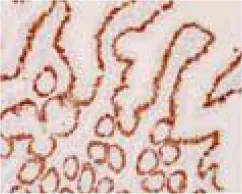
ab41898 staining HNF-4-alpha in Rat Intestine epithelial cell(10-20 ug/mL) by Immunohistochemistry, formalin-fixed paraffin embedded sections.
This image was generated using the ascites version of the product.
- WB
Unknown
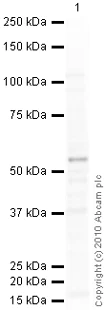
Western blot - Anti-HNF-4-alpha antibody [K9218] (AB41898)
This image was generated using the ascites version of the product.
All lanes:
Western blot - Anti-HNF-4-alpha antibody [K9218] (ab41898) at 1 µg/mL
All lanes:
HepG2 (Human hepatocellular liver carcinoma cell line) Whole Cell Lysate at 10 µg
Secondary
All lanes:
Western blot - Goat Anti-Mouse IgG H&L (HRP) preadsorbed (<a href='/en-us/products/secondary-antibodies/goat-mouse-igg-h-l-hrp-preadsorbed-ab97040'>ab97040</a>) at 1/5000 dilution
Predicted band size: 53 kDa
Observed band size: 108 kDa,37 kDa,53 kDa
true
Exposure time: 4min
Alternative Products
Primary Antibodies
AB217073
Alexa Fluor® 647 Anti-HNF-4-alpha antibody [EPR3648]
RabMAb|Recombinant
- 0
- 0
Primary Antibodies
AB201460
Anti-HNF-4-alpha antibody [EPR16885-99]
20ul selling size|RabMAb|Advanced Validation|Recombinant

- 4
- 2
Primary Antibodies
AB200142
Anti-HNF-4-alpha antibody [EPR19265-130] - ChIP Grade
KO Validated|RabMAb|Advanced Validation|Recombinant|20ul selling size
- 0
- 1
Primary Antibodies
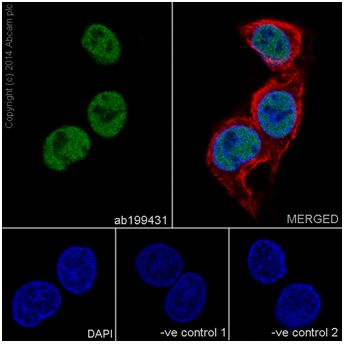
AB199431
Anti-HNF-4-alpha antibody [EPR16786] - N-terminal
RabMAb|Advanced Validation|Recombinant|KO Validated
- 0
- 0
Primary Antibodies
AB231167
Anti-HNF-4-alpha antibody [EPR16885-99] - BSA and Azide free
RabMAb|Advanced Validation|Recombinant

- 0
- 0
Primary Antibodies
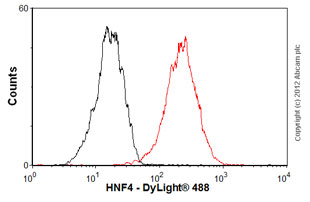
AB92378
Anti-HNF-4-alpha antibody [EPR3648]
KO Validated|20ul selling size|RabMAb|Advanced Validation|Recombinant
- 5
- 4
Primary Antibodies
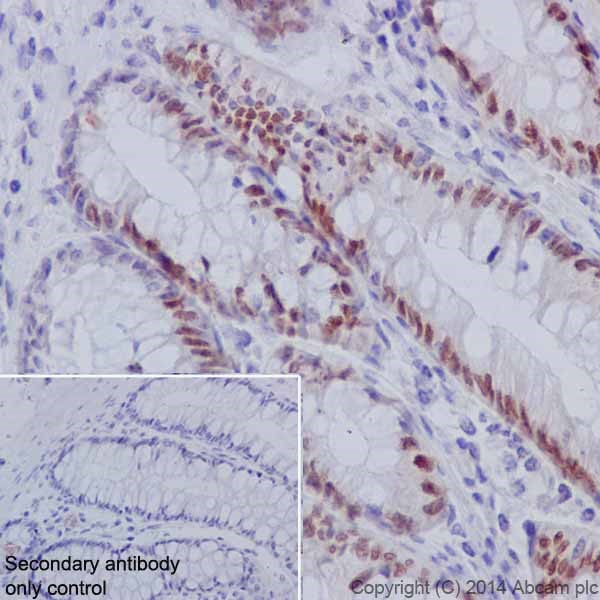
AB181604
Anti-HNF-4-alpha antibody [EPR16885] - ChIP Grade
20ul selling size|RabMAb|Advanced Validation|Recombinant
- 5
- 4
Complementary Products

Primary Antibodies
AB124964
Anti-alpha smooth muscle Actin antibody [EPR5368]
BOND RX™ Validated|RabMAb|Recombinant|KO Validated|20ul selling size

- 5
- 19
Primary Antibodies
AB52625
Anti-Cytokeratin 19 antibody [EP1580Y] - Cytoskeleton Marker
BOND RX™ Validated|RabMAb|Recombinant|Lab Essentials|20ul selling size|Advanced Validation

- 5
- 12
Primary Antibodies
AB16667
BOND RX™ Validated|KO Validated|RabMAb|Advanced Validation|Recombinant|20ul selling size

- 5
- 133
Primary Antibodies
AB207327
Anti-Albumin antibody [EPR20195]
20ul selling size|RabMAb|Recombinant|Lab Essentials

- 5
- 2
Reactivity data
Product details
Product Specifications
Anti-HNF-4-alpha antibody [K9218] (ab41898) is a mouse monoclonal antibody and is validated for use in Flow Cyt, ICC/IF, IHC-P, WB in human, rat samples.
Anti-HNF-4-alpha antibody [K9218] (ab41898) specifically detects HNF-4-alpha (UniProt ID: P41235; Molecular weight: 53kDa) and is sold in 100 µL selling sizes.
Quality and Validation
Abcam's high quality validation processes ensure Anti-HNF-4-alpha antibody [K9218] (ab41898) has high sensitivity and specificity.
Anti-HNF-4-alpha antibody [K9218] (ab41898) has been cited over 110 times in peer reviewed journals and is trusted by the scientific community.
Anti-HNF-4-alpha antibody [K9218] (ab41898) has 8 independent reviews from customers.
This product was changed from ascites to tissue culture supernatant on 3rd April 2019. Please note that the dilutions may need to be adjusted accordingly. If you have any questions, please do not hesitate to contact our scientific support team.
Properties and storage information
Form
Purification technique
Storage buffer
Shipped at conditions
Appropriate short-term storage duration
Appropriate short-term storage conditions
Appropriate long-term storage conditions
Aliquoting information
Storage information
Supplementary information
This supplementary information is collated from multiple sources and compiled automatically.
Biological function summary
HNF-4-alpha influences the expression of genes involved in liver and pancreatic function. It acts as a transcriptional regulator that controls fatty acid oxidation gluconeogenesis and insulin secretion. HNF-4-alpha interacts with other proteins to form transcriptional complexes that fine-tune the expression of metabolic enzymes and transport proteins. This protein is key to ensuring that metabolic genes are expressed in a coordinated manner which is essential for maintaining normal metabolic processes.
Pathways
HNF-4-alpha participates in the insulin signaling and lipid metabolism pathways. Through these pathways it interacts with other transcription factors such as HNF-1-alpha and PPAR-alpha which coordinate the regulation of genes involved in glucose metabolism and fatty acid oxidation. HNF-4-alpha plays a critical role by modulating the expression of enzymes like gluconeogenic enzymes in response to metabolic needs which connects it to key metabolic pathways influencing overall energy homeostasis.
Product protocols
- Visit the General protocols
- Visit the Troubleshooting
Target data
Alternative Names
Publications (144)
Recent publications for all applications. Explore the full listand refine your search
Nature communications 16:7438 PubMed40835606
2025
Applications
Unspecified application
Species
Unspecified reactive species
Materials today. Bio 32:101700 PubMed40225139
2025
Applications
Unspecified application
Species
Unspecified reactive species
Cell reports. Medicine 6:102053 PubMed40187357
2025
Applications
Unspecified application
Species
Unspecified reactive species
Cell proliferation 58:e13772 PubMed39810466
2025
Applications
Unspecified application
Species
Unspecified reactive species
Genes & development 39:325-347 PubMed39794125
2025
Applications
Unspecified application
Species
Unspecified reactive species
The Journal of clinical investigation 135: PubMed39774471
2025
Applications
Unspecified application
Species
Unspecified reactive species
JHEP reports : innovation in hepatology 7:101223 PubMed39758511
2025
Applications
Unspecified application
Species
Unspecified reactive species
Blood advances 9:844-855 PubMed39626355
2024
Applications
Unspecified application
Species
Unspecified reactive species
Hepatology communications 8: PubMed38967580
2024
Applications
Unspecified application
Species
Unspecified reactive species
Cell proliferation 57:e13646 PubMed38623945
2024
Applications
Unspecified application
Species
Unspecified reactive species
Product promise
Please note: All products are 'FOR RESEARCH USE ONLY. NOT FOR USE IN DIAGNOSTIC OR THERAPEUTIC PROCEDURES'.
For licensing inquiries, please contact partnerships@abcam.com