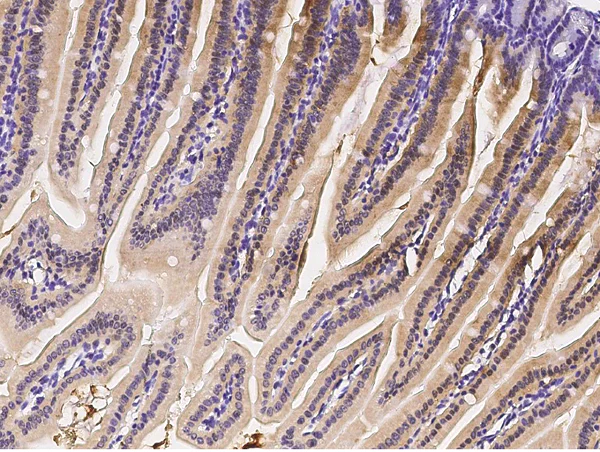
- IHC-P
Unknown
Immunohistochemistry (Formalin/PFA-fixed paraffin-embedded sections) - Anti-IRF6 antibody (AB275609)
Immunohistochemical analysis of paraffin embedded mouse small intestine labeling IRF6 with ab275609 at 1/1000 dilution.
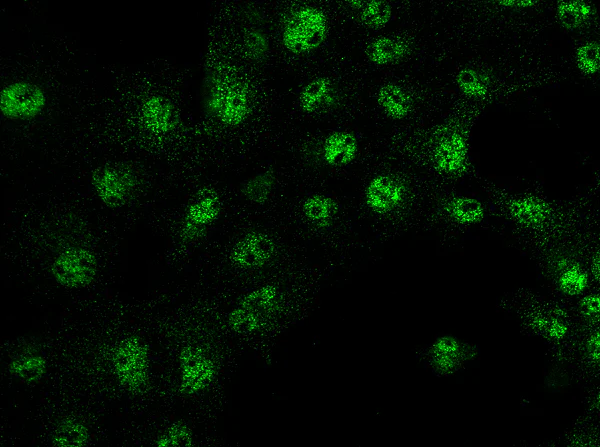
- ICC/IF
Unknown
Immunocytochemistry/ Immunofluorescence - Anti-IRF6 antibody (AB275609)
Immunocytochemical analysis of COS-7 (African green monkey kidney fibroblast-like cell line) cells labeling IRF6 with ab275609 at 1/1000 dilution at 4℃ overnight, followed by Goat Anti-rabbit IgG Alexa Fluor®488-conjugated secondary antibody (green). Cells were fixed with 4% PFA, permeabilzed with 0.3% Triton X-100 in PBS, blocked with 10% serum prior incubation with ab275609. Positive staining was localized to cytoplasm and nucleus.
Complementary Products
Primary Antibodies
AB217678
Anti-Rad21 antibody [EPR22506-15] - ChIP Grade
20ul selling size|BOND RX™ Validated|RabMAb|Advanced Validation|Recombinant
- 4
- 2
Primary Antibodies
AB22656
Anti-beta Catenin antibody [12F7]
BOND RX™ Validated|KO Validated|Lab Essentials|Trial Size
- 4
- 4
Primary Antibodies
AB4729
Anti-Histone H3 (acetyl K27) antibody - ChIP Grade
BOND RX™ Validated

- 5
- 85
Primary Antibodies
AB124762
BOND RX™ Validated|20ul selling size|RabMAb|Advanced Validation|Recombinant
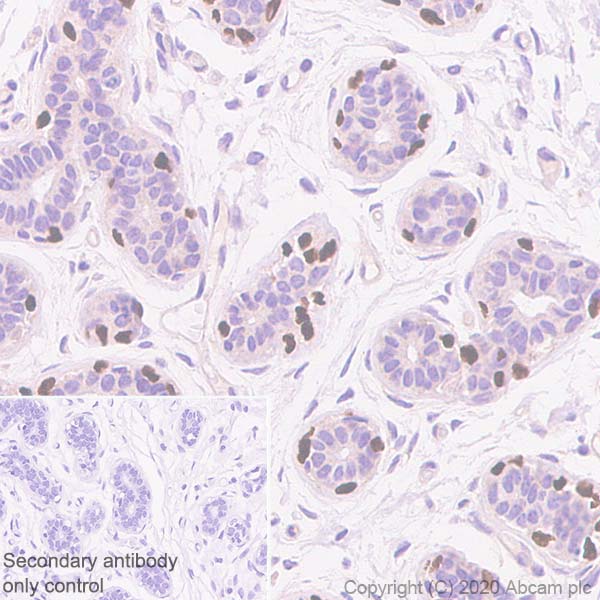
- 4
- 13
Reactivity data
Properties and storage information
Form
Purification technique
Storage buffer
Shipped at conditions
Appropriate short-term storage duration
Appropriate short-term storage conditions
Appropriate long-term storage conditions
Aliquoting information
Storage information
Supplementary information
This supplementary information is collated from multiple sources and compiled automatically.
Biological function summary
IRF6 orchestrates various cellular activities essential for tissue development and repair. It functions as a transcriptional activator influencing the expression of genes involved in the morphogenesis of craniofacial structures. IRF6 does not form large protein complexes but rather exerts its function through interaction with DNA and possibly with other transcription factors. It contributes to epithelial differentiation and proliferation balancing growth and apoptosis in tissues.
Pathways
IRF6 participates significantly in the Wnt and Notch signaling pathways. Both pathways are critical for regulating cell fate and development processes. The Notch pathway influences differentiation in the epithelial cells while the Wnt pathway is key for controlling the balance between growth and differentiation. IRF6 interacts with proteins such as RIPK4 which mediates signaling important for preventing excessive proliferation by promoting differentiation processes.
Product protocols
- Visit the General protocols
- Visit the Troubleshooting
Target data
Alternative Names
Product promise
Please note: All products are 'FOR RESEARCH USE ONLY. NOT FOR USE IN DIAGNOSTIC OR THERAPEUTIC PROCEDURES'.
For licensing inquiries, please contact partnerships@abcam.com