Anti-JNK1 + JNK2 + JNK3 antibody [EPR18841-95] - BSA and Azide free (Detector)
- RabMAb
- Recombinant
- What is this?
Be the first to review this product! Submit a review
|
(0 Publication)
- sELISA
Supplier Data
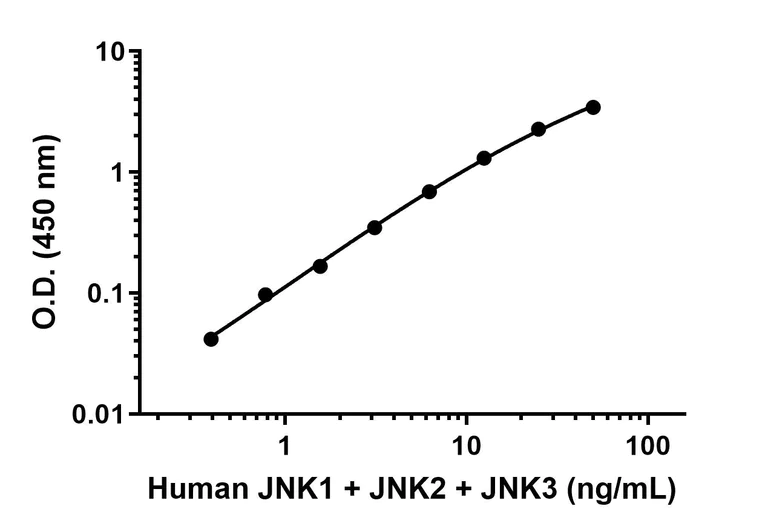
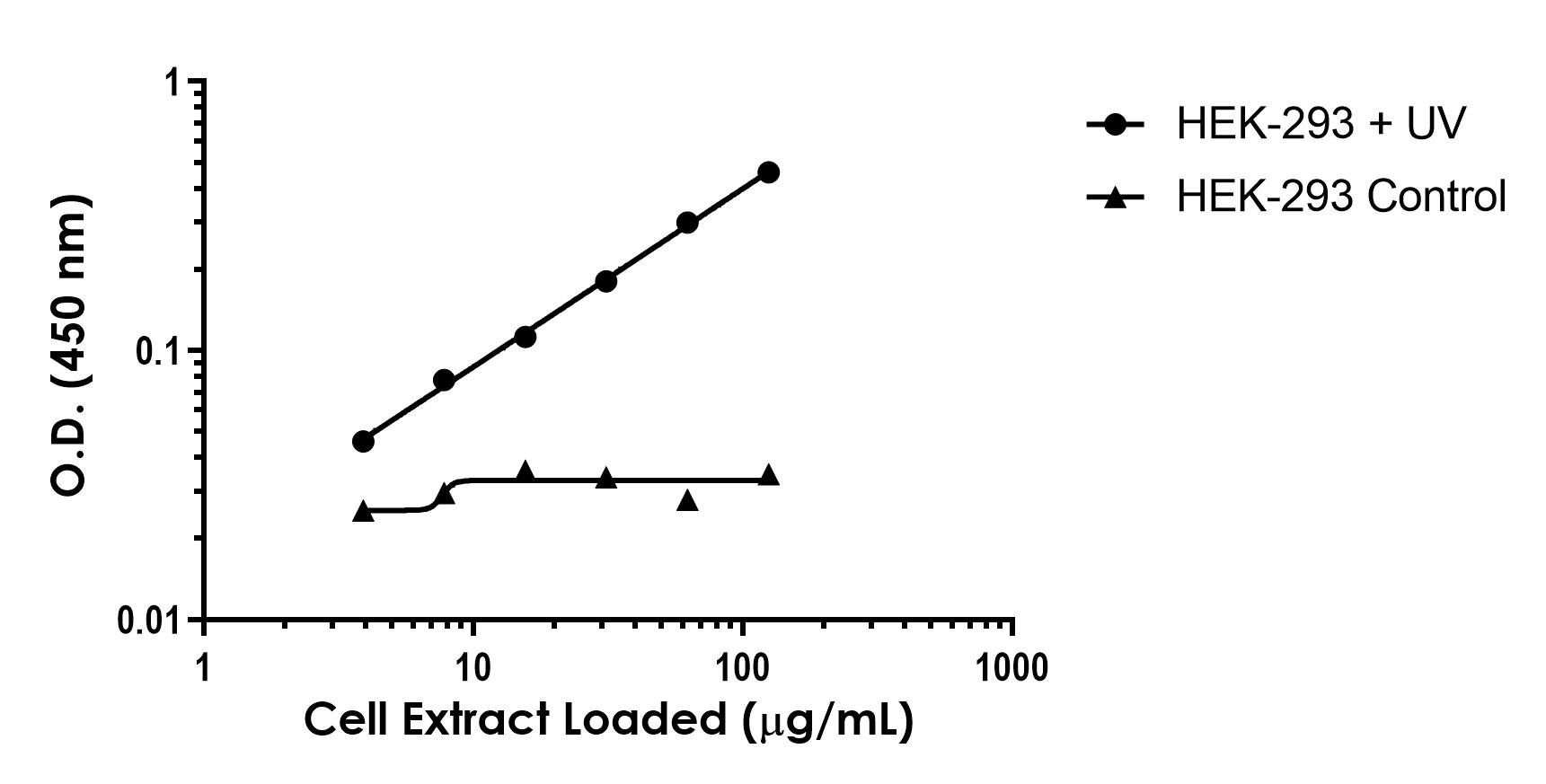
Sandwich ELISA - Anti-JNK1 + JNK2 + JNK3 antibody [EPR18841-95] - BSA and Azide free (Detector) (AB308541)
Sandwich ELISA of ab308540 with the capture antibody dilution at 2 µg/mL and detector antibody dilution at 0.5 µg/mL.
Related conjugates and formulations (4)
-
Anti-JNK1 + JNK2 + JNK3 antibody [EPR18841-95]
-
Anti-JNK1 + JNK2 + JNK3 antibody [EPR18841-95] - BSA and Azide free
-
519 Alexa Fluor® 488
Alexa Fluor® 488 Anti-JNK1 + JNK2 + JNK3 antibody [EPR18841-95]
-
HRP Anti-JNK1 + JNK2 + JNK3 antibody [EPR18841-95]
Complementary Products

Primary Antibodies
AB259613
Anti-Myosin light chain 3 antibody [EPR4161] - BSA and Azide free (Capture/Detector)
RabMAb|Recombinant
- 0
- 0
Primary Antibodies
AB314571
Anti-LTBR antibody [EPR26646-39] - BSA and Azide free (Detector)
RabMAb|Recombinant
- 0
- 0
Primary Antibodies
AB288740
Anti-JNK1 + JNK2 + JNK3 (phospho T183 + Y185) antibody [EPR20763-76] - BSA and Azide free (Detector)
Recombinant
- 0
- 0
Reactivity data
Product details
Sandwich ELISA
The recommended antibody orientation is based on internal optimization for ELISA-based assays. Antibody orientation is assay dependent and needs to be optimized for each assay type. Please note that the range provided for this antibody is only an estimation based on the performance of the product using the recommended antibody pair. Performance of the antibody pair will depend on the specific characteristics of your assay. We guarantee the product works in sandwich ELISA, but we do not guarantee the sensitivity or dynamic range of the antibody in your assay.
Patented technology
Our RabMAb® technology is a patented hybridoma-based technology for making rabbit monoclonal antibodies. For details on our patents, please refer to RabMAb® patents.
What are the advantages of a recombinant monoclonal antibody?
This product is a recombinant monoclonal antibody, which offers several advantages including:
- - High batch-to-batch consistency and reproducibility
- - Improved sensitivity and specificity
- - Long-term security of supply
- - Animal-free batch production
For more information, read more on recombinant antibodies.
Conjugation ready
Our carrier-free antibodies are typically supplied in a PBS-only formulation, purified and free of BSA, sodium azide and glycerol. This conjugation-ready format is designed for use with fluorochromes, metal isotopes, oligonucleotides, and enzymes, which makes them ideal for antibody labelling, functional and cell-based assays, flow-based assays (e.g. mass cytometry) and Multiplex Imaging applications.
Use our conjugation kits for antibody conjugates that are ready-to-use in as little as 20 minutes with 1 minute hands-on-time and 100% antibody recovery: available for fluorescent dyes, HRP, biotin and gold.
Properties and storage information
Form
Storage buffer
Shipped at conditions
Appropriate short-term storage conditions
Appropriate long-term storage conditions
Supplementary information
This supplementary information is collated from multiple sources and compiled automatically.
Biological function summary
These kinases function as significant regulators of cellular responses to stress and cytokines. They do not act alone but often form part of larger signaling complexes that include other MAPKs and various scaffold proteins. Their roles are substantial in cell differentiation proliferation apoptosis and migration. Precise regulation by JNK molecules influences these critical cellular events which play a role in maintaining homeostasis and response to external stresses.
Pathways
JNK proteins are central to the MAPK signaling pathway and are tightly linked to the MAPK/ERK pathway. Activation of the JNK pathways leads to the regulation of various other proteins including those in the apoptosis pathway such as Bcl-2 and Bax. These interactions focus on cellular stress response regulation and contribute to processes like inflammation stress-induced apoptosis and some metabolic processes.
Product protocols
- Visit the General protocols
- Visit the Troubleshooting
Target data
Additional targets
Alternative Names
Product promise
Please note: All products are 'FOR RESEARCH USE ONLY. NOT FOR USE IN DIAGNOSTIC OR THERAPEUTIC PROCEDURES'.
For licensing inquiries, please contact partnerships@abcam.com