JavaScript is disabled in your browser. Please enable JavaScript to view this website.
AB216428

Anti-MADH7/SMAD7 antibody

4

(1 Review)

|

(72 Publications)

Anti-MADH7/SMAD7 antibody (ab216428) is a rabbit polyclonal antibody detecting MADH7/SMAD7 in Western Blot, Flow Cytometry, IHC-P, ICC/IF. Suitable for Human, Mouse, Rat.

- Over 50 publications

View Alternative Names

MADH7, MADH8, SMAD7, SMAD family member 7, SMAD 7, hSMAD7, Mothers against decapentaplegic homolog 7, Mothers against decapentaplegic homolog 8, MAD homolog 7, Mothers against DPP homolog 7, MAD homolog 8, Mothers against DPP homolog 8
6 Images
Western blot - Anti-MADH7/SMAD7 antibody (AB216428)
  • WB

Supplier Data

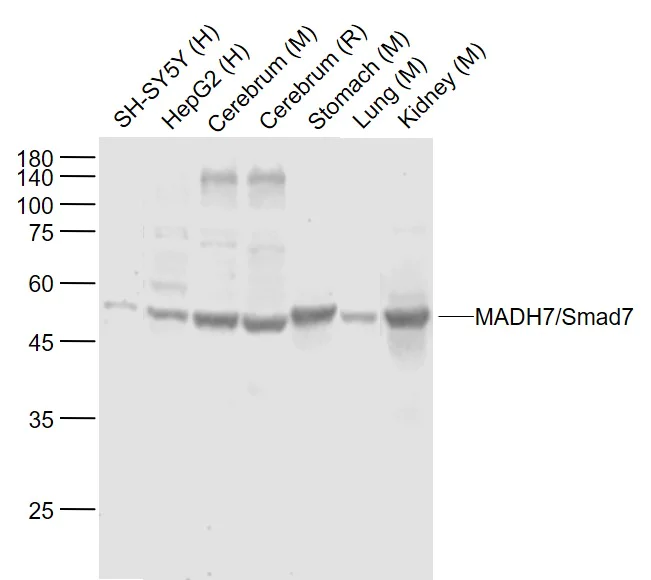
Western blot - Anti-MADH7/SMAD7 antibody (AB216428)

All lanes:

Western blot - Anti-MADH7/SMAD7 antibody (ab216428) at 1/200 dilution

Lane 1:

SHSY5Y human cells

Lane 2:

HepG2 cells

Lane 3:

Mouse cerebrum

Lane 4:

Rat cerebrum

Lane 5:

Mouse stomach

Lane 6:

Mouse lung

Lane 7:

Mouse kidney

Secondary

All lanes:

Conjugated Secondary at 1/200 dilution

Predicted band size: 46 kDa

false
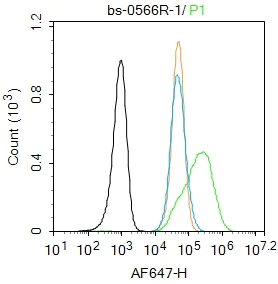
Flow Cytometry - Anti-MADH7/SMAD7 antibody (AB216428)
  • Flow Cyt

Supplier Data

Flow Cytometry - Anti-MADH7/SMAD7 antibody (AB216428)

Flow cytometry analysis of SH-SY5Y cells labelled for MADH7/ SMAD7 using ab216428 at 1/200 dilution. Acquisition of 20,000 events were performed. Cells stained with primary antibody (green), isotype control (orange).
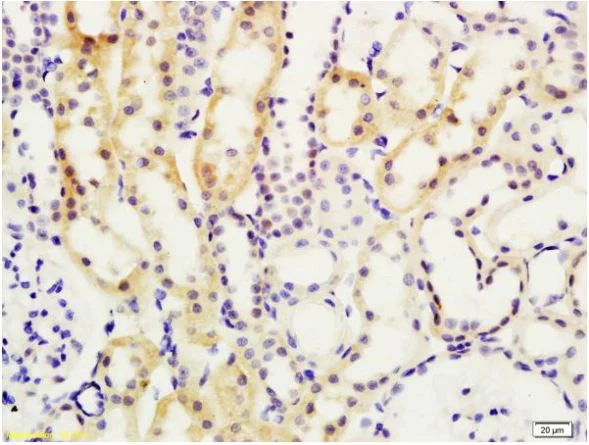
Immunohistochemistry (Formalin/PFA-fixed paraffin-embedded sections) - Anti-MADH7/SMAD7 antibody (AB216428)
  • IHC-P

Supplier Data

Immunohistochemistry (Formalin/PFA-fixed paraffin-embedded sections) - Anti-MADH7/SMAD7 antibody (AB216428)

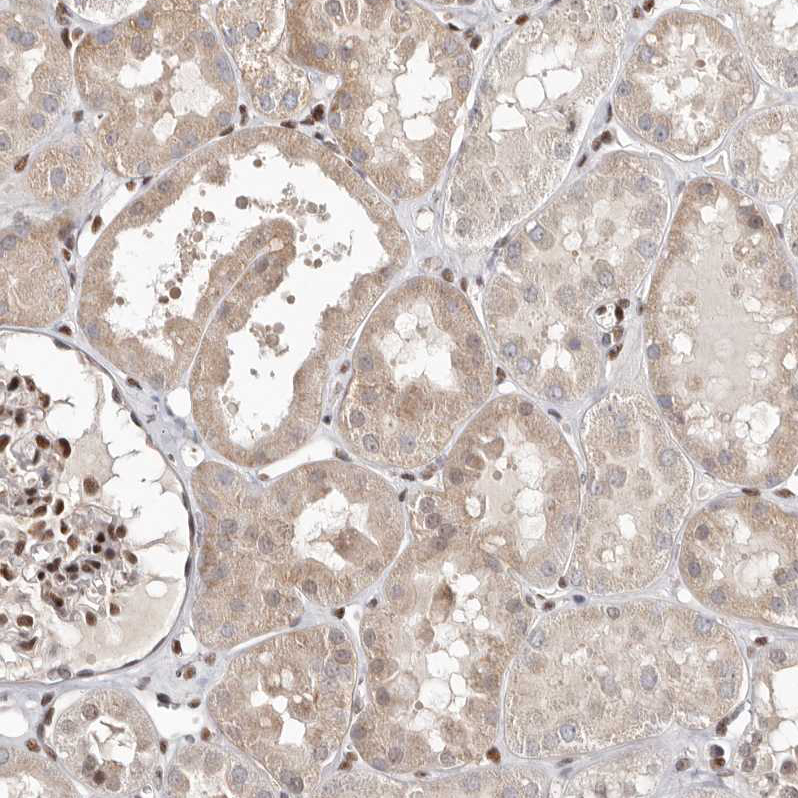
Immunohistochemical analysis of formalin-fixed, paraffin-embedded rat kidney tissue labeling MADH7/SMAD7 with ab216428 at 1/200 dilution followed by conjugation to the secondary antibody and DAB staining.
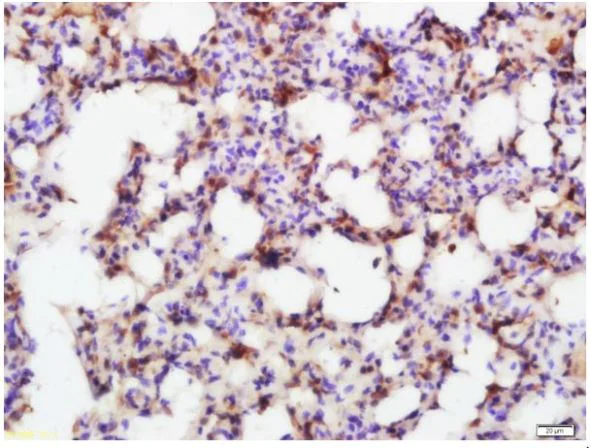
Immunohistochemistry (Formalin/PFA-fixed paraffin-embedded sections) - Anti-MADH7/SMAD7 antibody (AB216428)
  • IHC-P

Supplier Data

Immunohistochemistry (Formalin/PFA-fixed paraffin-embedded sections) - Anti-MADH7/SMAD7 antibody (AB216428)

Immunohistochemical analysis of formalin-fixed, paraffin-embedded rat lung tissue labeling MADH7/SMAD7 with ab216428 at 1/600 dilution followed by conjugation to the secondary antibody for 20 minutes and DAB staining. Prior to addition of the primary antibody, antigen retrieval was carried out by boiling in sodium citrate buffer (pH6.0) for 15min. Endogenous peroxidase was blocked by 3% hydrogen peroxide for 20 minutes and blocking buffer (normal goat serum) added at 37°C for 30min.
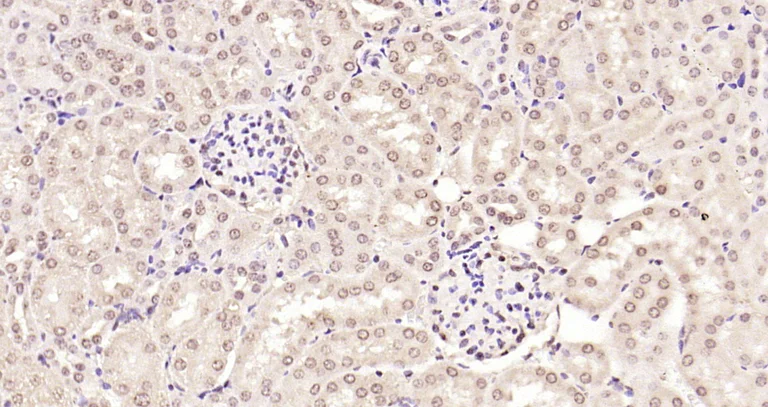
Immunohistochemistry (Formalin/PFA-fixed paraffin-embedded sections) - Anti-MADH7/SMAD7 antibody (AB216428)
  • IHC-P

Supplier Data

Immunohistochemistry (Formalin/PFA-fixed paraffin-embedded sections) - Anti-MADH7/SMAD7 antibody (AB216428)

Immunohistochemical analysis of formalin-fixed, paraffin-embedded mouse kidney tissue labeling MADH7/SMAD7 with ab216428 at 1/200 dilution followed by conjugation to the secondary antibody and DAB staining.
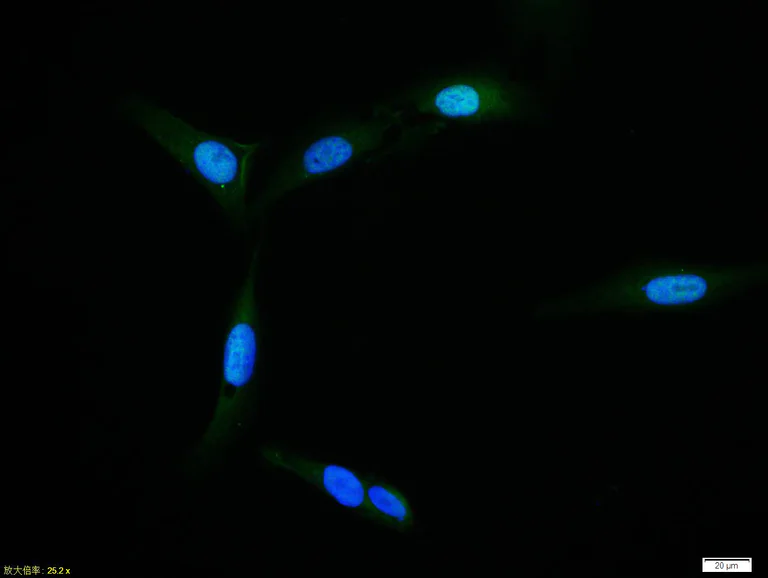
Immunocytochemistry/ Immunofluorescence - Anti-MADH7/SMAD7 antibody (AB216428)
  • ICC/IF

Supplier Data

Immunocytochemistry/ Immunofluorescence - Anti-MADH7/SMAD7 antibody (AB216428)

Key facts

Host species

Rabbit

Clonality

Polyclonal

Isotype

IgG

Carrier free

No

Reacts with

Mouse, Rat, Human

Applications

ICC/IF, IHC-P, WB, Flow Cyt

applications

Immunogen

Synthetic Peptide within Human SMAD7 aa 1-50 conjugated to Keyhole Limpet Haemocyanin. The exact immunogen used to generate this antibody is proprietary information.

O15105

Reactivity data

{ "title": "Reactivity Data", "filters": { "stats": ["", "Species", "Dilution Info", "Notes"], "tabs": { "all-applications": {"fullname" : "All Applications", "shortname": "All Applications"}, "FlowCyt" : {"fullname" : "Flow Cytometry", "shortname":"Flow Cyt"}, "WB" : {"fullname" : "Western blot", "shortname":"WB"}, "IHCP" : {"fullname" : "Immunohistochemistry (Formalin/PFA-fixed paraffin-embedded sections)", "shortname":"IHC-P"}, "ICCIF" : {"fullname" : "Immunocytochemistry/ Immunofluorescence", "shortname":"ICC/IF"} }, "product-promise": { "all": "all", "testedAndGuaranteed": "tested", "guaranteed": "expected", "predicted": "predicted", "notRecommended": "not-recommended" } }, "values": { "Human": { "FlowCyt-species-checked": "testedAndGuaranteed", "FlowCyt-species-dilution-info": "1/200", "FlowCyt-species-notes": "<p></p>", "WB-species-checked": "testedAndGuaranteed", "WB-species-dilution-info": "1/100 - 1/1000", "WB-species-notes": "<p></p>", "IHCP-species-checked": "guaranteed", "IHCP-species-dilution-info": "", "IHCP-species-notes": "", "ICCIF-species-checked": "testedAndGuaranteed", "ICCIF-species-dilution-info": "", "ICCIF-species-notes": "<p></p>" }, "Mouse": { "FlowCyt-species-checked": "guaranteed", "FlowCyt-species-dilution-info": "", "FlowCyt-species-notes": "", "WB-species-checked": "testedAndGuaranteed", "WB-species-dilution-info": "1/100 - 1/1000", "WB-species-notes": "<p></p>", "IHCP-species-checked": "testedAndGuaranteed", "IHCP-species-dilution-info": "1/100 - 1/500", "IHCP-species-notes": "<p></p>", "ICCIF-species-checked": "guaranteed", "ICCIF-species-dilution-info": "", "ICCIF-species-notes": "" }, "Rat": { "FlowCyt-species-checked": "guaranteed", "FlowCyt-species-dilution-info": "", "FlowCyt-species-notes": "", "WB-species-checked": "testedAndGuaranteed", "WB-species-dilution-info": "1/100 - 1/1000", "WB-species-notes": "<p></p>", "IHCP-species-checked": "testedAndGuaranteed", "IHCP-species-dilution-info": "1/100 - 1/500", "IHCP-species-notes": "<p></p>", "ICCIF-species-checked": "guaranteed", "ICCIF-species-dilution-info": "", "ICCIF-species-notes": "" } } }

Product details

What is this antibody validated in?
Anti-MADH7/SMAD7 antibody (ab216428) is a rabbit polyclonal antibody and is validated for use in Western Blot (WB), Flow Cytometry (Flow Cyt), Immunohistochemistry (IHC-P), Immunocytochemistry/immunofluorescence (ICC/IF) in Human, Mouse, Rat samples.

What is the molecular weight of MADH7/SMAD7?
Anti-MADH7/SMAD7 (ab216428) specifically detects a band for MADH7/SMAD7 (UniProt: O15105) at a molecular weight of 46kDa.

Trusted by the scientific community
Anti-MADH7/SMAD7 (ab216428) was first used in a scientific publication in 2016 and has been cited over 50 times in peer-reviewed journals.

Properties and storage information

Form
Liquid
Purification technique
Affinity purification Protein A
Storage buffer
pH: 7.4 Preservative: 0.02% Proclin 300 Constituents: 50% Glycerol (glycerin, glycerine), 48.98% TBS, 1X, 1% BSA
Shipped at conditions
Blue Ice
Appropriate short-term storage duration
1-2 weeks
Appropriate short-term storage conditions
+4°C
Appropriate long-term storage conditions
-20°C
Aliquoting information
Upon delivery aliquot
Storage information
Avoid freeze / thaw cycle

Supplementary information

This supplementary information is collated from multiple sources and compiled automatically.

MADH7 also known as SMAD7 is an intracellular protein that acts as an inhibitor in the signaling pathway of the TGF-beta (transforming growth factor-beta) family. This protein has a molecular mass of approximately 46 kDa and is widely expressed with a significant presence in tissues involved in immune response and development. SMAD7 directly interacts with receptor-regulated SMADs (R-SMADs) preventing their phosphorylation and consequent nuclear translocation effectively halting further signal transduction.
Biological function summary

SMAD7 functions to regulate the TGF-beta signaling pathway by operating as a negative feedback mediator. It binds to TGF-beta receptors recruiting E3 ubiquitin ligases which promote receptor degradation. SMAD7 is not part of complex large-scale multi-protein assemblies but is essential in modulating the pathway's activity. Its balance controls important processes like cell proliferation differentiation and apoptosis across varied biological contexts.

Pathways

SMAD7 strongly influences the TGF-beta and BMP (bone morphogenetic protein) signaling pathways. SMAD7 blocks TGF-beta signaling by interfering with the activity of R-SMADs such as SMAD2 and SMAD3 and it modulates the BMP pathway by interacting with SMAD1 and SMAD5. Its regulatory roles are tightly integrated within these pathways highlighting its importance in cellular homeostasis and response to extracellular signals.

SMAD7 has links to inflammatory conditions and cancer. Its dysregulation can lead to heightened TGF-beta signaling which may contribute to conditions like fibrosis and can enhance tumor progression by affecting cancer cell dynamics and the tumor microenvironment. In these scenarios abnormal SMAD7 function can associate with proteins such as SMAD3 in fibrosis while in cancer its association with proteins like SMAD4 disrupts normal growth control and cellular response.

Product protocols

For this product, it's our understanding that no specific protocols are required. You can visit:

Target data

Antagonist of signaling by TGF-beta (transforming growth factor) type 1 receptor superfamily members; has been shown to inhibit TGF-beta (Transforming growth factor) and activin signaling by associating with their receptors thus preventing SMAD2 access (PubMed : 21791611). Functions as an adapter to recruit SMURF2 to the TGF-beta receptor complex. Also acts by recruiting the PPP1R15A-PP1 complex to TGFBR1, which promotes its dephosphorylation. Positively regulates PDPK1 kinase activity by stimulating its dissociation from the 14-3-3 protein YWHAQ which acts as a negative regulator.
See full target information SMAD7

Publications (72)

Recent publications for all applications. Explore the full list and refine your search

Molecular medicine reports 32: PubMed40539440

2025

polysaccharide alleviates liver fibrosis through the TGF‑β/Smad signaling pathway and reduces collagen.

Applications

Unspecified application

Species

Unspecified reactive species

Yin Yuan,Xiaojing Liu,Tian Zhou,Zhongguang Zhou,Minghai Gong,Yihang Li

Journal of orthopaedic surgery and research 20:484 PubMed40390079

2025

LncRNA HCG18 regulates the progression of spinal tuberculosis by modulating the hsa-miR-146a-5p/TGF-β1/SMADs pathway.

Applications

Unspecified application

Species

Unspecified reactive species

Feng Li,Hongdong Tan,Xiao Zhang,Xiaodong Zhao,Xiaopeng Li,Gaoyang Chen

European journal of medical research 30:271 PubMed40211426

2025

M2 macrophage-derived exosomes reverse TGF-β1-induced epithelial mesenchymal transformation in BEAS-2B cells via the TGF-βRI/Smad2/3 signaling pathway.

Applications

Unspecified application

Species

Unspecified reactive species

Chao Liu,Xiaolin Huang,Siqi Li,Wentao Ji,Tian Luo,Jianping Liang,Yanhua Lv

Biomolecules & biomedicine 25:1175-1183 PubMed40035626

2025

Predictive value of TGF-β1 and SMAD-7 expression at diagnosis for treatment response in low-risk myelodysplastic syndrome.

Applications

Unspecified application

Species

Unspecified reactive species

Bedrettin Orhan,Hülya Öztürk Nazlıoğlu,Oğuzhan Dik,Büşra Gürbüz,Vildan Özkocaman,Tuba Ersal,İbrahim Ethem Pınar,Cumali Yalçın,Sinem Çubukçu,Tuba Güllü Koca,Fazıl Çağrı Hunutlu,Şeyma Yavuz,Rıdvan Ali,Fahir Özkalemkaş

Oncology letters 29:151 PubMed39898288

2025

MicroRNA‑96 promotes the proliferation and migration of breast cancer cells by inhibiting Smad7 expression.

Applications

Unspecified application

Species

Unspecified reactive species

Xiumei Zhang,Lin Cong,Rong Yu,Qianwen Yu,Xian Hou,Yonghua Zhou

Scientific reports 15:3417 PubMed39870682

2025

KAT2B inhibits proliferation and invasion via inactivating TGF-β/Smad3 pathway-medicated autophagy and EMT in epithelial ovarian cancer.

Applications

Unspecified application

Species

Unspecified reactive species

Yuqin Yao,Yuna Niu,Honggui Zhou,Min Yong

Heliyon 10:e36059 PubMed39224263

2024

Berberine suppressed the epithelial-mesenchymal transition (EMT) of colon epithelial cells through the TGF-β1/Smad and NF-κB pathways associated with miRNA-1269a.

Applications

Unspecified application

Species

Unspecified reactive species

Chao Huang,Haosheng Liu,Yidian Yang,Yue He,Weizeng Shen

Kidney & blood pressure research 49:385-396 PubMed38735279

2024

Indoxyl Sulfate Aggravates Podocyte Damage through the TGF-β1/Smad/ROS Signalling Pathway.

Applications

Unspecified application

Species

Unspecified reactive species

Miao Jia,Lihua Lin,Kang Xun,Damei Li,Weijiang Wu,Shaobo Sun,Hong Qiu,Donghua Jin

International archives of allergy and immunology 185:704-717 PubMed38484719

2024

LncRNA ZFAS1 Alleviated NLRP3 Inflammasome-Mediated Pyroptosis through Regulating miR-96-5p/Smad7 Signaling in Allergic Rhinitis.

Applications

Unspecified application

Species

Unspecified reactive species

Jiabin Zhan,Yanyan Qi,Yunlong Fu,Jing Zheng,Jinli Wu,Xin Wei,Min Zeng

Nature communications 15:2176 PubMed38467649

2024

YTHDF2 governs muscle size through a targeted modulation of proteostasis.

Applications

Unspecified application

Species

Unspecified reactive species

Christopher J Gilbert,Charles P Rabolli,Volha A Golubeva,Kristina M Sattler,Meifang Wang,Arsh Ketabforoush,W David Arnold,Christoph Lepper,Federica Accornero
View all publications

Product promise

We are committed to supporting your work with high-quality reagents, and we're here for you every step of the way. In the unlikely event that one of our products does not perform as expected, you're protected by our Product Promise.
For full details, please see our Terms & Conditions

Please note: All products are 'FOR RESEARCH USE ONLY. NOT FOR USE IN DIAGNOSTIC OR THERAPEUTIC PROCEDURES'.

For licensing inquiries, please contact partnerships@abcam.com