JavaScript is disabled in your browser. Please enable JavaScript to view this website.
AB244424

Anti-MADH7/SMAD7 antibody

Be the first to review this product! Submit a review

|

(2 Publications )

Rabbit Polyclonal MADH7/SMAD7 antibody. Suitable for IHC-P, ICC/IF and reacts with Human samples. Cited in 2 publications. Immunogen corresponding to Recombinant Fragment Protein within Human SMAD7 aa 150 to C-terminus.
5 Images
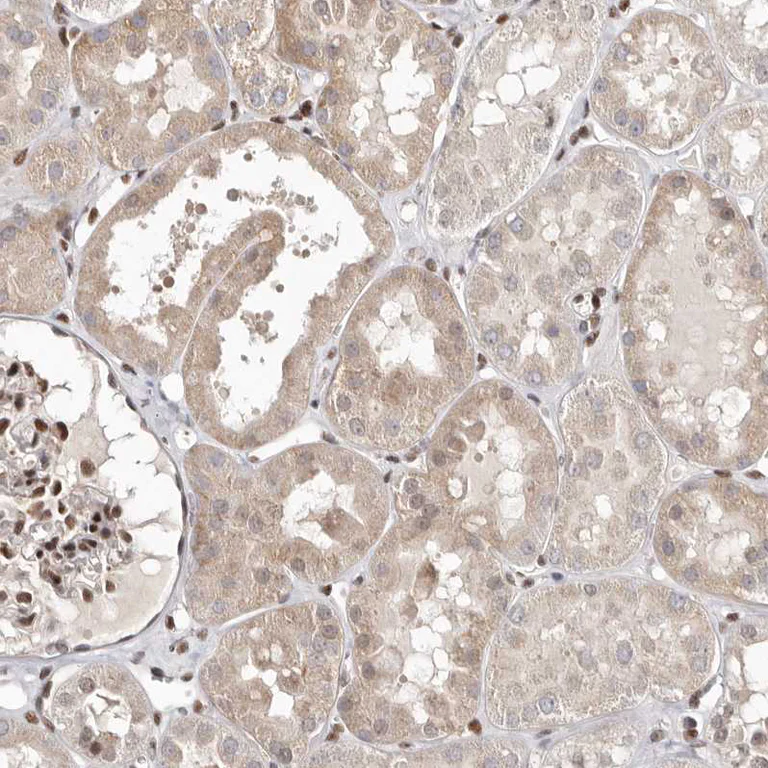
Immunohistochemistry (Formalin/PFA-fixed paraffin-embedded sections) - Anti-MADH7/SMAD7 antibody (AB244424)
  • IHC-P

Unknown

Immunohistochemistry (Formalin/PFA-fixed paraffin-embedded sections) - Anti-MADH7/SMAD7 antibody (AB244424)

Paraffin-embedded human kidney tissue stained for MADH7/SMAD7 using ab244424 at 1/50 dilution in immunohistochemical analysis.
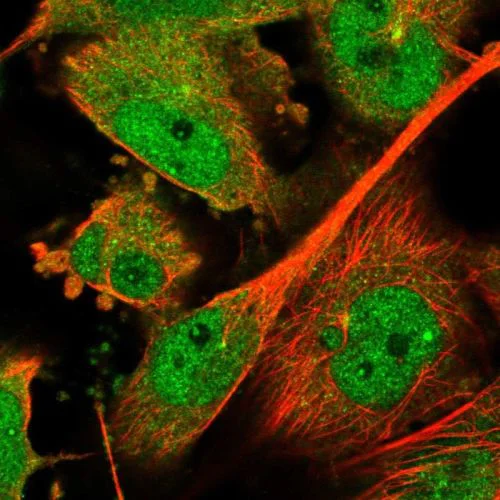
Immunocytochemistry/ Immunofluorescence - Anti-MADH7/SMAD7 antibody (AB244424)
  • ICC/IF

Unknown

Immunocytochemistry/ Immunofluorescence - Anti-MADH7/SMAD7 antibody (AB244424)

PFA-fixed, Triton X-100 permeabilized U-251 MG (human brain glioma cell line) cells stained for MADH7/SMAD7 (green) using ab244424 at 4 μg/ml in ICC/IF.
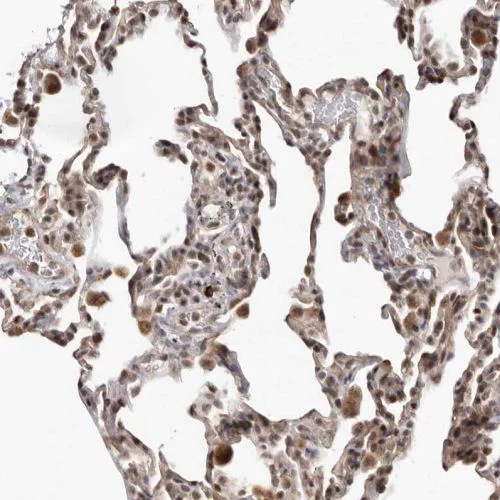
Immunohistochemistry (Formalin/PFA-fixed paraffin-embedded sections) - Anti-MADH7/SMAD7 antibody (AB244424)
  • IHC-P

Unknown

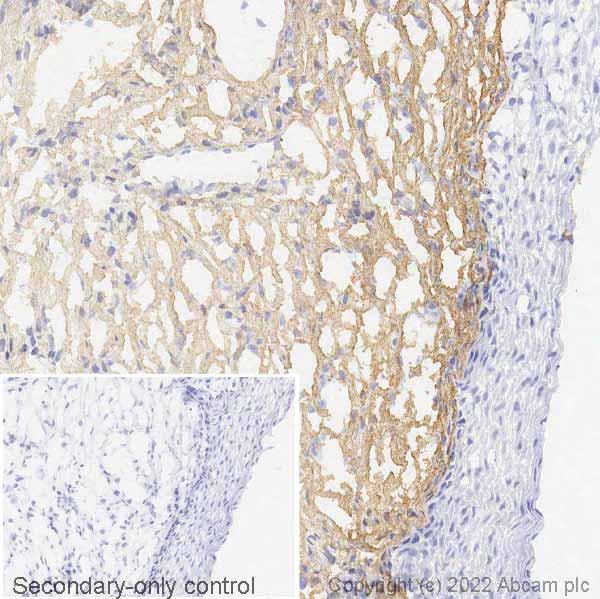
Immunohistochemistry (Formalin/PFA-fixed paraffin-embedded sections) - Anti-MADH7/SMAD7 antibody (AB244424)

Paraffin-embedded human lung tissue stained for MADH7/SMAD7 using ab244424 at 1/50 dilution in immunohistochemical analysis.
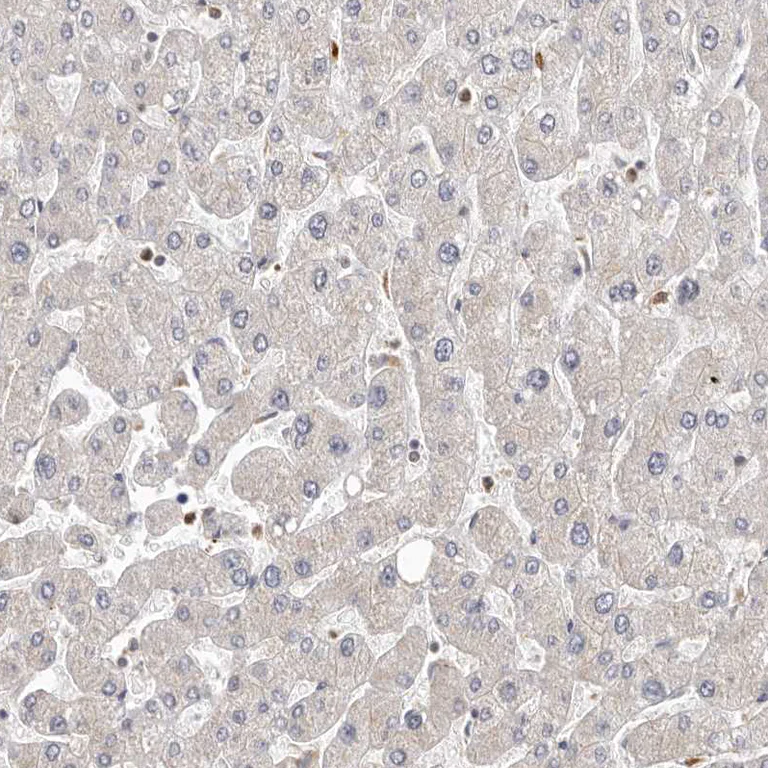
Immunohistochemistry (Formalin/PFA-fixed paraffin-embedded sections) - Anti-MADH7/SMAD7 antibody (AB244424)
  • IHC-P

Supplier Data

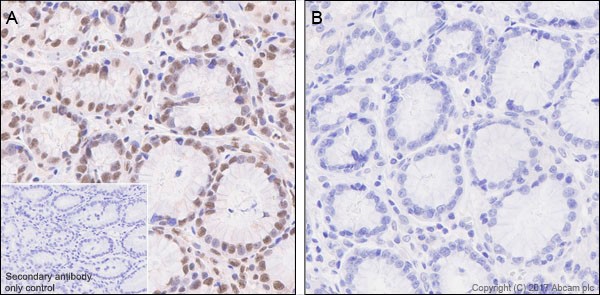
Immunohistochemistry (Formalin/PFA-fixed paraffin-embedded sections) - Anti-MADH7/SMAD7 antibody (AB244424)

Paraffin-embedded human liver tissue stained for MADH7/SMAD7 using ab244424 at 1/50 dilution in immunohistochemical analysis.
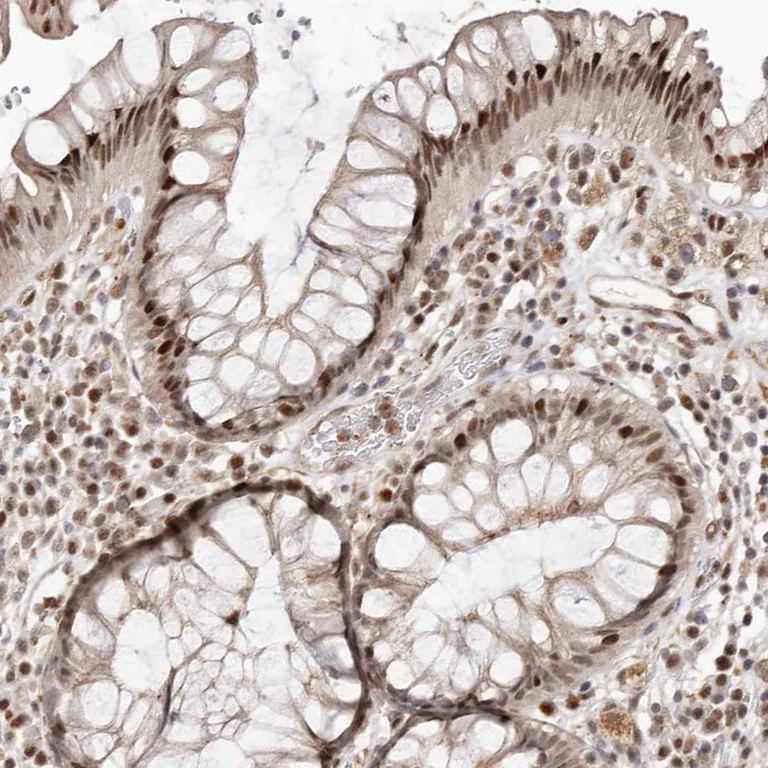
Immunohistochemistry (Formalin/PFA-fixed paraffin-embedded sections) - Anti-MADH7/SMAD7 antibody (AB244424)
  • IHC-P

Supplier Data

Immunohistochemistry (Formalin/PFA-fixed paraffin-embedded sections) - Anti-MADH7/SMAD7 antibody (AB244424)

Paraffin-embedded human rectum tissue stained for MADH7/SMAD7 using ab244424 at 1/50 dilution in immunohistochemical analysis.

Key facts

Host species

Rabbit

Clonality

Polyclonal

Isotype

IgG

Carrier free

No

Reacts with

Human

Applications

IHC-P, ICC/IF

applications

Immunogen

Recombinant Fragment Protein within Human SMAD7 aa 150 to C-terminus. The exact immunogen used to generate this antibody is proprietary information.

O15105

Reactivity data

{ "title": "Reactivity Data", "filters": { "stats": ["", "Species", "Dilution Info", "Notes"], "tabs": { "all-applications": {"fullname" : "All Applications", "shortname": "All Applications"}, "IHCP" : {"fullname" : "Immunohistochemistry (Formalin/PFA-fixed paraffin-embedded sections)", "shortname":"IHC-P"}, "ICCIF" : {"fullname" : "Immunocytochemistry/ Immunofluorescence", "shortname":"ICC/IF"} }, "product-promise": { "all": "all", "testedAndGuaranteed": "tested", "guaranteed": "expected", "predicted": "predicted", "notRecommended": "not-recommended" } }, "values": { "Human": { "IHCP-species-checked": "testedAndGuaranteed", "IHCP-species-dilution-info": "1/50 - 1/200", "IHCP-species-notes": "<p></p> Perform heat-mediated antigen retrieval with citrate buffer pH 6 before commencing with IHC staining protocol.", "ICCIF-species-checked": "testedAndGuaranteed", "ICCIF-species-dilution-info": "0.25-2 µg/mL", "ICCIF-species-notes": "<p>Fixation/Permeabilization: PFA/Triton X-100.</p>" }, "Mouse": { "IHCP-species-checked": "predicted", "IHCP-species-dilution-info": "", "IHCP-species-notes": "", "ICCIF-species-checked": "predicted", "ICCIF-species-dilution-info": "", "ICCIF-species-notes": "" }, "Rat": { "IHCP-species-checked": "predicted", "IHCP-species-dilution-info": "", "IHCP-species-notes": "", "ICCIF-species-checked": "predicted", "ICCIF-species-dilution-info": "", "ICCIF-species-notes": "" } } }

Properties and storage information

Form
Liquid
Purification technique
Affinity purification Immunogen
Storage buffer
pH: 7.2 Preservative: 0.02% Sodium azide Constituents: PBS, 40% Glycerol (glycerin, glycerine)
Shipped at conditions
Blue Ice
Appropriate short-term storage duration
1-2 weeks
Appropriate short-term storage conditions
+4°C
Appropriate long-term storage conditions
-20°C
Aliquoting information
Upon delivery aliquot
Storage information
Avoid freeze / thaw cycle

Supplementary information

This supplementary information is collated from multiple sources and compiled automatically.

MADH7 also known as SMAD7 is an intracellular protein that acts as an inhibitor in the signaling pathway of the TGF-beta (transforming growth factor-beta) family. This protein has a molecular mass of approximately 46 kDa and is widely expressed with a significant presence in tissues involved in immune response and development. SMAD7 directly interacts with receptor-regulated SMADs (R-SMADs) preventing their phosphorylation and consequent nuclear translocation effectively halting further signal transduction.
Biological function summary

SMAD7 functions to regulate the TGF-beta signaling pathway by operating as a negative feedback mediator. It binds to TGF-beta receptors recruiting E3 ubiquitin ligases which promote receptor degradation. SMAD7 is not part of complex large-scale multi-protein assemblies but is essential in modulating the pathway's activity. Its balance controls important processes like cell proliferation differentiation and apoptosis across varied biological contexts.

Pathways

SMAD7 strongly influences the TGF-beta and BMP (bone morphogenetic protein) signaling pathways. SMAD7 blocks TGF-beta signaling by interfering with the activity of R-SMADs such as SMAD2 and SMAD3 and it modulates the BMP pathway by interacting with SMAD1 and SMAD5. Its regulatory roles are tightly integrated within these pathways highlighting its importance in cellular homeostasis and response to extracellular signals.

SMAD7 has links to inflammatory conditions and cancer. Its dysregulation can lead to heightened TGF-beta signaling which may contribute to conditions like fibrosis and can enhance tumor progression by affecting cancer cell dynamics and the tumor microenvironment. In these scenarios abnormal SMAD7 function can associate with proteins such as SMAD3 in fibrosis while in cancer its association with proteins like SMAD4 disrupts normal growth control and cellular response.

Product protocols

For this product, it's our understanding that no specific protocols are required. You can visit:

Target data

Antagonist of signaling by TGF-beta (transforming growth factor) type 1 receptor superfamily members; has been shown to inhibit TGF-beta (Transforming growth factor) and activin signaling by associating with their receptors thus preventing SMAD2 access (PubMed : 21791611). Functions as an adapter to recruit SMURF2 to the TGF-beta receptor complex. Also acts by recruiting the PPP1R15A-PP1 complex to TGFBR1, which promotes its dephosphorylation. Positively regulates PDPK1 kinase activity by stimulating its dissociation from the 14-3-3 protein YWHAQ which acts as a negative regulator.
See full target information SMAD7

Alternative Names

MADH7, MADH8, SMAD7, SMAD family member 7, SMAD 7, hSMAD7, Mothers against decapentaplegic homolog 7, Mothers against decapentaplegic homolog 8, MAD homolog 7, Mothers against DPP homolog 7, MAD homolog 8, Mothers against DPP homolog 8

Publications (2)

Recent publications for all applications. Explore the full listand refine your search

Biology direct 19:21 PubMed38459605

2024

Mammalian enabled protein enhances tamoxifen sensitivity of the hormone receptor-positive breast cancer patients by suppressing the AKT signaling pathway.

Applications

Unspecified application

Species

Unspecified reactive species

Lifang He,Chuanghong She,Sen Jiang,Zhaochang Qi,Zihao Deng,Likeng Ji,Yukun Cui,Jundong Wu

International journal of biological sciences 20:200-217 PubMed38164169

2024

Treatment for type 2 diabetes and diabetic nephropathy by targeting Smad3 signaling.

Applications

Unspecified application

Species

Unspecified reactive species

Huijun He,Honglian Wang,Xiaocui Chen,Yu Zhong,Xiao Ru Huang,Ronald Cw Ma,Cheng Wang,Hui-Yao Lan
View all publications

Product promise

We are committed to supporting your work with high-quality reagents, and we're here for you every step of the way. In the unlikely event that one of our products does not perform as expected, you're protected by our Product Promise.
For full details, please see our Terms & Conditions

Please note: All products are 'FOR RESEARCH USE ONLY. NOT FOR USE IN DIAGNOSTIC OR THERAPEUTIC PROCEDURES'.

For licensing inquiries, please contact partnerships@abcam.com