JavaScript is disabled in your browser. Please enable JavaScript to view this website.
AB243587

Anti-MTA3 antibody

Be the first to review this product! Submit a review

|

(0 Publication)

Rabbit Polyclonal MTA3 antibody. Suitable for IHC-P, ICC/IF and reacts with Human samples. Immunogen corresponding to Recombinant Fragment Protein within Human MTA3 aa 400 to C-terminus.
2 Images
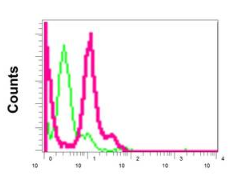
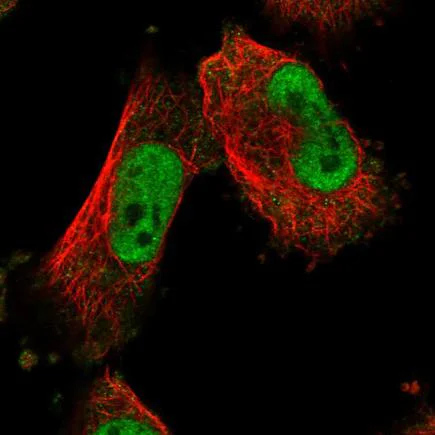
Immunocytochemistry/ Immunofluorescence - Anti-MTA3 antibody (AB243587)
  • ICC/IF

Supplier Data

Immunocytochemistry/ Immunofluorescence - Anti-MTA3 antibody (AB243587)

PFA-fixed, Triton X-100 permeabilized U-251 MG (human brain glioma cell line) cells stained for MTA3 (green) using ab243587 at 4 μg/ml in ICC/IF.
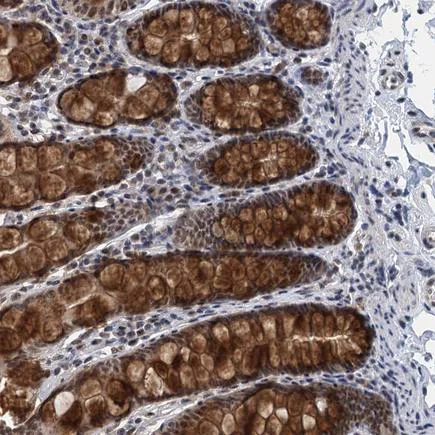
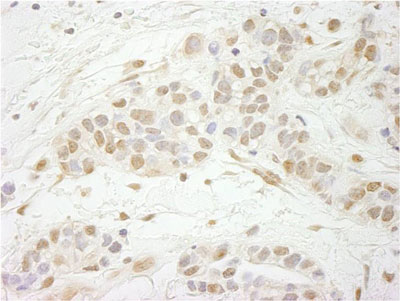
Immunohistochemistry (Formalin/PFA-fixed paraffin-embedded sections) - Anti-MTA3 antibody (AB243587)
  • IHC-P

Supplier Data

Immunohistochemistry (Formalin/PFA-fixed paraffin-embedded sections) - Anti-MTA3 antibody (AB243587)

Formalin-fixed, paraffin-embedded human colon tissue stained for MTA3 using ab243587 at 1/200 dilution in immunohistochemical analysis.

Key facts

Host species

Rabbit

Clonality

Polyclonal

Isotype

IgG

Carrier free

No

Reacts with

Human

Applications

IHC-P, ICC/IF

applications

Immunogen

Recombinant Fragment Protein within Human MTA3 aa 400 to C-terminus. The exact immunogen used to generate this antibody is proprietary information.

Q9BTC8

Reactivity data

{ "title": "Reactivity Data", "filters": { "stats": ["", "Species", "Dilution Info", "Notes"], "tabs": { "all-applications": {"fullname" : "All Applications", "shortname": "All Applications"}, "IHCP" : {"fullname" : "Immunohistochemistry (Formalin/PFA-fixed paraffin-embedded sections)", "shortname":"IHC-P"}, "ICCIF" : {"fullname" : "Immunocytochemistry/ Immunofluorescence", "shortname":"ICC/IF"} }, "product-promise": { "all": "all", "testedAndGuaranteed": "tested", "guaranteed": "expected", "predicted": "predicted", "notRecommended": "not-recommended" } }, "values": { "Human": { "IHCP-species-checked": "testedAndGuaranteed", "IHCP-species-dilution-info": "1/200 - 1/500", "IHCP-species-notes": "<p></p> Perform heat-mediated antigen retrieval with citrate buffer pH 6 before commencing with IHC staining protocol.", "ICCIF-species-checked": "testedAndGuaranteed", "ICCIF-species-dilution-info": "0.25-2 µg/mL", "ICCIF-species-notes": "<p>Fixation/Permeabilization: PFA/Triton X-100.</p>" }, "Cow": { "IHCP-species-checked": "predicted", "IHCP-species-dilution-info": "", "IHCP-species-notes": "", "ICCIF-species-checked": "predicted", "ICCIF-species-dilution-info": "", "ICCIF-species-notes": "" } } }

Properties and storage information

Form
Liquid
Purification technique
Affinity purification Immunogen
Storage buffer
pH: 7.2 Preservative: 0.02% Sodium azide Constituents: PBS, 40% Glycerol (glycerin, glycerine)
Shipped at conditions
Blue Ice
Appropriate short-term storage duration
1-2 weeks
Appropriate short-term storage conditions
+4°C
Appropriate long-term storage conditions
-20°C
Aliquoting information
Upon delivery aliquot
Storage information
Avoid freeze / thaw cycle

Supplementary information

This supplementary information is collated from multiple sources and compiled automatically.

The MTA3 protein also known as Metastasis-Associated Protein 3 is a member of the MTA family and has a molecular mass of approximately 53 kDa. MTA3 localizes in the nucleus and shows expression in various tissues including breast tissue and the immune system. It functions as a transcriptional corepressor particularly influencing E-cadherin repression by being part of the nucleosome remodeling and histone deacetylase (NuRD) complex.
Biological function summary

Activities involving gene expression regulation occur through interactions with other chromatin-associated molecules. MTA3 participates as a component of the NuRD complex which also includes Mi2 and HDAC1 that is critical in chromatin remodeling and transcriptional repression. Through MTA3's involvement the complex influences cell proliferation differentiation and epithelial-mesenchymal transition (EMT).

Pathways

MTA3 is particularly significant in the EMT pathway affecting cell migration and invasion capacities. It interacts with proteins such as TWIST and ZEB1 which are associated with EMT. Additionally MTA3 plays a role in the Notch signaling pathway where it helps in maintaining proper cell lineage differentiation by modulating transcription factors through deacetylation processes.

Altered MTA3 expression is seen in breast cancer and has a link to its progression. It connects closely with E-cadherin which serves as a marker for EMT and cancer metastasis. MTA3's involvement in histone modification pathways also correlates with altered gene expression seen in various autoimmune disorders making it a possible point of interest for therapeutic research and interventions.

Product protocols

For this product, it's our understanding that no specific protocols are required. You can visit:

Target data

Acts as a component of the histone deacetylase NuRD complex which participates in the remodeling of chromatin (PubMed : 12705869, PubMed : 16428440, PubMed : 28977666). Plays a role in maintenance of the normal epithelial architecture through the repression of SNAI1 transcription in a histone deacetylase-dependent manner, and thus the regulation of E-cadherin levels (PubMed : 12705869). Contributes to transcriptional repression by BCL6 (PubMed : 15454082).
See full target information MTA3

Alternative Names

KIAA1266, MTA3, Metastasis-associated protein MTA3

Product promise

We are committed to supporting your work with high-quality reagents, and we're here for you every step of the way. In the unlikely event that one of our products does not perform as expected, you're protected by our Product Promise.
For full details, please see our Terms & Conditions

Please note: All products are 'FOR RESEARCH USE ONLY. NOT FOR USE IN DIAGNOSTIC OR THERAPEUTIC PROCEDURES'.

For licensing inquiries, please contact partnerships@abcam.com